
Category Archives: Food Pairing

Devour AZ: Can Fine Dining Survive?

I recently attended the event #DevourAZ organized by #LocalFirstAZ and had the opportunity to interview several local executive chefs presenting a local mid to high tier take on the Phoenix restaurant experience. The result was a startling realization regarding new trends in the local fine dining scene.

Local First AZ (link at: https://localfirstaz.com/news) is an organization established to promote the AZ Food & Beverage industry. If you live in AZ, check out their website for other local events throughout the year. Arizona Desert Botanical Gardens in Phoenix, AZ (link at: https://dbg.org/) was closed for this private event. Great garden venue and a perfect choice for eating and drinking in an enjoyable, relaxed setting. DBG was a great place to enjoy the temperate AZ winter weather and discover new favorites on the AZ food & beverage scene. There were lots of prepared local foods with wine, beer and spirits showcasing Arizona restaurants, distributors and beverage producers. This event was sold-out well in advance, so if you are interested in attending next year, make sure to buy tickets early.
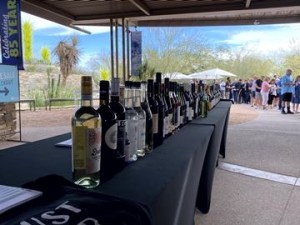
Loads of wine, beer and spirits to taste.

THE INTERVIEWS

All four chefs I spoke to, shared the same two-part message: a reasonably priced fine dining experience is now beyond even the upper-income dining community and younger generations are significantly changing their restaurant preferences. As a Boomer generation diner, I am accustomed to a white tablecloth, multi-course, curated food & wine experience. If you are of the same mindset, be prepared… it is all changing.

POST-COVID PRICE CHALLENGES

One of the more well-known curated fine-dining restaurants in my area is Monarch Cafe in Scottsdale. I checked their most recent menu and the per-plate cost has risen to $150-$250 per plate, plus beverage. A friend recently told me he dropped $1,000 on a recent Monarch visit for two with a pre-fixe menu, two bottles of wine and tip for the evening. He doesn’t plan to go back any time soon… There are choices in Phoenix that can get you near the experience for $500-$600, but it is a compromise. There is only one traditional fine-dining restaurant left in Phoenix that allows you to bring your own wine for a corkage fee. These prices will significantly limit the pool of potential clients for this category of restaurant and is pushing those restaurants still trying, to either close their doors, or change their menu, service AND business model.

The issue for restaurants and bars during COVID was just finding help. Now, it is making a new business plan work with huge increases in competitive wages and on-going service inflation. None of the chefs I spoke to were investing in significant server training and all were trying to find a simpler approach to a menu that did not require lengthy explanations of flavors and pairings to sell the experience. They all said servers in this market with the needed experience/knowledge to offer a traditional fine-dining experience are now at $60K-$75K/yr. income level with salary and tips… and are disappearing. Add 25-50% to that for the major centers of fine-dining like San Fran, Chicago and New York.

CHANGES IN BEVERAGE

Wine prices have continued to move higher in the U.S., having been the most expensive dinner beverage option for some time now. This has been my pet-peeve for years. With wineries moving towards the premium category for more than a decade AND the total lack of interest exhibited by volume producers to offer decent quality at lower price points… the entire U.S. industry has been shooting itself in the foot… as percentage wine consumption is dropping by double digits. The industry will lose entire generations of wine drinkers at this rate. In Italy, Germany and France, a $20 USD carafe of red wine at a restaurant competes on quality favorably with the $40-$50 bottles of U.S. wine I have purchased at restaurants.

These factors are causing the chefs I interviewed to cut their wine & craft beer (yes, beer consumption is now dropping too) inventories in half and move towards craft cocktail programs. Cocktails don’t require premium spirits brands, spoilage is a minimum, is a much smaller investment and can offer a very diverse flavor spectrum with little effort… and is much easier for untrained servers to support.
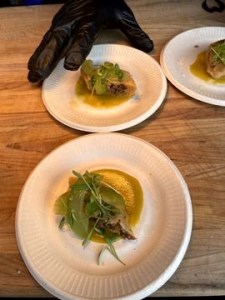
Bites from numerous restaurants serving many different dishes/flavors.

CHANGES IN MENUS/FOOD STYLES

The younger generations seem to be less interested in a 3-4 course traditional meal, than they are in a multi-plate, tapas-style experience. I understand that this approach can offer a more diverse flavor spectrum, but it totally ignores the idea of curating flavor and beverage pairings. For any of you that have had formal training, this is anathema to the old-world European style experience. European cuisines have experienced generations of being honed to find the most complementary flavors and beverages. Millions have been spent on promoting complimentary local food and beverage styles that are identified with a specific location, or region.

There is the service aspect here too. These chefs told me they can compose tapas style menus that describe simpler single flavor profiles that don’t require a trained server to explain. This approach offers a lower payroll cost, corresponding to a lower bill at the end of the meal.

FUTURE OF FINE-DINING

I have been mourning the loss of fine-dining in Phoenix for a couple years now and wracking my brain to look for alternatives to showcase curated food and beverage at a reasonable price. This is what I have come up with and I would appreciate your feedback.

I first thought that the American Wine Society (link at: https://americanwinesociety.org/) was the answer, but there has been significant push-back on including the idea of curated menus with wine tasting. I am hoping this myopic view of wine will change and the leadership will recognize how important food is to the wine experience. I still have hope this is possible and am continuing my efforts to move local AWS chapters in this direction.

I have begun building PowerPoint templates to assist inexperienced enthusiasts in effectively hosting curated food & wine experiences in their homes. If we are going to save the idea of pairing flavors and beverage in the dining experience, it may be possible to do this 8-10 people at a time, with a private experience in local homes. Would there be enough interest to build networks of small groups with this theme in mind? I am hoping…

2 Comments

Filed under Fine Dining, Food Pairing, Restaurant, Restaurant Review, Sommelier, Spirits, Wine Education, Wine Industry, Wine Marketing, Wine Tasting

Will Wineries/Distributors Listen to Consumer Feedback on Restaurant Wine Service?

Auditorium of Wine2Wine Business Forum

Wine2Wine Symposium Tackling the Difficult Issues

The purpose of this survey was to discover the importance of wine selection and wine lists to the dining experience in North America. The survey results match my understanding of the average consumer at an average white tablecloth dining restaurant here in the U.S. (high-end fine dining is a different category). Why did this feedback take so long? Anyone connected to your local restaurant scene could have shared this information. At least in Italy, the wine industry is attempting to understand what the U.S. wine consumer is asking for. When will the industry in the U.S. follow suit? See if this matches your wishes/wants:

  1. The food menu is the most important factor for a significant majority of respondents (81.13%) when choosing a restaurant.
  2. The wine list is important to a minority of respondents (9.43%) when choosing a restaurant.
  3. Most consumers (95.83%) want to see less than 100 labels on the wine list.
  4. 57% of consumers favor an average price of below $60.
  5. 50% of restaurant workers think chefs create menus without thinking about wine.
  6. Consumers prefer winemakers’ dinners (15.51%) and seated wine and food paring events (18.18%) rather than wine classes (9.63%) and cooking lessons (7.49%)
  7. At wine and food pairing events 40% of respondents thought the pairings weren’t great.

(recent survey on behalf of Quench Magazine discussed at Wine2Wine symposium)

Wine and the Typical U.S. Dining Experience

These answers represent something closer to the typical dining experience in Europe and reflect the disconnect between the U.S. wine industry and the average U.S. consumer. In Europe, the average table wine at under $30 USD/btl is pretty darn good. In the U.S., under $30 USD/btl (roughly $15 USD/btl retail) is typically undrinkable. In my opinion, the lack of focus on quality at this price-point is killing overall demand for wine in the U.S. and causing the current increasing imbalance between production and consumption. The only demand growth in the U.S. marketplace is in the over $60 USD/btl retail off-premises wine category. There is a story in this data that is being completely overlooked, to the detriment of the industry.

Customer Feedback

I wonder how insulted your favorite dining restaurant would be if you shared this press release? This topic is one of my personal great frustrations with dining out and pushes me to BYO restaurants and payment of corkage fees, rather than purchasing from on-premises inventory. The selection of restaurants in AZ that offer this option is controlled by local beverage laws and is very limited. It is quite disappointing.

Future of On-Premise Wine Sales in the U.S.

Now that we are seeing more consumer feedback, perhaps the industry will respond. I wonder if distributors will evaluate the value proposition and push production there. Distribution is much more influential in driving restaurant demand than producers, due to three-tier wine, beer & spirits laws. For those of us that enjoy a bottle of wine with dinner while dining out, one can hope.

Link to Wine Industry Network coverage of the press releases at this link: Wine2Wine Symposium Link

Comments Off on Will Wineries/Distributors Listen to Consumer Feedback on Restaurant Wine Service?

Filed under Fine Dining, Food Pairing, Restaurant, Wine Industry

Restaurant Beverage Strategies for Success and Profitability

Pic from Somm Business Blog

I was just reading this on Facebook from an industry magazine and was disappointed in how basic the ideas were. Check it out here: Sommelier Business Article.

Importance of a Diverse Beverage Inventory

There is much more than price-point management and basic food pairing needed for a Somm to successfully manage a dining restaurant’s inventory. Here are a few other ideas to consider:

  • There should be a low, medium and premium price option for each major category. Train staff to upsell wines.
  • Inventory a few recognizable labels in each major category, but the majority of the wine should not be found at local stores – train staff to upsell these wines.
  • Know the local alcoholic beverage procurement laws. If possible, work with distributors, brokers/importers and winery direct to build a diverse selection at the right price-points.

If the menu is even minimally diverse, there is so much more than a wine’s geographic origin to consider:

  • Weight – lighter wines can be more versatile with food.
  • Fruity wines should be included as an aperitif and to pair with sweeter dishes.
  • Complex/Savory wines for specific flavor pairings.
  • Tannic wines to pair with red meats and red sauces.
  • Acidic wines to pair with dishes having cream sauces.

Can the chef build a dessert menu to pair with Ports and Sauternes?

  • Train staff to sell digestifs.

Financial Success

Experiment with variable margin strategies. Perhaps:

  • Reduce margin on bottles over $75 USD to improve cash-flow.
  • Lower prices on a few accessible mid-price labels to help your staff upsell.

A diverse cellar is useless, if the staff is not trained with a sales strategy. Remember gross profit is a mix of pricing AND total beverage revenue. Have a goal – if beverage (beer, wine, cocktails) is not contributing to at least a third of a restaurant’s revenue and half the profits, the business is not likely to succeed.

Whether you are a wine steward, sommelier, or the restaurant manager/owner… managing beverage is complex. Without training of staff and an overall beverage strategy, a successful and profitable restaurant will be difficult to achieve.

Comments Off on Restaurant Beverage Strategies for Success and Profitability

Filed under Business, Fine Dining, Food Pairing, Wine Industry, Wine Tasting

Restaurant Service – The Importance of Upselling Beverage

Borrowed this graphic from a restaurant software site. Hope they don’t mind.

Non-chain restaurants are often family affairs and frequently – even with the best food – are the least profitable, poorest run category of business in the U.S. Why should you care? The strategic profitability of a restaurant can be a key indicator of the quality of the dining experience, not just the success of ownership. As a consumer, if you look for these ideas in action, you will find your favorite spots without much effort.

What to Look For (restaurant owners are you listening?)

Does the restaurant/bar have a beverage specialty: craft cocktails, fine whiskies, different styles of beer, quality/value wine list? If you don’t enjoy alcoholic beverages, you can stop reading now. If you do, stick with me here…

If beverage sales is not at least 1/3 of a sit-down restaurant’s sales, you can bet they won’t be in business long. In training for restaurant financial management, 50% of revenue is the recommendation. If there is one thing I am sure of, the best loyalty builder is a successful beverage program. Where I see the serious consumer passion coming from is – their preferred beverage category: whisky, wine, beer, and/or craft cocktails. Yes, the investment can be sizable, but can a restaurant afford not to?

A Successful Beverage Program

It is irrelevant which category(ies) are chosen, the clientele will eventually find the restaurant, with a minimum of invested marketing dollars.

Onwership/Management

Training, Training, Training… employees who find their passion in the category should be identified and have them lead staff. ALL servers should be trained to have some familiarity with the beverage specialty of the house. Encourage passionate clients with knowledge of the category and have staff funnel them back to the lead. Inventory choices have to be smart for this category of clientele. Find both brands/labels popularly known AND uncommon brands consumers can explore. Inventory should be strategic, with a good/better/best approach and there should be at least a few value items in each quality category. Local alcohol distribution laws should be investigated and multiple sources should be used, if possible: winery/brewery direct, distributor, auctions, overstock re-sellers and local producers. Each state usually has more than one type of alcohol resale license. Most – except the 100% liquor license (bar) – are more reasonable in cost. Licensing options may open purchasing to more channels, provide more buying power and selection. Unfortunately in my state for example, by law, restaurants & bars have very few choices.

Consumers

Take a minute to look for these services and specialty inventories. Ask about their availability. Notice the difference, when you find it. Praise the positive and provide constructive feedback on the negative. It is in your best interest. In some ways, your involvement can be a key to the success of your favorite spot. AND… most importantly, vote with your dollars. Try to limit your entertainment budget to the businesses that provide this kind of experience. My wife and I do.

Food Menu

Main course food is a very low-profit sales category for sit-down restaurants. Without volume, focusing on this is not a winning business model. As a consumer, who wants to join the herd? From the food category – starters, appetizers, sides and desserts can drive profits AND seriously enrich the customer food experience. Look for super yummy looking and creative menu items here. It is evidence of a well-run restaurant, a smart chef and the beginning of a great dining experience. A chef has much more lee-way to be really creative with these items, without breaking the bank on cost and can add experimental flavors that might not be acceptable to a portion of their clientele. On the staff side, owners need to find foodies for servers and have the chef train them to recommend flavors and pairings, not just dishes. Servers need to upsell the appetizers, sides and desserts. If you have ever had a server suggest specific menu items due to the flavors… it can really add to the dining experience, especially if you enjoy pairing food flavors with beverages.

Comments Off on Restaurant Service – The Importance of Upselling Beverage

Filed under Business, Fine Dining, Food Pairing, Restaurant

Earth, Wine and Fire Wine Dinner Review

Background

If you don’t have a Fleming’s in your town, or have just not had dinner at this restaurant chain before, bear with me. I will try to provide some reference. Fleming’s is a high-end steakhouse, similar in style to Ruth’s Chris, but not quite as expensive. They have been running a four course wine dinner special (branded as the title of this review) paired with Wagner Family wines (Caymus label) and my wife and I decided to give it a try. There were two options: Earth – vegetarian and Fire – meat. We selected Fire. Our overall experience was one step down from true gourmet, but very enjoyable. This is the full detail.

Salad Course

Dish: BURRATA WITH NORTH ATLANTIC LOBSTER

Wine: 2018 SEA SUN, CHARDONNAY 90 pts. (100 pt. system) or 16 pts. (20 pt. system)

Wine Note: Sweet citrus nose with lemon-lime mousse on the palate. High acidity and a fair amount of oak. If you like stainless chardonnay, this is not your wine. My wife and I prefer Old World style oaked chardonnay, so the very fruit forward profile was a little out of character. Nice mouthfeel. I would guess, the winemaker allowed some extended lees contact. Enjoyable chard for our palates and the acidity paired very well with the burrata. Some aging potential, if you like to lay down your wines.

If you have never had burrata, it is a soft cheese a little like mozzarella in flavor, but creamy and richer. Love the stuff and the fresher, the better. This burrata was excellent, but it was the other components that were a little disappointing. The lobster did not seem really fresh (we ARE in land-locked AZ, I suppose) and needed to be poached in butter. Lobster flavor was a little off and weak. The parmesan cheese crisp flavor (on top) almost over-powered the more delicate burrata below. Still… pretty enjoyable and an excellent pairing with the acidic Chardonnay.

2nd Course

Dish: COCONUT-CRUSTED PORK BELLY

Wine: NV RED SCHOONER, MALBEC 89 pts. (100 pt. system) or 15.5 pts. (20 pt. system)

Wine Note: Fruity nose with a little burn from the alcohol. Palate is filled with red and black fruit – black plum, blackberry and boysenberry. Medium acidity and medium minus tannins. A touch of residual sugar. Lighter, smooth mouthfeel. Very easy drinking red with a bit of structure. Successful for the style of wine it was meant to be. Drink now, don’t hold.

The pork belly was very tasty and the grits were fabulous! Our restaurant added goat cheese, instead of cheddar (on the website) – fantastic idea. The vegetable medley included (not shown below) was seasoned with spicy chiles. I pushed my veggies aside, in order to really enjoy the grits. The fruity, sweet wine was needed to pair with the leftover spiciness from the veggies. Turned out to be a pretty fair wine pairing with the fat from the pork belly and spice.

3rd Course

Dish: FILET MIGNON & BONE MARROW

Wine: 2019 CAYMUS VINEYARDS, CABERNET SAUVIGNON – NAPA VALLEY 87 pts. (100 pt. system) or 15 pts. (20 pt. system)

Wine Note: OK, you Caymus fans out there, I get it. Easy drinking Cali cab, but I just can’t do it. There is so much oak, as the joke goes, I could set the dang wine on fire. Fruity nose, but lacking freshness due to the over-powering oak. Blackberry and black currant on the palate, with some dark chocolate in the middle. Medium minus tannin and medium acidity. Simple wine flavor profile. I am sorry, neither my wife, or I could finish this wine. Just not a good match for our palates.

The filet was seasoned well and perfectly prepared. I have had better bone marrow. It needed to have more of the fat rendered out. Altho I will say, the filet with a bit of bone marrow on top was a pretty tasty bite.

Dessert Course

Dish: ORANGE OLIVE OIL CAKE

Wine: NV EMMOLO, SPARKLING – CALIFORNIA 89 pts. (100 pt. system) or 15.5 pts. (20 pt. system)

Wine Note: Citrus fruit on the nose. Palate of primarily lemon with a touch of tropical fruit. This is a cuvee style sparkling with a small amount of residual sugar. High acidity. Nice mouthfeel with a medium length finish to round it out. This could be more interesting with some bottle age. Has enough of a backbone to enjoy in 3-5 years.

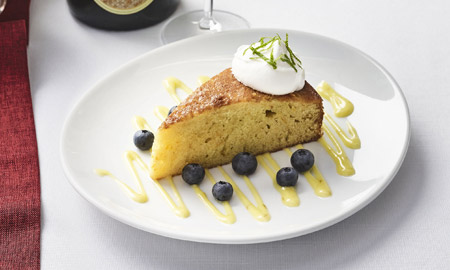
If you have not had olive oil cake – no, it does not taste like olive oil, but it IS very moist. I have had the orange version before and this was quite good. The tart lemon coulis drizzled on the plate was a nice addition. The citrus flavor in the cake paired very nicely with the sparkling wine.

Dining Experience and Rating

In general, this was a serious white tablecloth experience. Great service from our waiter, she was friendly and engaging. One of the managers stopped by twice to check in on us. I felt like there was a genuine interest in making sure the experience was enjoyable. I felt a bit rushed tho. This is the kind of meal that takes time to work your way through. I understand they want to turn tables, but for this kind of bill, you expect the time to have an experience. I would score the experience at a 92/100, or a 2 of 3 star equivalent. The meal was very good (especially the steak), but could have been better and the service was really excellent.

Comments Off on Earth, Wine and Fire Wine Dinner Review

Filed under Cabernet Sauvignon, Chardonnay, Fine Dining, Food Pairing, Malbec, Napa Valley, Restaurant Review, Wine Tasting, Wine Tasting Notes

Wine Dinner Review

Restaurant Review

Tisha’s Fine Dining (BYO) – Cape May, NJ

Score: 94/100 – $$$$ (see rating guides below)

Meal: Arugula salad with Burrata cheese and red Beets, Pepper crusted Prime Filet medium rare with mash potatoes, green beans and fried onion strings. The shared desert was profiteroles layered with vanilla ice cream and topped with chocolate sauce.

Wine Pairing: Stags’ Leap 2017 Petit Sirah Napa Valley – Score: 94/100. Wine paired well with Dish: Yes.

Stag’s Leap 2017 Cabernet Sauvignon Napa Valley – Score: 91/100. Wine paired well with Dish: Yes.

My wife grew up in Cape May on the Jersey Shore and her family has owned a beach house there for a couple of generations. She visits for a week, or two, in the Summer every year and I usually join her. We always make sure to arrange our reservation for Tisha’s and it is always the culinary highlight of the trip.

Restaurant Menu and Ambiance

The menu rotates every week with as much local in-season produce as possible. The choices are typically American style seafood and meats, with a few other items such as pasta dishes. My wife and I have been visiting Tisha’s for near 20 years now and have never had a mediocre dish. Although, I would suggest the seafood and meats, over the other dishes. The veggies are always in-season and fresh. There is good reason why Jersey is called the Garden State!

The ambiance includes indoor and patio dining with a small, upscale white tablecloth feel. Reservation availability is limited in the Summer. The servers are always friendly and attentive, but the premises can get very busy. Patience is needed for both the kitchen and servers in the Summer – to enjoy the experience. The restaurant staff requires your entire order upon arrival and paces the service for you. It seems a little odd for fine dining, but I have never had a bad experience.

The Food

The salad had great flavors and textures. The Arugula was peppery, the Burrata cheese was creamy and fresh and the beets were fresh and sweet… tasted almost like fruit. Nine times out of ten, the beef is out of this world and this was one of those nights. The Filet is on the menu with a bleu cheese flavored butter sauce, but my wife and I prefer the beef without it. The medium-rare steak was a touch towards the medium side, but the beef was melt-in-your-mouth tender and very tasty. The sides were fresh and accompanied the beef well. The desert was very tasty, not too sweet and the pastry was light and airy, but not quite fresh enough to be perfect.

The Wine

My wife and I enjoy Stags’ Leap wines. Please note, this is NOT Stag’s Leap. If you weren’t aware, the two wineries settled a law suit years ago by agreeing to move the apostrophe. Christophe Paubert (Stags’ Leap winemaker) is French trained and produces wonderfully balanced wines. In contrast, the other Stag’s Leap produces the more typical Napa fruit-tannin bombs.

The Petit Sirah is not a typical U.S. product for this variety. This had a typical fruit driven profile, but was much lighter, structured and balanced. Red and blue fruits were on the nose and palate. The wine was dry with medium tannin, medium+ acidity and a nice long finish. The texture was a bit silky with fine-grained tannin. As a comparison, this was nothing like the very common Michael David Petit Sirah. The wine actually paired well with the Burrata cheese and beets in the salad.

The Cab had a huge fruit-bomb nose, but the palate was not quite as concentrated. Still more fruity than I would prefer, with plum and blackberry on the attack. A rather simple taste profile, but with good balance and excellent structure. The wine was dry with medium tannins, medium+ acidity and a long fruity finish. This cab had the signature Stags’ Leap fine grained tannin. It paired very well with the Filet we had for the main course.

Rating Charts Used in this Review

(Common industry comparative data used with detailed scoring templates)

Wine

97 – 100Exceptional
92 – 96Excellent
89 – 91Enjoyable
85 – 88Passable
80 – 84Barely Acceptable
74 – 79Choke it Down
50 – 73Flawed

Restaurant / Food

97 – 100Exceptional3 Star Equivalent
92 – 96Excellent2 Star Equivalent
88 – 91Enjoyable1 Star Equivalent
82 – 87PassableDiner Quality
77 – 81Barely AcceptablePoor Diner Quality
72 – 76DumpDive
50 – 71Should CloseNuf Said
Does not include fast food, or take-out restaurants. Sit down only.
$$20 and under
$$$20 to $30
$$$$30 – $50
$$$$$50 and over
The dollar signs represent cost of a two-course dinner/pp, taxes and a 15% tip (no drinks or dessert).

Comments Off on Wine Dinner Review

Filed under Cabernet Sauvignon, Food Pairing, Napa Valley, Petit(e) Sirah, Restaurant, Restaurant Review, Stags Leap District, Wine by Varietal, Wine Tasting, Wine Tasting Notes

Wine Certifications MW, CWE, WSET and MS? Differences AND Why You Want To Know

Why Should a Wine Consumer Care?

You are attending a wine tasting, wine class, an attendant is recommending a wine at a restaurant, buying a wine at a shop, or deciding which vintage to pop from your cellar… If you are an average consumer and “Two Buck Chuck” (okay, probably $4 now) is your thing, please move on to the next article of interest. If wine selection is a bit more important to you read on…

Most wine enthusiasts are faced with these situations frequently and try to make sense of the value proposition. Do you trust recommendations? How could wine professionals understand what you enjoy? Should I pay $20 for a bottle, or maybe splurge and spend $30? What IS a quality wine and how does it taste different? Which food tastes better with which type of wine?

If you spend any time asking yourself these questions, you need to know the difference between these certifications. Well, why should you trust my explanation? If a certification helps to define my content here… I have trained formally, tested and passed the first two levels of Sommelier certifications. Strictly speaking, I am a certified Professional Sommelier. The next level is Advanced and then Master Sommellier. There are a little over 200 MS certified individuals in the world and just the Master test requires a 3 day commitment for the Theory, Service and Tasting sections. Even with a fair amount of experience, it would take me a year (or more) off work to study for that one! All of these certifications require much preparation and are quite an accomplishment. The failure rate for all of these tests is high.

What is a Master of Wine (MW)?

The certification body is the Institute of Masters of Wine and requires a research project and paper. This should give you an idea of the direction here. The path here is Stages 1,2 and 3, prior to the Master designation. An MW will KNOW virtually everything about all wines around the world: all varietals, how they are farmed, all individual world Terroir, vineyard strategies, winemaking techniques, wine taste variation, etc. Where do these people play in the industry? Usually, they work as technical consultants to media, wineries, publications, distributors and importers, etc. There is much to learn about wine from one of these individuals, IF they know how to teach it.

What is a Certified Wine Educator (CWE), or a WSET L4 certified Consultant?

The certification bodies here are the Society of Wine Educators and Wine & Spirits Education Trust. The path to CWE can be to study and test for the Certified Specialist of Wine (CSW), or not. The path to WSET L4 typically goes through L1-L3. These are the most prestigious wine education organizations in the world and they certify as you might guess… the teachers of wine. Why is this distinction important? Think of these people as the educators. If you were to take a wine class, it would be good to have a teacher with one of these certs. It validates their level of knowledge and that they have been introduced to a methodology for teaching wine.

What is a Master Sommelier (MS)?

The most prestigious certifying body here is the Court of Master Sommeliers. I was certified by the International Sommeliers Guild (ISG). They are connected to the Food & Wine education programs at the Art Institutes in major cities in the U.S. In my case, the Phoenix Art Institute and we had the opportunity to work with the chef education program there for food pairing training. The path to MS is already described earlier in this article.

I have a real bias towards these people. The difference here is, you are trained on Theory, Tasting and SERVICE. Why is this different than the other certs? Yes, I was trained to understand how different varietals and styles TASTE and I was tasked to learn about wine production and growing, but the big difference here is the focus on FOOD and matching an individual palate. I was mentored to believe that there can be a difference in wine quality, but wine flavors only apply to an individual palate. There is no “bad tasting wine”, only wine flavors appreciated by different clients. I was trained to learn HOW to pair different flavors (both FOOD & WINE) with different clients and their perception of an enjoyable EXPERIENCE. In essence, this certification focuses on recognizing HOW & WHY people enjoy different foods and wines and how to build an experience that is tailored to an individual. Look for these certified attendants at RESTAURANTS. They will know their stuff and if you can get some one-on-one time, they will enhance your dining experience.

The Difference Based on Your Need

I think you will find this quick guide helpful and easily understandable. If you are taking a wine class, look for WSET and CWE certified individuals. If you have decided to start some sort of business in the wine industry, an MW as a consultant would be a good choice. If you are at a restaurant, a Sommelier on staff would be a good indication of the quality of their wine program. All of these individuals have a level of wine knowledge that can offer much to your personal wine experience, but there are differences as noted above. If you are participating in a wine tasting, any of these people could lead a group successfully with very interesting and rich content for you to enjoy.

So, keep an eye out and ask about certifications. There are a million so-called wine experts. In fact, some can be amazing. I have spent time with wine collectors that would blow you away. Although, if you want to be sure that your money is being spent wisely for classes, education, or dining… Look for the folks with formal training and certification testing. You will have a better chance of getting the most for your money and a much improved experience!


8 Comments

Filed under Food Pairing, Restaurant, Sommelier, Wine Education, Wine Industry, Wine Tasting

Wine Buying Strategies for the Average Consumer

So, let’s say it is Friday and you are Mr./Ms. average wine consumer on your way home from work. You drop in to the grocery store for a few things and a bottle, or two, of wine for the weekend. Your tendency is probably to go to a brand label you know that has proven reasonable value in the $10-15/btl. range, like Yellow Tail, Cupcake, or Woodbridge. Now, let’s say this day you just got a raise, or your just feeling a little adventurous and decide your willing to up your budget to $20/btl. and you look at the 100′ long wall of wine in front of you… and you are totally lost! What do you do? Make a selection at random? by varietal? because you like the pretty label? If you are like me (before the wine training), I eventually gave up and rolled the dice, picking a bottle at random of a varietal I thought I enjoyed. Half the time, I struck-out and had to pour the bottle down the drain. It happened too often to stick to my pride and drink the awful bottle.

If this sounds familiar, just what can you do to be a little more realistic and have a better chance of selecting a bottle you will enjoy? This will require a little advance thought and a little time to walk through the process, but in the end, you will feel like your money is being better spent!

How do You Drink Wine?

Most importantly, think about how you drink wine: with food, or without. Food requires wines with more acidity to cut through and compliment fats, proteins and carbs. Acidity is the component that makes you salivate and a “bite” is usually felt near the back sides of the mouth and tongue. Easy drinking (less acidic) wines may be what you enjoy, but are best drunk on their own. For example, it is difficult to find a Malbec, or Red Zinfandel with good acidity. I am convinced this is the result of producers assuming people have discovered Malbec and Zin as simple, fruity wines that drink well without food. These varietals can present much more character, but aren’t often produced this way. In the end, wine is a business and if a producer doesn’t think they can sell a type of wine, they will simply choose not to produce it.

If you enjoy wine primarily accompanied with food, then one approach can be looking for regions that are known for producing primarily acidic wines, i.e. Chianti (Italy), White Burgundy (France), or White/Red Bordeaux (France).

Special Case: if you are a red meat eater, wines with high tannins should be your choice, as the tannins break-down the fats in the meat and clean your palate between bites. When your palate is cleared, it prepares your taste buds to appreciate the full flavor of the food with each bite. Tannins are the component that makes your mouth feel like Marlon Brando chewing on cotton balls for his next big scene in The Godfather. The cottony dryness is usually felt between the teeth and gums. These wines are fantastic paired with red meat. Examples would be: all Cabernet Sauvignon, Italian Sangiovese, French Red Bordeaux. Italian pasta dishes with red meat sauces are also good pairings for these types of wines.

Why Do You Drink Wine?

Do you drink wine for the appreciation of the flavor, or do you just enjoy relaxing with a bottle of wine after work? If you are the latter, just make an effort to learn the better quality growing regions and select something in your price range from one of these areas. In general, wine regions that are known for their quality, or have been growing wine for generations, tend to offer generally better wines. An example would be Napa Valley in the U.S., or Bolgheri in Italy. If you can find a $20 bottle of Cab Sauv from these areas, give it a shot…  it is more likely to be enjoyed, than a random Cab from Lodi, or Mendocino. If flavor is your thing, you are going to be one of those needing to put some effort into learning about wine regions, because that is the only real method for selecting wines by flavor profile.

If you are selecting wine to enjoy with friends, or at a restaurant… some of these same strategies can work. If you are lucky at the restaurant, you might get a server that actually knows something about wine, but in general think of these situations as opportunities to learn more about wine. I have written several more advanced posts on this site to help with a detailed approach to fine wine selection, if you are ready to dive in.

Cheers!


1 Comment

Filed under Food Pairing, Wine Education, Wine Tasting

Follow-up to: “Cabernet Sauvignon Blend Comparison”

A few comments from readers outside the U.S. highlighted the cultural bias I showed in this piece.  So, for my readers outside the U.S., I decided to write a follow-up with that in mind…

Bias Cartoon

I have written before about cultural differences and how it affects wine culture and wine jobs around the world.  It is difficult to shed the result of our up-bringing.  My point has always been – evaluating the quality of a wine is the same around the world, but whether it is enjoyed with or without food… or which foods pair best to local palates – are not simple questions with easy answers.

Cultural “Liberties”

I took many cultural “liberties” in the previous piece, assuming a shared understanding.  Also, I SHOULD have offered an evaluation regarding the best wine-food pairing…  As a starting point, keep in mind, all four wines were essentially Bordeaux style blends, the wines were similar in profile and this style of wine pairs well generally with red meat.

When I hold a tasting of varietally similar wines like these, it definitely allows a focus on evaluating structure and balance vs. flavors/aromas.  A more technical approach, but one I prefer. If you read my tasting notes, I ALWAYS discuss the structure and balance of the wine – regardless of the pairing.  I tend to evaluate wines based on how well they are made vs. how much I enjoy them.  This is the FIRST concept I was taught in formal Sommelier training.  The French wine was BY FAR the best balanced wine at the table.  So, in a tasting of similar style wines, it offered the best wine-food pairing of the four.  Which wine did I enjoy the most without food?  The 1993 Beringer Private Reserve.

In my opinion, this “Cultural Bias” is the biggest challenge that a wine professional can face when trying to bridge the chasm between Old and New World locations:  accommodating the local wine culture.  This affects every discipline in the wine industry, affecting how the wine is made, how it is marketed, serving decisions…  Perhaps, this thinking explains the importance of an involved U.S. importer to a European producer.

Cultural Differences

In the U.S., it is more common to enjoy wine without food.  One of the challenges I had to overcome in my training, but it also affects how I approach evaluating wine for my U.S. audience.  I believe there are a few ideas differentiating wine drinkers in the U.S. from many other locations around the world:

1) A significant share of the wine consumed in the U.S. is enjoyed before, or after dinner, without food.

2) Americans are looking for a less formal and relaxed wine experience.

3) When paired with food, wine flavors should enhance food flavors, rather than just complement the flavors.  Wine is not often consumed primarily to clear the palate as is common in Europe.

In closing, I was asked for a better description of the food prepared and enjoyed with the wines. So, here it is:

Beef Short Ribs – braised with a balsamic reduction for 3 hours in a pressure cooker.  They were rich, meaty, and very tender.

Mac & Cheese – a uniquely American comfort food.  This is an extremely rich pasta dish made with butter, cream and lots of cheese.  In this case we made the pasta from scratch vs. pre-packaged.

Succotash – another uniquely American dish.  A mixture of corn, butter beans (we subbed cannelloni) and okra (we subbed zucchini) in a light butter sauce with salt pork flavoring.

1 Comment

Filed under Food Pairing, Wine Education, Wine Industry, Wine Tasting

New and Old World Style Food – Wine Pairings?

Cartoon Bar-minister-priest-rabbi

A Frenchman Walks into a Bar in Mendocino, and…

My wife and I were recently in a winery tasting room in Mendocino County enjoying several wines and a gentleman from France joined us at the tasting bar.  This producer happened to offer a cool-climate Syrah mixed with 20% cool-climate Zinfandel and Viognier.  A very light style of wine, with the Zin adding a brighter red fruit character.  I remarked that I wished I had a bottle of this wine to pair with our Turkey and stuffing dinner from a few nights before… and wow, both the attendant and the Frenchman laughed out loud!

Is Food & Wine Pairing THAT Different in the U.S.?

At the time, I didn’t think much of it, but it stuck with me and eventually had me thinking about the nature of food – wine pairings.  Is a Sommelier‘s job different in Europe vs. the United States?  Does the European restaurant patron look for something different, than their American counterpart?  I began turning over my Somm training in my head and realized, there really are two separate and distinct points of view to this discussion:

1st View

When pairing with foods, wines should contribute to mouth-feel, exhibit balance to complement the food textures, but primarily – the wine should clear the palate between bites.  The idea being: clearing the palate with wine allows you to fully experience the flavors of the food in each bite.

2nd View

When pairing with foods, wine should compliment the flavors in the food and ENHANCE its enjoyment.  In this case, a wine is selected based on pairing the wine and food flavors so the whole is tastier than the parts.

I know EXACTLY what that Frenchman was thinking… in his mind, that fruit-forward wine interfered with the taste of the food.  I thought back to his preferred wines at the tasting bar.  He purchased the most acidic Pinot Noir that was the least fruity and the best balanced (BTW, I enjoyed it too).  His thinking regarding the pairing was completely at odds with mine.  Lighter Zins (with good acidity) are a great pairing with turkey and gravy, because the wine compliments the food.  These two people were so against that kind of thinking, that they had laughed when it was suggested.  A strange experience, but very instructive.

Another Wine Job That Requires an Understanding of Cultural Preferences?

Sometime back, I wrote a piece on the cultural differences affecting the wine marketing and media manager position.  So, now the Somm position is affected by this too?  OK, I am not saying my preference here matches everyone in the U.S., but the wine education training I have done, has shown it to be true – at least in my small sample.  Does this mean Somm training and certification should include the regional and cultural preferences of local wine consumers, NOT just regional cuisine?  Could this also mean, there is no one definitive training approach to content that will apply to both the Old and New Worlds?

Feedback

For the professional Somms reading this, what has your experience been?  Am I painting to broad a brush on the issue? I don’t read much talk about this on wine related websites.  Is this observation and discussion relevant?

12 Comments

Filed under Food Pairing, Sommelier, Wine Education, Wine Industry, Wine Tasting