Tag Archives: wine blog

New and Old World Style Food – Wine Pairings?

Cartoon Bar-minister-priest-rabbi

A Frenchman Walks into a Bar in Mendocino, and…

My wife and I were recently in a winery tasting room in Mendocino County enjoying several wines and a gentleman from France joined us at the tasting bar.  This producer happened to offer a cool-climate Syrah mixed with 20% cool-climate Zinfandel and Viognier.  A very light style of wine, with the Zin adding a brighter red fruit character.  I remarked that I wished I had a bottle of this wine to pair with our Turkey and stuffing dinner from a few nights before… and wow, both the attendant and the Frenchman laughed out loud!

Is Food & Wine Pairing THAT Different in the U.S.?

At the time, I didn’t think much of it, but it stuck with me and eventually had me thinking about the nature of food – wine pairings.  Is a Sommelier‘s job different in Europe vs. the United States?  Does the European restaurant patron look for something different, than their American counterpart?  I began turning over my Somm training in my head and realized, there really are two separate and distinct points of view to this discussion:

1st View

When pairing with foods, wines should contribute to mouth-feel, exhibit balance to complement the food textures, but primarily – the wine should clear the palate between bites.  The idea being: clearing the palate with wine allows you to fully experience the flavors of the food in each bite.

2nd View

When pairing with foods, wine should compliment the flavors in the food and ENHANCE its enjoyment.  In this case, a wine is selected based on pairing the wine and food flavors so the whole is tastier than the parts.

I know EXACTLY what that Frenchman was thinking… in his mind, that fruit-forward wine interfered with the taste of the food.  I thought back to his preferred wines at the tasting bar.  He purchased the most acidic Pinot Noir that was the least fruity and the best balanced (BTW, I enjoyed it too).  His thinking regarding the pairing was completely at odds with mine.  Lighter Zins (with good acidity) are a great pairing with turkey and gravy, because the wine compliments the food.  These two people were so against that kind of thinking, that they had laughed when it was suggested.  A strange experience, but very instructive.

Another Wine Job That Requires an Understanding of Cultural Preferences?

Sometime back, I wrote a piece on the cultural differences affecting the wine marketing and media manager position.  So, now the Somm position is affected by this too?  OK, I am not saying my preference here matches everyone in the U.S., but the wine education training I have done, has shown it to be true – at least in my small sample.  Does this mean Somm training and certification should include the regional and cultural preferences of local wine consumers, NOT just regional cuisine?  Could this also mean, there is no one definitive training approach to content that will apply to both the Old and New Worlds?

Feedback

For the professional Somms reading this, what has your experience been?  Am I painting to broad a brush on the issue? I don’t read much talk about this on wine related websites.  Is this observation and discussion relevant?

12 Comments

Filed under Food Pairing, Sommelier, Wine Education, Wine Industry, Wine Tasting

A Wine Experiment – Naked Wines: The GOOD and BAD in the Wine Industry

What is Naked Wines?

Naked Wines is introducing a revolutionary concept to the Wine Industry.  The premise is to provide crowd source funding to bankroll winemakers, so they can focus on the winemaking and consequently offer lower prices to the consumer.  The company was founded in 2008 in the UK. The strategy includes a website where:

  • Consumer members preferences are tracked
  • Consumers can interact with the winemakers
  • Consumers can offer reviews and feedback on the wines

This captures the advantages of social media and the internet and brings it to the wine industry.  The concept also effectively brings the winemakers closer to their customers, allowing them to hone their craft and tailor the product to meet demand.  The “Angels”, as the investors / members are called, are required to submit $40 USD/mo. to provide seed money and then in return they receive discounted prices on the resulting wine when released.  Naked Wines interviews and accepts winemaker members upon application based on qualifications, experience and training.

Visit and Interview

During our trip to the Northern California Wine Country, I stopped in to talk with Kirsten Bragg the tasting room manager for Naked Wines in Sonoma County, CA.  The following information was offered by Kirsten and has not been verified:

  • Roughly 1,500 winemakers are involved from around the world producing less than 1000 cases of wine each
  • 30,000+ “Angels” contribute to the program

According to Kirsten, the growth has been mercurial and forced them to begin a waiting list to allow the organization to keep pace with demand.

Understanding Winery Costs

Before you can understand the Naked Wines philosophy, it is important to get a feel for typical boutique wine production costs (around 5K cases produced).  These numbers do not reflect table, nor cult wine production costs, but somewhere toward the lower end of the average small winery.  Estate Wineries and Larger Producers (>50K cases produced) have very different cost structures.  Here goes some rough numbers that were taken from several reliable sources:

  • Nor Cal Quality Fruit $4 / bottle cost

  • Oak Barrels – $1 / bottle cost

  • Mobile Bottling & Bottle – $2 / bottle cost

  •  Overhead, Equipment, Debt Service (Sonoma)- $5 / bottle cost

  •  Salaries – $4 / bottle cost

  • Sales & Marketing – $2 / bottle cost

Total Cost per Bottle: $ 18

In the Naked Wines business model, Winemakers may be sharing Overhead and Investment, consolidating Salaries and leveraging joint Sales & Marketing costs – picking up advantages that could drive bottle cost down to $13/btl in this example.  Keep in mind, these numbers are all speculative and just to illustrate a point…  This data is relevant in order to provide a perspective on Kirsten’s comments – when she says, “We are looking to produce wines that will sell in the $15 – $20 per bottle sweet spot in the market.”

This Business Philosophy and Why it Leads Down the Path to the Dark Side

So, nothing wrong with that thinking… “know thy market” (first rule of marketing), but it does take some wind out of the high-minded, lofty vision of “freeing the winemaker to express his/her art” (paraphrasing here).  I like the whole idea, in theory.  This concept establishes a form of Co-Op for winemakers, funding the business by allowing consumers to dictate the successful producers based on their feedback and the demand.  Great stuff! Only, the whole thing goes awry, when you begin to target a price point.  A few reasons:

  • Limiting Winemaker Creativity?

Let’s say, a Winemaker wants to make wine requiring a technique called “extended maceration“, or perhaps barrel-age in French Oak for 12 months.  These ideas add cost to production and would not fit into the “sweet spot” price discussed above. Perhaps, the Winemaker wants to contract for fruit from a grower and dictate yield per acre, harvest timing, or block harvesting fruit at different times.  These approaches add cost to the fruit and require a long-term commitment to a specific vineyard.

  • Unwittingly Dictating Your Own Demand?

Let’s go in another even more important direction. What if offering wines in this specific price range attracts consumers who prefer simple, easy drinking table wines. Nothing wrong with that… but won’t that skew the majority of “Angel” reviews towards that preference and deliberately dictate where the crowd source funding will be spent… on the making of easy drinking table wine?

Are Naked Wines Good?

I tasted several of their wines from different winemakers: sparkling, reds, whites.  All reasonably well made. All generally enjoyable, but nothing that stood out as above average.  Which (unfortunately) is about what I would expect from this approach to making wine.

How Could the Concept be Improved?

There is so much more potential for this idea than is being realized.  In its current form, this Co-Op will inevitably continue to produce reasonably priced, consistently average wines.  I typically choose to purchase wines that are interesting and different, or of exceptional quality and am willing to spend more than $20/btl to access my preferences.  That type of consumer would not be attracted to this model and is the primary limitation of this business approach.  Their community of “Angels” is large enough to begin breaking into individual focus groups and then maybe… it could attract a more representative cross-section of wine consumers.  Is that important?  Certainly not to the success of the business, but if you view wine drinkers as a community (I do), it definitely excludes an influential segment.  Personally, I know I would enjoy feeling part of the production of the wine I drink by offering winemakers my consumer tasting notes, feedback on various techniques used and suggestions on modifying structure, balance, texture and flavor profiles.  This is what internet marketing does best, build relationships and brand loyalty between producers and their customer base.

Added after publishing, from reader feedback…

Business Models

Yes, these kind of creative business ideas are fantastic for the wine community, but with concepts like this that have such broad potential to influence the entire industry and are exclusionary in practice… not sure that is a good thing.  Nothing wrong with targeting a price point in your business model… but perhaps I was personally disappointed.  When I discovered the inherent circular logic driving the demand and consequently where the money is being invested, it was disappointing.  Maybe this piece will not achieve its objective – to provide a viewpoint that broadens the concept further to include the premium slice of the market – but it is worth the effort.  Viewing wine consumers as a community may not be a very popular concept from a business perspective, but I think it has some merit from a marketing point of view.

1 Comment

Filed under Business, Wine Industry, Wine Tasting

New Year’s Eve Bubbly – Let’s Have a Party!

If you are looking for a fun idea for a New Year’s Eve Wine Party, think bubbly!  Most people will drink it, even if they are not big wine fans and it adds to the festive atmosphere!  There is a funny beer related surprise at the end too!
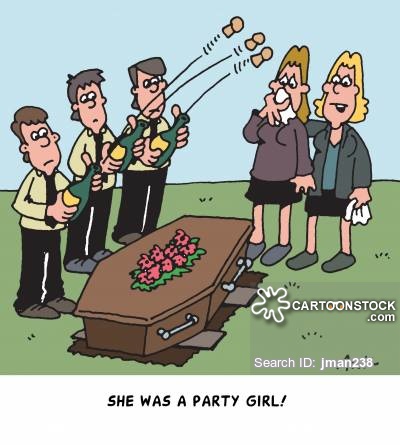
'She was a party girl!'

How to Hold a Blind Bubbly Party!

Here is a wine party theme to spark the imagination, satisfy curiosity and add a little adventure from around the world.  Plus, it fits into the spirit of New Years.

Sparkling wines are made in different styles all over the world (not just Champagne, France) and can taste radically different.  So, here is your mission (should you choose to accept it), introduce your friends to the world of sparkling wines.  Most Americans have had some exposure to bubbly wines and the typical experience is with California sparkling, and/or French Champagne.  I hosted this themed party with friends last year and it was a big hit.  Everybody loves bubbly!

Here’s how you do it.  Select one representative bottle of sparking wine from each (or less) region worldwide (see below for help).  Record the regions / styles on a blank sheet of paper and set aside. Line the bottles up on the counter and turn them around so the front labels are not visible, then place them in numbered plain paper bags.  Write the numbers with extra space on several blank sheets of paper and hand out to each party-goer.  When the tasting begins, refer everyone to the sheet with the different regions / styles and have them record their votes and comments regarding each numbered bag relating to their guesses.  When complete, expose the bottles and compare to actual.

Choosing Your Bubbly

This is a good spot to throw in a time saver… for those who are not interested in the background explaining the differences in these wines, skip this section and move down to the next – Regional Areas and Recommendations.  For those who would like to impress their guests with your wine knowledge and help you and them understand WHY these wines vary so much in taste, aroma and mouth-feel, please read on… (find an in-depth guide to sparkling wine production – HERE)

Grape Varietals

First, sparkling can be made from many different white and red grapes varieties.  Sparkling grape varieties must produce good acidity in the final product, so cool-climate varieties work best, the most common are:  Chardonnay, Pinot Noir, Pinot Muenier, Pinot Gris, Pinot Blanc, Gamay, Glera, Chenin Blanc, Muscat and Riesling.

Sparkling Styles

1 – The first step in producing sparkling wine is always the making of still wine.  All the factors that make white still wines different, applies here too.  Let’s assume we are starting the discussion at second ferment – the process that adds the bubbles. There is much more to the final production stages, but in an effort to focus on what affects the bubbles most…  There are three typical methods that affect the texture and size of the bubbles in the wine:

  • Methode Champenoise – The second ferment creates the bubbles in each bottle and the wine remains in the bottle for the entire process
  • Methode Traditionelle – Same as above, but (by law) wineries are not allowed to use the term Methode Champenoise outside of the Champagne region
  • Charmat Method – These wines are fermented in large pressurized vats
  • Transfer Method – The second ferment is in the bottle, then the wine is transferred to large pressurized vats (less common)

Suffice it to say, the first method produces much finer bubbles, but can be very expensive, especially bottle-aged Champagne.  Often, the producer will describe the process used to make the wine on the label.  Some regions ONLY make the wine one way, or the other.  Such as, Champagne must be made with the first process, while Cava is made with the second.

2 – Another primary characteristic is the sweetness and amount of residual sugar in the final product. In France, they have a naming convention for this:

  • Extra Brut, Brut – Very little to no sugar
  • Cuvee – This actually denotes a blend of grapes, but usually is more fruity and/or has some residual sugar
  • Extra Dry, or Dry-Sec – Is slightly sweeter than Brut (don’t confuse this with a “dry” red wine)
  • Demi-Sec – Is medium sweet
  • Doux – Is very sweet and can be a touch syrupy

3 – Finally, an additional factor is whether the wine is made from red-skinned, or white skinned grapes.  The French also have terms for this that are used around the world:

  • Blanc-de-Blancs – from white grapes, usually Chardonnay. Can be crisper, lighter and more acidic.  Makes great food wines.
  • Blanc-de-Noirs – from red grapes (but is a white wine – click on link for explanation), usually Pinot Noir.  Can be richer, have more complex flavors, a voluptuous mouth-feel and are usually softer.
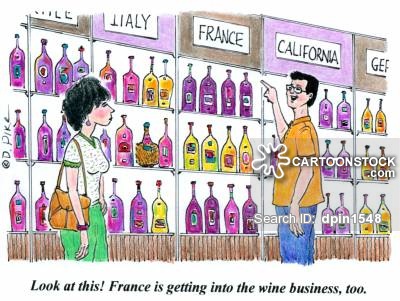
'Look at this! France is getting into the wine business, too.'

Sparkling Regions and Regional Styles

These are recommendations (best street prices noted) for selecting a very diverse group of readily available, reasonably priced wines that are sure to have your friends scratching their heads.  One “wine” will be our-ace-in-the-hole stumper… adding a surprise ending.   I will not cover Rose and Red styles, or Vintage sparkling , because the fun of this event is for people to compare similar wines with surprising differences at reasonable prices.  These wines are likely to be NV – Non-Vintage (shown on the label), but if you can find bottles with a date on the label, these can be of better quality (but not always).  You will want to select wines at price-points your guests would buy for themselves.

1. Brut Champagne

The Champagne region of France has been known for making the finest sparkling wine in the world for more than a century.  The best example of these are usually Brut style, with strong bread and/or nut flavors.  This wine is always made via the Methode Champenoise process by French law.  These wines are typically the most expensive sparkling. Try:

  • Charles Heidsieck Brut NV $50/btl, Piper Heidsieck Brut NV $40/btl, Laurent-Perrier Brut NV $35/btl.

2. Cremant de Bourgogne

These sparkling wines are made in the Burgundy region of France and can be excellent too, but are often made by brokers called “negociants“.  Quality control year over year can be an issue.  This category will be at a lower price point and often is made in a fruitier style than Champagne.  Try:

  • Louis Bouillot NV Blanc-de-Blanc, or Blanc-de-Noir $15/btl.

3. American Sparkling

This is a very diverse category with the Northern California region being the big player.  There are many producers making all styles. Quality and price can vary widely.  The well-known, quality California producers are Mumm, Roederer Estate, Schramsberg, Domaine Chandon, Domaine Carneros and Gloria Ferrer.  You could throw your guests a curve and serve good wines from lesser known places like: Gruet from Albuquerque, NM, or Laetitia from San Luis Obispo County, CA.  Try Brut, or Demi-Sec (or Cuvee) styles:

  • Mumm Cuvee “M” NV $15/btl, Schramsberg Blanc-de-Blanc NV $20/btl, Gruet Brut NV $12/btl, Roederer Estate Brut NV $18/btl.

4. Cava

Cava is made in the Penedes region in Spain.  The area is the largest volume producer of sparkling wine in the world and specializes in lower cost brands with dependable average quality.  The wines here are always made via some form of the Charmat process.  Try:

  • Segura Viudas Heredad Reserva Brut NV $18, Sumarroca Cava Reserva Brut NV $16, Anna De Codorniu Brut NV $11

5. Cremant d’Alsace

These wines are made in the Alsace region of France.  This is an interesting area producing a wide variety of styles and uses some of the lesser known varietals.  Give the sparkling made from Pinot Blanc a shot to experience a richer, full-bodied sparkling wine.  Try:

  • Hubert Meyer Cremant Brut NV $16, Pierre Spar Cremant Brut Reserve NV $16, Albert Mann Cremant NV $22

6. Cremant de Loire

These wines are produced in the Northern Loire region of France.  They are typically made from Chenin Blanc (my favorite white varietal) grapes, but can also contain Chardonnay and Cabernet Franc.  Very often, these wines are aged extensively on the lees, giving them more body and a richer flavor.  They tend to be fruitier and can be found commonly in all levels of residual sugar (sweetness).  I have a personal soft spot for Chenin Blanc.  When used in wines from Northern France and South Africa, this varietal can be both acidic and crisp, while being fruity and have a great mouth-feel. Look for the better sparkling wines in this region to be made with Methode Traditionelle.  Try:

  • François Pinon Cremant Brut NV $22, Domaine des Baumard Cremant Brut NV $20, Chateau Moncontour Cremant Sec $15

7. Deutscher Sekt

Sekt is made in Germany, typically from the Riesling grape.  The “Deutscher” means it is made from grapes that originate in Germany.  The German palate tends toward sweeter and less alcoholic wines and Sekt is no different.  The characteristics of Riesling that I enjoy, are what makes Sekt interesting:  good minerality and acidity with a “clean”, bright sweetness.  Look for “Trocken” on the label, if you prefer the less sweet version.  Try:

  • Dr. Loosen Sparkling Riesling Sekt NV $13, von Buhl Riesling Sekt Brut $21, Deinhard ‘Lila’ Riesling Sekt NV $14

8. Prosecco

There is more change going on in this region, than the others.  The wine growing areas northwest of Venice, Italy produce this style of wine.  The quality in this region has improved drastically in recent years.  Some of the least expensive sparkling wine in the world is being produced here, but the better producers are beginning to offer quality wines that can stand-up to comparison.  These wines tend to be simpler,  fruitier and are usually a touch sweet.  Almost all Prosecco is made in the Charmat Method.  Look for Valdobbiadene Superiore DOCG on the label.  These wines are likely to be of better quality.  Try:

  • La Marca Extra Dry Prosecco NV $14, Nino Franco Rustico Prosecco NV $15, Bisol Crede Brut Prosecco NV

9. Asti Spumante / Moscato d’Asti

If there was ever a cliché for cheap, sweet sparkling, this is it.  Having very inexpensive versions imported into the U.S. for decades, this wine has developed a reputation.  Asti Spumanti is made in the Asti region of Italy from the Muscat grape.  The wine is typically made with the Charmat Method.  This style of sparkling wine is my least favorite, but if you are a sweet wine person and enjoy the richness of Muscat, this wine may be for you.  Try:

  • Casa Sant’Orsola Asti Spumante NV DOCG $12, Mondoro Asti Spumante NV DOCG $12, Gancia Asti Spumante NV DOCG $12

10. Duvel Brand Belgian Golden Ale

This Belgian beer is very light and made with Methode Traditionelle.  It has very fine bubbles and has all the character of fine Champagne, but with a barley aftertaste.  It tastes and feels just enough like sparkling wine that it will stump many of your guests and provide a fun, surprise ending to the tasting.  I enjoyed the surprised remarks at our party…

Conclusion

I hope you have as much fun with this as we did.  The group I hosted had a great time.  If your guests enjoy sparkling, this will open their eyes to a world of different, affordable wines.

Best wishes for a wonderful holiday season for you and your family!
 

1 Comment

Filed under Wine Tasting

Vintage 2014 Event – A Wine and Film Pairing

VINTAGE 2014

Link:  http://vintage2014.com/

Location: The Mod – Phoenix, AZ

Event Date: Sunday, November 9, 2014

This event was underwritten by the Santa Barbara County, California producers Buttonwood Farms, Clos Pepe, Byron, Carr, Bien Nacido Vineyards and Riverbench Wineries with the film portion produced by Wil Fernandez. The cinematography was beautiful and the pieces were well edited and offered the background for these wineries from bud-break leading up to the 2014 Harvest. The story was told through the eyes of the Winemakers, Vineyard Managers, Winery Managers and Owners. Wines from several of the wineries covered in the film were tasted at the showing.

Wil captured visually the story I have been trying to tell for some time now… (see recent post: https://coolclimatewine.wordpress.com/2014/11/07/terroir-controversy/).

Estate wineries are very aware of Terroir influences and the winemakers tend to be connected closely to each individual growing season and vintage. This connection is most often just the simple enjoyment of working in and among the vineyards. These people are down-to-earth and talk of their passion for the horticulture and viticulture associated with nurturing the vines. It is the marketing hype and food service functions that add the high-brow approach to the wine experience. If you enjoy the culture of wine, I would highly recommend attending one of these events to visually capture the winegrowing experience! If you contact Wil, I am sure he can provide information regarding future showings.

You can reach the film maker Wil at: me@wilfernandez.com.

FLIGHT 1 – WHITE WINES (2 NOTES)

 Nice SB and Chard. This area makes some of the best quality value whites in CA.
  • 2012 Buttonwood Sauvignon Blanc

    USA, California, Central Coast, Santa Ynez Valley

    93% Sauv Blanc and 7% Semillon. The Semillon is fermented in S.S. and then barrel-aged. The Sauv Blanc is fermented and aged in S.S. Aged on the lees according to winery manager in attendance.

    Typical better quality California SB. Grass and citrus on the nose. Solid acidity would contribute to a great pairing with seafood, or salad. The palate is full of lemon and grapefruit, with a touch of butter on the finish. Crisp texture, but with a slightly bigger mouth-feel from the lees.

  • 2013 Riverbench Vineyard & Winery Chardonnay Bedrock Riverbench Vineyard

    USA, California, Central Coast, Santa Maria Valley

    100% S.S. and aged on the lees according to winery manager in attendance.

    Strong lemon on the nose. Palate of lemon curd with a noticeable finish of banana. Interesting salinity from beginning to end. Strong acidity. The lees soften the crisp mouth-feel somewhat. Good complexity here, if that is your style. I enjoyed this wine.

FLIGHT 2 – PINOT NOIR (2 NOTES)

Disappointed with the Pinot showing here. These producers either were not tasting their better products, or have not jumped onboard with the idea of Terroir influenced wines.

  • 2012 Byron Pinot Noir

    USA, California, Central Coast, Santa Barbara County

    Brown butter and butterscotch on the nose. Light, watery soft texture. Very simple on the attack. Palate is mostly black, with some red cherry, and butterscotch, but is very subtle and barely fruit forward. Mid-palate has some dark chocolate with virtually no finish. Overly manipulated Pinot Noir, that fortunately has been made not to overwhelm. Difficult to get past the heavy toasted oak.

  • 2010 Bien Nacido Vineyards Pinot Noir Santa Maria Valley

    USA, California, Central Coast, Santa Maria Valley

    Bright red cherry on the nose. Initially peppery on the palate, with a sweet red cherry mid-palate and virtually no finish. With all the sweet red cherry, this wine could have been better focusing on a crisp, fresh quality. Drinkable, but doesn’t quite come together.

FLIGHT 3 – RED WINE (2 NOTES)

Carr makes a few of the better vineyard designate Syrahs in Santa Barbara County, but this one didn’t have the mojo. The Cab Franc… now, that was some great stuff and a good value too!

  • 2012 Carr Vineyards & Winery Syrah

    USA, California, Central Coast, Santa Barbara County

    Weak nose. The palate is fruit-forward with boysenberry, red cherry and sweet raspberry with a buttery finish. Medium-high acidity. Watery mouth-feel. Medium tannins. Very simple profile. Carr produces some wonderful single vineyard Syrahs, but this missed the mark.

  • 2011 Carr Vineyards & Winery Cabernet Franc Camp Four Vineyard

    USA, California, Central Coast, Santa Ynez Valley

    Nothing like a wine with a floral nose… Nose full of violets, red plum and black pepper. Silky soft mouth-feel. Medium tannins and medium-high acidity. Palate of plum, blackberry and spice with a medium-long dark chocolate finish. Carr makes very enjoyable, reasonably priced, drink-now Cabernet Franc. Enjoy!

Comments Off on Vintage 2014 Event – A Wine and Film Pairing

Filed under Cool Climate Wine, Santa Barbara County, U.S. Wines by Region, Wine Industry, Wine Tasting, Wine Tasting Notes

Terroir Controversy

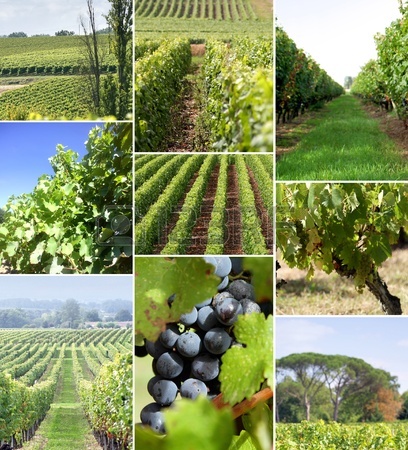
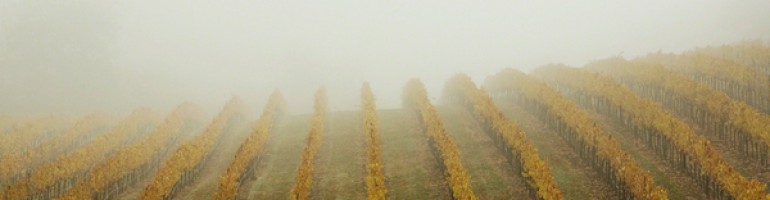
images-of-a-vineyard

Terroir – Webster Dictionary Definition:

“The combination of factors including soil, climate, and sunlight that gives wine grapes their distinctive character.”

What a simplistic explanation!  Does “soil” include proper drainage, or the angle of the grade?  Does “climate” include the daily temperature variation?  Does “sunlight” include the degree of latitude?  All of this and much more make up the definition of Terroir.  I can think of other related factors: the altitude of the vineyard, are the vineyards terraced, is the vineyard in full sunlight, or shaded at times, etc…

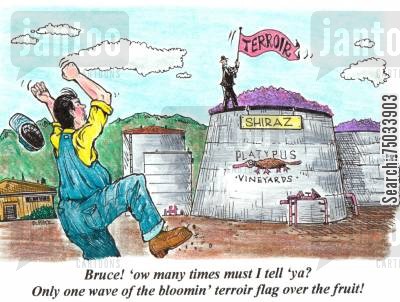
'Bruce! 'ow many times must I tell 'ya? Only one wave of the bloomin' terroir flag over the fruit!'

Is Terroir a Real Concept?

“Terroir” has been one of the most misunderstood and controversial concepts in the wine industry, since vineyards began popping up all over the New World.  It has been a critical part of the tradition of European winemaking from it’s very beginnings.  European wines have always been more about “Place”, than Varietal.  New World skeptics continually site the lack of scientific data that supports the chemical impact of soil composition on flavors developed in wine grapes… completely absurd! Whether, or not the chemistry supports it, your palate can taste it.  Most contrary opinions point to the soil component, when Terroir is actually so much more.  Soil is just a small piece of the vineyard conditions that impact the character of wine.

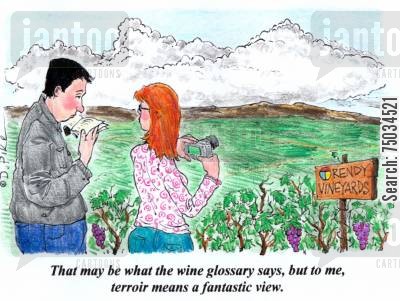
'That may be what the wine glossary says, but to me, terroir means a fantatic view.'

A Personal Connection to Terroir

I usually recall most wines by either vineyard, or winery location, or the underlying experience, rather than the flavor.  I prefer wines aged in neutral oak, rather than new oak, so the fruit can express itself fully.  When I taste acidity, I see morning fog in the vineyards.  When I taste savory flavors, I think cooler climate.  When I taste concentration, I think small berries and making the vines work hard to ripen…  There is more to the impact of Terroir, than just added minerality.  Sometimes, when I sit alone enjoying a well made wine, I try to visualize the vineyard from the character of the wine.  Focusing on “Place” can truly enhance your enjoyment of wine, if you embrace the idea.

Why Does Terroir Matter?

UC – Davis has added so much to the world of wine in the last decade and it is exactly that influence that has swung the pendulum too far.  A scientific approach to wine can foster a dependence on chemistry alone in making decisions impacting the final product.  I have been looking at this issue for many years now and have come to the conclusion:  the making of wine is definitely equal parts science and art.  Two prominent winemakers I interviewed this year (Kathleen Inman and Todd Anderson) embrace this kind of thinking.  Their ideas are interesting and worth sharing, because they focus winemaking on the result (not the process).  This winemaking strategy requires starting with a vision, even before bud-break.  In my experience, this alternative view is more likely to produce balanced and structured wines with a textural component. That last piece is too often missing from wines today.

So, where does this topic fit into the idea of Terroir?  Very simple… a poor understanding of the fruit and its influences will cause poor winemaking decisions.  Winemakers cannot express the art in their craft, without an understanding of the Terroir that has produced the fruit.  I will take this even one step further… Terroir is not a fixed concept.  Vintage variation from year-over-year of climate change can influence the sense of “Place” that wine brings.  If these ideas are starting to connect, you will realize vintage variation is NOT such a bad thing.  It just ties you closer to “Place”.  When a winemaker works with climate variation (instead of fighting it), some years the wines are silky instead of velvetty, lighter instead of heavier bodied, or have soft instead of chewy tannins.  Personally, I enjoy most wine styles and can really appreciate that diversity, often coming from the same vineyard each year.

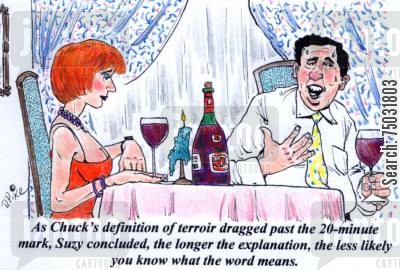
'As Chuck's definition of terroir dragged past the 20-minute mark, Suzy concluded, the longer the explanation, the less likely you know what the word means.'

Are We All Tired of This Discussion?

Everyone associated with wine in any way has probably had this discussion at one time, or another… and is probably tired of the topic.  Please don’t lose your patience, it is much more important than you may realize.  It could even hold the key to introducing an appreciation of premium wines to the average consumer.  If my introduction to wine was any indication, I was appreciating Terroir long before I even knew the word.  I enjoyed wine country vacations for many years, before I understood what I was drinking.

Humor me for a second… visualize:

  • sitting in a rocking chair at sunset
  • on a porch overlooking row upon row of vineyard
  • enjoying a glass of wine

It just sort of warms the soul!  I think there are more consumers that would connect with this experience than the industry realizes.

Now stop and ask yourself:  

  • Did you choose a location for that view?
  • Did a specific wine, or style come to mind?

Wine can enrich life, but you must choose the path and open your mind… a few other people through history agree with me:


“If you have to ask if it’s too early to drink wine, you’re an amateur and we can’t be friends.” – Anonymous

  • I will have to use this one next time I visit Napa…

“Good company, good wine, good welcome, can make good people.” – Shakespeare

“Wine is more than a beverage, it’s a lifestyle.” – Anonymous

“Wine to me is passion. It’s family and friends. It’s warmth of heart and generosity of spirit. Wine is art. It’s culture. It is the essence of civilization and the art of living.” – Robert Mondavi

  • This is a great quote. He was able to put into words the affect wine had on his life.

“Great wine requires a madman to grow the vine, a wise man to watch over it, a lucid poet to make it, and a lover to drink it.” – Salvador Dali

“Wine is sure proof that God loves us and wants us to be happy.” – Benjamin Franklin

1 Comment

Filed under Wine Education, Wine Industry, Wine Tasting, Wine Travel

Wine Marketing – The Gap Between Europe and the U.S.

Am-Fr

Can European Wine Producers Access the Mainstream U.S. Market?

I have two acquaintances from Europe on a work visa here in the States.  It is always interesting to hear their perspective on wine.  They view wine very differently than the majority of my U.S. friends.  When I am looking for someone to explore and appreciate the complexities of Northern Rhone, or Burgundy with me…  it is rarely my U.S. friends.  Decades of high Robert Parker scores have been driving demand for high alcohol, big oak and rich mouth-feel and have skewed the high-dollar U.S. Cabernet market towards palates that have been trained to demand it.  I know, because that was mine back in the day.  It’s all good though.  I have come to enjoy both the big & bold and lighter complex styles.  Although I must say, the wines that fill that special place for me are often the more balanced lighter wines of Italian origin.  With such major differences in style preference between here and there, can a wine executive from Europe having grown up with a different wine sensibility…  truly understand the American consumer?

Many Europeans Experience Wine as an Accompaniment to Food

Until 2010, I primarily drank wine before, or after a meal, but rarely with. Based on my friends, acquaintances and wine education events, this is the primary wine experience for the majority of Americans.  It wasn’t until my Sommelier training that I was introduced to the idea of wine as an accompaniment to food.  Too many U.S. consumers evaluate wines and make buy decisions based on tasting without paired food.  I don’t believe this is well understood by wine industry executives in Europe. The popularity of the big fruit-forward taste profile in the U.S. is a good barometer for this discussion.

Is There an Assumption of Basic Wine Knowledge?

There are a few points to make on this topic. Wine is a common fixture on most French, Italian and Spanish dinner tables, consequently children are exposed to wine at a very early age.  This leads to basic wine knowledge being assumed by many Europeans.  In addition, branding regional food and wine by city, or area name is well understood there. In the U.S., this is a confusing and foreign concept. Until another approach to marketing is developed, the under $50/btl. retail wine market here will continue to be an elusive target for European producers.

Many Europeans might cringe at the idea that the most popular food dish in America is probably boxed mac & cheese.  The foodie movement is a relatively new trend here.  Working with consumers in the U.S. means starting with people from the ground up and building demand with little steps.

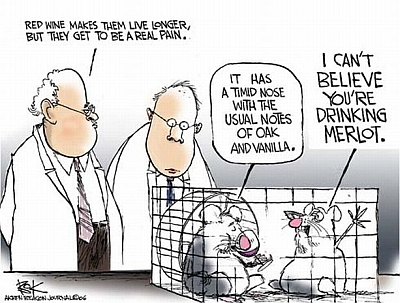
Red Wine Health Benefits Comic

Are European Producers Targeting Only U.S. Collectors and Connoisseurs?

Importing marketing, or sales professionals from Europe is a thoroughly misguided idea… unless you are trying to target the 5% of the total market (by volume) that are the collectors and connoisseurs. I have had only a few experiences with Europeans in a sales role for wineries in the U.S.  They have all been French and were the singular worst experiences I have had during all my wine trips to California over the years.

Changing the American Wine Paradigm

The challenge in the American market is convincing the average consumer that wine is not just for special occasions and holidays… or… is not just a glass on tap (yes, most winebars are now serving on tap) with friends before, or after dinner.

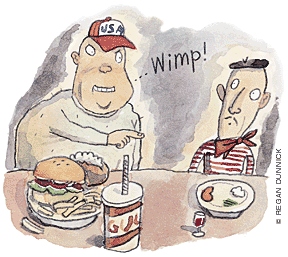
Wine Wimp

Conclusion

The more I talk to people in wine marketing in the U.S., the more I realize how misguided many are… and how absolutely correct the winemakers usually are… winemakers and vineyard managers are just farmers at heart.  It is this wine for the “regular Joe” story that resonates with the average American Consumer. If wine is to gain greater market share here, it should be experienced as relaxed and fun, with no rules. Put together an effective explanation of why focusing on wine can make life richer… and there you have a marketing campaign that will have an impact in the U.S.

Comments Off on Wine Marketing – The Gap Between Europe and the U.S.

Filed under Business, Food Pairing, Wine Industry

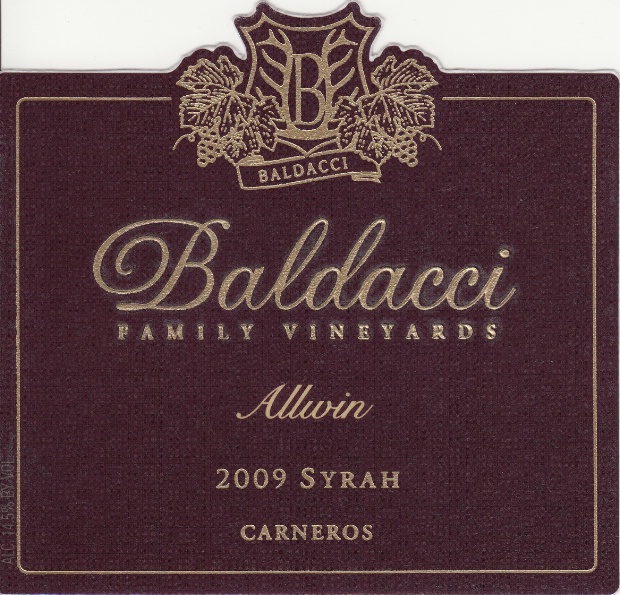
2009 Baldacci Family Vineyards Syrah Allwin

254280

Baldacci Family Vineyards Syrah Allwin

California, Napa Valley, Carneros

Wine Tasting Note:

A beautiful aged Syrah. Dinrk now… this is smack in the middle of its drinking window. The nose is full of rich plum and blackberry fruit with a woody, creme brulee note. On pop and pour all you get is cashmere in the mouth. What wonderful texture! The wine is initially closed. After a 30 min. decant – the plum and blackberry becomes persistent and in front. The mid-palate is full of oak, rich brown butter and spicy clove with a medium-long dark chocolate finish. The tannins are partially resolved and medium. The acidity is medium-high producing a nice backbone. The alcohol is well integrated. An extremely balanced wine! The richness and smooth texture of this wine will only pair well with the richest foods. Falls a little flat on the finish, but I can forgive… On its own, it is an after-dinner crowd-pleaser that your guests will likely not forget. A cool-climate Carneros Syrah lives up to its potential again!

Comments Off on 2009 Baldacci Family Vineyards Syrah Allwin

Filed under Carneros, Cool Climate Wine, Napa Valley, Syrah/Shiraz, U.S. Wines by Region, Wine Tasting, Wine Tasting Notes

Winemaker Interview – Todd Anderson of Anderson’s Conn Valley Vineyards (ACVV)

Please follow my winemaker interview series! You can find this interview at the following link:


http://winemakerinterviewseries.net/2014/10/15/winemaker-interview-todd-anderson-of-andersons-conn-valley-vineyards-acvv/

Comments Off on Winemaker Interview – Todd Anderson of Anderson’s Conn Valley Vineyards (ACVV)

Filed under Cabernet Sauvignon, Napa Valley, U.S. Wines by Region, Wine by Varietal, Wine Industry, Wine Tasting, Wine Tasting Notes, Winemaker Interview

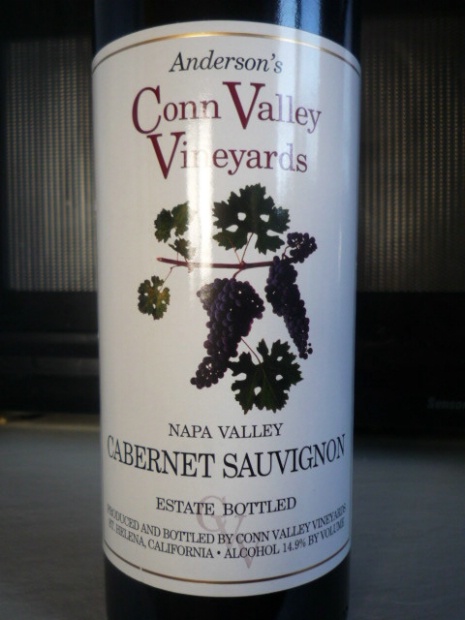
2007 Anderson’s Conn Valley Vineyards Cabernet Sauvignon

Conn 160043

Anderson’s Conn Valley Vineyards Cabernet Sauvignon

California, Napa Valley

Wine Tasting Note:

Drank over a four hour decant. Nose after pour is full of menthol and alcohol that almost masks the other more subtle notes of black plum and currant with tobacco. The acidity is very high… a definite food wine, needing red meat, or ribs. The texture fills the mouth with chewy tannins that are soft, but a touch rustic. This wine needs time to decant. After an hour decant, still shows big alcohol and menthol – overpowering the cherry and raspberry peaking through. After three hours, the alcohol has blown off and subtler notes appear. The fruit has moved forward and the plum and currant are now dominating. The menthol is now a subtle after-taste. The mid-palate has tobacco, oak and vanilla moving to a dark chocolate finish that turns a touch bitter and lasts forever… This is a premium Napa Cabernet showing its chops. For those that love the Napa Cab experience, this is an excellent example of one of the best. Another year, or two in the bottle and this wine will be ready to drink. Suggested optimum drinking window: 2016-2018.

Comments Off on 2007 Anderson’s Conn Valley Vineyards Cabernet Sauvignon

Filed under Cabernet Sauvignon, Napa Valley, U.S. Wines by Region, Wine Tasting

Winemaker Interview – Kathleen Inman of Inman Family Wines

Please follow my winemaker interview series! You can find this interview at the following link:

http://winemakerinterviewseries.net/2014/08/20/winemaker-interview-kathleen-inman-of-inman-family-wines/


Comments Off on Winemaker Interview – Kathleen Inman of Inman Family Wines

Filed under Wine Tasting, Winemaker Interview