Tag Archives: fine wine

Chasing Napa Cult Status

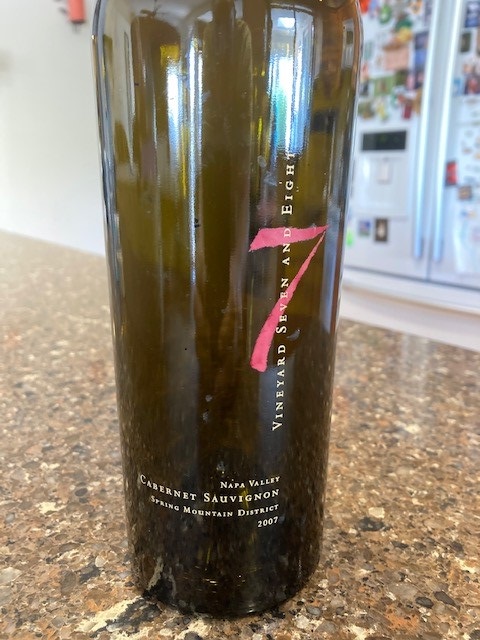
Producer: Vineyard 7 & 8

Release: “7” Label

Varietal: Cabernet Sauvignon

Appelation: Spring Mountain AVA, Sub-Appelation of Napa AVA, California

Vintage: 2007

Score: 91 pts. – 100 pt. Scale, 16 pts. – 20 pt. Scale

Provenance: Buyer Cellared Original Purchase

Bewitched, Bothered and Bewildered

I am always conflicted when judging these premium Napa cabs made to chase after a “cult” profile. So many American wine enthusiasts enjoy this style of wine, that I feel as if I am not being fair in my evaluation. If you have tasted Caymus, or Silver Oak, you have been introduced to the lower price point for this New World style of wine that can run upwards of $1,000/btl (Harlan Estate for example). These super fruity, high alcohol, smooth drinking red wines often struggle to get past the downside of over-ripe harvesting and winemaker manipulation. At the higher price-points, sometimes the producer succeeds, but more often not. If you would like to taste the premium Old World opposite, you could try Sassicaia from Bolgheri, Italy ($200/btl), or Pontet Canet from Bordeaux, France ($150/btl). I am not a big fan of the Napa new oak (vs. neutral oak) dominated wines. The richness in the fruit and texture is often achieved at the expense of the freshness of the fruit. My favorite vintages of these labels are the cooler ones, like 2011. The cooler vintages tend to either tone down the over-the-top profile, or they are unpleasant (like 2011 Shafer cab). It is bewildering for me, why so many hold this style of wine in such high esteem. I much prefer a clean, fresh, light to medium weight, under-manipulated Bordeaux-style wine over these any day. These labels often taste like the wine equivalent of a fruity rum cocktail to me.

Tasting Note

Your impression of this wine will be very dependent on whether you have an Old World, or New World palate. The 7&8 estate vineyards are located at the highest point on Spring Mtn., but this wine doesn’t drink like a typical mountain fruit cab. The Pride Mountain vineyards are right next store, but proximity is where the similarity ends. If you enjoy this approach to winemaking, this bottle would probably merit a mid-90s score. The nose is full of alcohol, with little else. The fruit does not taste fresh and the new oak did not integrate well. This wine is still very fruit forward after 14 years aging in the bottle, with black currant, blackberry and black plum on the palate. The profile is fairly simple tho. Only a touch of dark chocolate on the mid-palate adds complexity. The wine has medium+ acidity and medium- tannin. The tannin has mostly resolved at this point and the wine is very smooth. The finish is medium length and tapers off leaving alcohol as the last impression. There is no noticeable residual sugar. This style of wine is off balance for me, with a texture and richness that approaches a stewed fruit profile. I can acknowledge that many wine enthusiasts will enjoy this wine, but in Napa, I much prefer aged Pride, or O’Shaughnessy mountain cabs instead. This has enough acidity to pair well with rich foods, but tended to overwhelm the steak my wife and I paired it with.
Comments Off on Chasing Napa Cult Status

Filed under Bordeaux/Meritage Blend, Napa Valley, Spring Mountain, U.S. Wines by Region, Wine by Varietal, Wine Collecting, Wine Industry, Wine Tasting, Wine Tasting Notes

2007 Giacomo Grimaldi Barolo

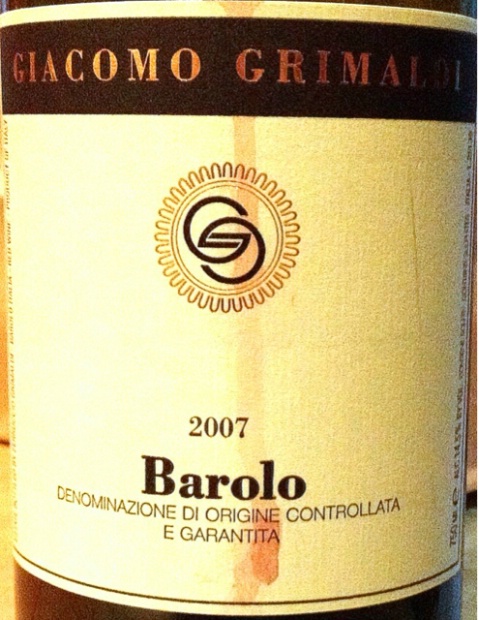
Producer: Giacomo Grimaldi

Varietal: Nebbiolo

Appelation: Barolo, Sub-Appelation of Piedmonte – Langhe, Italy

Vintage: 2007

Score: 92 pts. – 100 pt. Scale, 17 pts. – 20 pt. Scale

Provenance: Buyer Cellared Original Purchase

Tasting Note:

This is/was an Old World style Barolo. There are certain wine styles that are produced for extended bottle aging and Barolo leads this category. Don’t expect to purchase a classic Barolo and drink it in less than 10 yrs. I know for some this might sound bizarre, but nevertheless, it is the reality for this style of wine. This was not originally an overly expensive Barolo ($33/btl in 2011), so it was fun to see how this held-up. If you are thinking 14 years is a long time to wait for an experiment, I agree… but these are the kind of purchases that are the most satisfying… when they succeed. As a wine collector, I have developed my palate just for opportunities like this.

The drinking window for a traditional Barolo is usually 10-20 yrs from purchase. I popped this first bottle last night at 14 years and I enjoyed it very much, but for some, the tannin might still be too much. IMO, this wine is drinking really well right now, but another 3-5 years of bottle age and this Barolo will be positively singing. Decanted for an hour. Nose is very closed for a Barolo, just some alcohol, tar and red fruit. The palate is raspberry, black cherry and red plum, tar and a touch of wood. The fruit is really holding up nicely as the wine ages. Structure is superb: high acid with medium+ tannin. I enjoyed the mouthfeel. Tannin is integrated, but mouth-filling, rather than drying. It is missing the Barolo signature floral nose/palate and could use more complexity to add interest. The finish was lengthy with a touch of dark chocolate bitterness and tar to round it out. This is enjoyable to drink on its own, but especially with rich foods (red meats/red sauces), the high acidity will pair well.

Evaluation

This was a solid Classic Barolo and a real value (in retrospect). It was not in the top 3rd of Barolos I have tasted at any price, BUT it had truly classic Barolo flavors, was well made, held-up to bottle aging very well and is continuing to evolve. It could have had more complexity, but then again, it was not priced at the more typical $50-100/btl. I am impressed with what this producer achieved at this price.

Comments Off on 2007 Giacomo Grimaldi Barolo

Filed under Barolo, Cool Climate Wine, Nebbiolo, Piedmonte, Wine by Varietal, Wine Collecting, Wine Education, Wine Tasting, Wine Tasting Notes

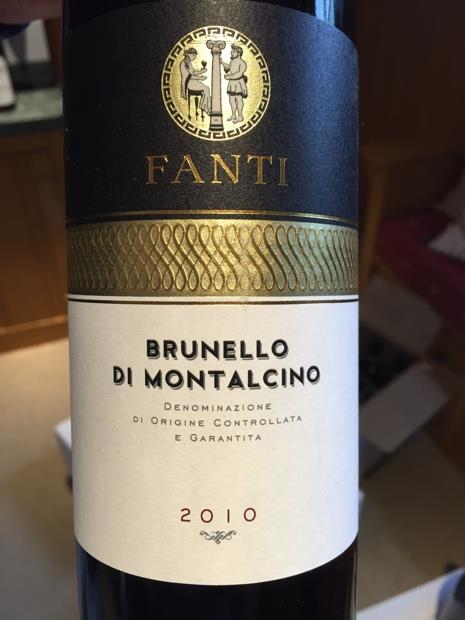
2010 Fanti Brunello di Montalcino

Producer: Tenuta Fanti (previously Fanti San Felippo)

Appelation: Brunello di Montalcino

Varietal: Brunello (clone of Sangiovese)

Vintage: 2010

Score: 94/100 – 100 pt scale, 18/20 – 20 pt scale

Tasting Note:

OK, we know Brunello IS Sangiovese, but wow, is it different. Not the flavors, but the texture, mouthfeel, tannin and finish.

Nose is full of alcohol, but you can make out the red/black cherry, leather and earth. Upon open, the alcohol is integrated and the palate is full of red and black cherry, this transitions to black plum as it continues to open. Mid-palate of leather and a bit of dark chocolate. A long finish that adds a herbal mint character. Tannins and acidity are high, even after 11 years in the bottle, but are somewhat muted and softening. Another 3-5 years and this wine will be exceptional. The tannin is finely textured and presenting a wonderful mouthfeel, not really silky… yet. The clarity and freshness of fruit is spectacular. This wine is clearly Old World Italian, a little lighter in weight and would be great either on its own, or accompanying a red sauce, or red meat entree. This Brunello is aging really well. I am looking forward to popping the next bottle in three years…

Comments Off on 2010 Fanti Brunello di Montalcino

Filed under Brunello, Italian Wine, Sangiovese, Wine Collecting, Wine Tasting, Wine Tasting Notes

Restaurant Service – The Importance of Upselling Beverage

Borrowed this graphic from a restaurant software site. Hope they don’t mind.

Non-chain restaurants are often family affairs and frequently – even with the best food – are the least profitable, poorest run category of business in the U.S. Why should you care? The strategic profitability of a restaurant can be a key indicator of the quality of the dining experience, not just the success of ownership. As a consumer, if you look for these ideas in action, you will find your favorite spots without much effort.

What to Look For (restaurant owners are you listening?)

Does the restaurant/bar have a beverage specialty: craft cocktails, fine whiskies, different styles of beer, quality/value wine list? If you don’t enjoy alcoholic beverages, you can stop reading now. If you do, stick with me here…

If beverage sales is not at least 1/3 of a sit-down restaurant’s sales, you can bet they won’t be in business long. In training for restaurant financial management, 50% of revenue is the recommendation. If there is one thing I am sure of, the best loyalty builder is a successful beverage program. Where I see the serious consumer passion coming from is – their preferred beverage category: whisky, wine, beer, and/or craft cocktails. Yes, the investment can be sizable, but can a restaurant afford not to?

A Successful Beverage Program

It is irrelevant which category(ies) are chosen, the clientele will eventually find the restaurant, with a minimum of invested marketing dollars.

Onwership/Management

Training, Training, Training… employees who find their passion in the category should be identified and have them lead staff. ALL servers should be trained to have some familiarity with the beverage specialty of the house. Encourage passionate clients with knowledge of the category and have staff funnel them back to the lead. Inventory choices have to be smart for this category of clientele. Find both brands/labels popularly known AND uncommon brands consumers can explore. Inventory should be strategic, with a good/better/best approach and there should be at least a few value items in each quality category. Local alcohol distribution laws should be investigated and multiple sources should be used, if possible: winery/brewery direct, distributor, auctions, overstock re-sellers and local producers. Each state usually has more than one type of alcohol resale license. Most – except the 100% liquor license (bar) – are more reasonable in cost. Licensing options may open purchasing to more channels, provide more buying power and selection. Unfortunately in my state for example, by law, restaurants & bars have very few choices.

Consumers

Take a minute to look for these services and specialty inventories. Ask about their availability. Notice the difference, when you find it. Praise the positive and provide constructive feedback on the negative. It is in your best interest. In some ways, your involvement can be a key to the success of your favorite spot. AND… most importantly, vote with your dollars. Try to limit your entertainment budget to the businesses that provide this kind of experience. My wife and I do.

Food Menu

Main course food is a very low-profit sales category for sit-down restaurants. Without volume, focusing on this is not a winning business model. As a consumer, who wants to join the herd? From the food category – starters, appetizers, sides and desserts can drive profits AND seriously enrich the customer food experience. Look for super yummy looking and creative menu items here. It is evidence of a well-run restaurant, a smart chef and the beginning of a great dining experience. A chef has much more lee-way to be really creative with these items, without breaking the bank on cost and can add experimental flavors that might not be acceptable to a portion of their clientele. On the staff side, owners need to find foodies for servers and have the chef train them to recommend flavors and pairings, not just dishes. Servers need to upsell the appetizers, sides and desserts. If you have ever had a server suggest specific menu items due to the flavors… it can really add to the dining experience, especially if you enjoy pairing food flavors with beverages.

Comments Off on Restaurant Service – The Importance of Upselling Beverage

Filed under Business, Fine Dining, Food Pairing, Restaurant

Judging-Scoring Wines

Risky Business

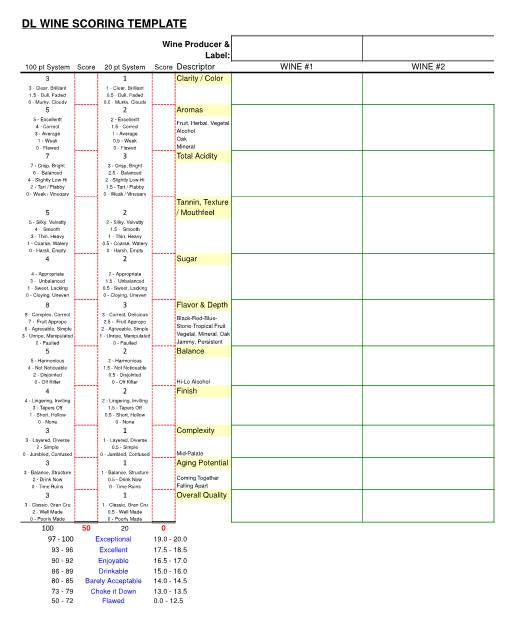
At the risk of upsetting every wine critic/judge out there, I set out to create a wine scoring system that matched my view of fine wine. I will include this scoring template at the end of the article, for those that might be like-minded. Email me if you would like a self-calculating spreadsheet copy.

My Motivation

After pro Sommelier training (where scoring was discouraged), I was exposed to the WSET scoring method and wine judging courses. Both used a variation of the UC Davis 20 Point Scoring System. I was shocked how these systems were unable to separate amateur from premium wines effectively. In these classes, we scored fruit wines (cherry, blueberry, strawberry, etc.) and vitis labrusca wines (Concord, Chambourcin, Catawba, etc.). These wines were near undrinkable for me and were being given the same scores as mediocre Cali Cabernet. The methodology and scoring systems taught in these classes were intended to be appropriate for both amateur and fine wines. Although, away from class these same people would explain the intent of these systems was to score wines based on a comparison of LIKE wines. This is not how I understood the training and it is likely the public views this scoring similarly. This experience motivated me to build a scoring system that is weighted properly and could be used to provide comparatively accurate scores for amateur, professional AND fine wines, without a bias.

The Evaluation Criteria

First, it was necessary to determine what separates fine wine, from other wines. In that evaluation, I arrived at the following characteristics that are under-represented in the UC Davis System: Balance, Complexity, Finish and Aging Potential. All of these measures are intended to be scored in the UC Davis “Quality” category, but to make the scores more comparatively accurate, I decided these characteristics needed their own point categories. I then looked at what seemed to be weighted incorrectly in the UC Davis System and arrived at: Clarity, Color and Acidity. Four of twenty points for clarity and color is 20% of the score. This is weighted too heavily towards mediocre wines. Acidity was only 5% of the score – not weighted heavily enough. I realized, if I reduced the points for clarity and color, increased points for acidity and added balance, complexity, finish and aging potential categories… I might be able to devise a scoring system that could properly measure a Concord wine (for example) and build an appropriate score against say… an aged Bordeaux Gran Cru.

A Wine Scoring Template

Now I was ready to put my scoring template together. I realized that many media outlets still use the old Robert Parker 100 pt system and decided to add it to my template. I wanted to help both systems arrive at a roughly equivalent score. I realized this could only be done, if I started the 100 pt score at 50, instead of 0. You will see what I mean below. The closer the wine came to the premium category, the better my 100 pt method seemed to arrive at an accurate score. It was the opposite with my 20 pt method, albeit much closer to reality than the UC Davis 20 pt method.

After the long explanation, here is my effort to build a scoring system that can evaluate both a poor blueberry wine and a Gran Cru Bordeaux – with the same template – done accurately and with a logical systematic approach.

In the past, my Somm training won out and I tried not to add scores to my tasting notes. In retrospect, I think this was mostly due to being uncomfortable with the systems available. I intend to use my scoring template moving forward and hopefully develop consistency and comparative accuracy across my tasting notes.

Feedback

I would be very interested in other opinions regarding both the thinking that drove this creative process AND the relative accuracy using this scoring system. I am also open to modifying aspects, if the changes fit within the logic model used to build it. Please feel free to leave your comments on this page. Thanks!

Comments Off on Judging-Scoring Wines

Filed under Wine Critics, Wine Education, Wine Industry, Wine Marketing, Wine Tasting, Wine Tasting Notes

Wine Additives

This is an important topic and a good article from the “A Matter of Taste” site on the topic. If you are a wine enthusiast, it might be something to consider for future purchases. If you are interested, use the link to access the website here:

Link to Article on Wine Additives

European Wines vs. U.S.

This issue highlights the local AVA, DOCG, AOC (etc.) regulations/laws. Some of the typical U.S. additives are not permitted in much of Europe: chaptalization, acidifying and fining agents, etc. The chemical additives category may be an even more important topic of discussion. I have found generally, I NEVER get headaches from French/Italian fine wines. Hit or miss with U.S. product.

What is your experience? Do you think it could be additives? If so, the only option to change this, is speak with your dollars. When visiting tasting rooms and talking to retailers, ask about additives. If you can’t obtain the info, consider that in your buying decision. I am a huge proponent of listing ingredients on wine labels. If you just can’t part from your faves, consider one of the several wine filtering utensils available in the aftermarket… but consider these too. Could they be using chemical agents to filter the wine? Happy wine hunting!

Comments Off on Wine Additives

Filed under Wine Education, Wine Industry

Scoring and Rating Restaurants

The Need for a Methodology

I have spent the last ten years scoring thousands of wines. I am also a serious Foodie, but as a trained Somm, I have looked at that experience through the lens of wine pairing. My wine training courses and evaluation took place at The Art Institute in conjunction with a chef training program, so I have always viewed the two pieces of food and beverage service as a whole. My perspective has broadened since visiting Italy and being exposed to the Slow Foods culinary movement. Recently, I decided to begin including fine dining in my evaluation, as I realized… it is rare for me to enjoy a bottle of wine apart from food. After starting the journey down this path I realized, if I am going to start evaluating food/food service, I needed to apply a methodology (like the 20 pt. UC Davis wine scoring system) to be fair and score with consistency. I went looking and found Department of Health score cards and forms for evaluating internal restaurant processes, but could not find consumer judging, or scoring sheets. If anyone reading this knows of a restaurant scoring template, please share…

Developing a Restaurant Scoring Method

I had to build a list of the factors that had the biggest impact on my dining experience and arrived at the following categories: location, ambiance, cleanliness, server disposition, timeliness of service, menu selection, flavors, balanced/complimentary composition, fresh/light/heavy food character, properly seasoned food and overall quality. I would hope this list is similar for you Foodies out there? Then, I had to select a scale and weight the individual categories. I used the wine scoring systems as a guideline and realized the UC Davis 20 pt. system was too compressed and I needed a 100 pt. system to properly judge the restaurant experience. This is my view of how to weight these categories: Location – 4/100, Ambiance – 8/100, Cleanliness – 8/100, Servers – 16/100, Service – 8/100, Menu – 12/100, Flavors – 16/100, Balance – 8/100, Fresh/Greasy – 4/100, Seasoning – 8/100, Overall Quality – 8/100. Cleanliness should probably be weighted more like 50/100, but that approach would favor mediocre establishments, so I made a compromise. I built common descriptors into each category and loaded this all into a spreadsheet template.

Dining Expense Categories

Then… I realized, not everyone wants to spend $50/pp on a meal, so I went about building a price scale. Scoring info was all over the web on this issue, but I did make a few personal decisions, to base the price categories on: a TWO course meal, include the cost of tax (5%), tip (15%) and exclude beverage and dessert. I concluded, not everyone is eating dessert today and it made sense to throw in an average tax/tip amount to provide a full price picture.

Scoring vs. Rating

It then occurred to me, it was important in fine dining evaluation to have both a scoring system AND a rating system. So, I developed a separate rating system incorporating the scoring system described above (see below). Here is my effort to complete comprehensive rating charts:

Wine

97 – 100Exceptional
92 – 96Excellent
89 – 91Enjoyable
85 – 88Passable
80 – 84Barely Acceptable
74 – 79Choke it Down
50 – 73Flawed

Restaurant / Food

97 – 100Exceptional3 Star Equivalent
92 – 96Excellent2 Star Equivalent
88 – 91Enjoyable1 Star Equivalent
82 – 87PassableDiner Quality
77 – 81Barely AcceptablePoor Diner Quality
72 – 76DumpDive
50 – 71Should CloseNuf Said
Does not include fast food, or take-out restaurants. Sit down only.
$$20 and under
$$$20 to $30
$$$$30 – $50
$$$$$50 and over
The dollar signs represent cost of a two-course dinner/pp, taxes and a 15% tip (no drinks or dessert).

I hope you found my process of some interest. I enjoyed putting this system together and will be using it religiously moving forward. Let me know if you have a different viewpoint on this topic, think I should be tweaking a few areas, or believe I am totally out of my mind (entirely possible).

BON APPETIT!

Comments Off on Scoring and Rating Restaurants

Filed under Fine Dining, Restaurant, Restaurant Review

Wine Dinner Review

Restaurant Review

Tisha’s Fine Dining (BYO) – Cape May, NJ

Score: 94/100 – $$$$ (see rating guides below)

Meal: Arugula salad with Burrata cheese and red Beets, Pepper crusted Prime Filet medium rare with mash potatoes, green beans and fried onion strings. The shared desert was profiteroles layered with vanilla ice cream and topped with chocolate sauce.

Wine Pairing: Stags’ Leap 2017 Petit Sirah Napa Valley – Score: 94/100. Wine paired well with Dish: Yes.

Stag’s Leap 2017 Cabernet Sauvignon Napa Valley – Score: 91/100. Wine paired well with Dish: Yes.

My wife grew up in Cape May on the Jersey Shore and her family has owned a beach house there for a couple of generations. She visits for a week, or two, in the Summer every year and I usually join her. We always make sure to arrange our reservation for Tisha’s and it is always the culinary highlight of the trip.

Restaurant Menu and Ambiance

The menu rotates every week with as much local in-season produce as possible. The choices are typically American style seafood and meats, with a few other items such as pasta dishes. My wife and I have been visiting Tisha’s for near 20 years now and have never had a mediocre dish. Although, I would suggest the seafood and meats, over the other dishes. The veggies are always in-season and fresh. There is good reason why Jersey is called the Garden State!

The ambiance includes indoor and patio dining with a small, upscale white tablecloth feel. Reservation availability is limited in the Summer. The servers are always friendly and attentive, but the premises can get very busy. Patience is needed for both the kitchen and servers in the Summer – to enjoy the experience. The restaurant staff requires your entire order upon arrival and paces the service for you. It seems a little odd for fine dining, but I have never had a bad experience.

The Food

The salad had great flavors and textures. The Arugula was peppery, the Burrata cheese was creamy and fresh and the beets were fresh and sweet… tasted almost like fruit. Nine times out of ten, the beef is out of this world and this was one of those nights. The Filet is on the menu with a bleu cheese flavored butter sauce, but my wife and I prefer the beef without it. The medium-rare steak was a touch towards the medium side, but the beef was melt-in-your-mouth tender and very tasty. The sides were fresh and accompanied the beef well. The desert was very tasty, not too sweet and the pastry was light and airy, but not quite fresh enough to be perfect.

The Wine

My wife and I enjoy Stags’ Leap wines. Please note, this is NOT Stag’s Leap. If you weren’t aware, the two wineries settled a law suit years ago by agreeing to move the apostrophe. Christophe Paubert (Stags’ Leap winemaker) is French trained and produces wonderfully balanced wines. In contrast, the other Stag’s Leap produces the more typical Napa fruit-tannin bombs.

The Petit Sirah is not a typical U.S. product for this variety. This had a typical fruit driven profile, but was much lighter, structured and balanced. Red and blue fruits were on the nose and palate. The wine was dry with medium tannin, medium+ acidity and a nice long finish. The texture was a bit silky with fine-grained tannin. As a comparison, this was nothing like the very common Michael David Petit Sirah. The wine actually paired well with the Burrata cheese and beets in the salad.

The Cab had a huge fruit-bomb nose, but the palate was not quite as concentrated. Still more fruity than I would prefer, with plum and blackberry on the attack. A rather simple taste profile, but with good balance and excellent structure. The wine was dry with medium tannins, medium+ acidity and a long fruity finish. This cab had the signature Stags’ Leap fine grained tannin. It paired very well with the Filet we had for the main course.

Rating Charts Used in this Review

(Common industry comparative data used with detailed scoring templates)

Wine

97 – 100Exceptional
92 – 96Excellent
89 – 91Enjoyable
85 – 88Passable
80 – 84Barely Acceptable
74 – 79Choke it Down
50 – 73Flawed

Restaurant / Food

97 – 100Exceptional3 Star Equivalent
92 – 96Excellent2 Star Equivalent
88 – 91Enjoyable1 Star Equivalent
82 – 87PassableDiner Quality
77 – 81Barely AcceptablePoor Diner Quality
72 – 76DumpDive
50 – 71Should CloseNuf Said
Does not include fast food, or take-out restaurants. Sit down only.
$$20 and under
$$$20 to $30
$$$$30 – $50
$$$$$50 and over
The dollar signs represent cost of a two-course dinner/pp, taxes and a 15% tip (no drinks or dessert).

Comments Off on Wine Dinner Review

Filed under Cabernet Sauvignon, Food Pairing, Napa Valley, Petit(e) Sirah, Restaurant, Restaurant Review, Stags Leap District, Wine by Varietal, Wine Tasting, Wine Tasting Notes

Crazy Recent Op-Eds on Wine-Searcher

Geez, I have not been reading enough Op-Ed pieces on the Wine Searcher website lately (http://www.wine-searcher.com). The editor there must have changed. Recent articles posted on their website have been ridiculous. Like these…

Forget Cellaring Wine?

The link to this article is at: https://tinyurl.com/4yn62bwa

This piece was written just to get people upset. The title is deliberately meant to be provocative and act as click-bait for wine enthusiasts. I can’t believe a respected industry media outlet like Wine Searcher posted it. This writer doesn’t have a palate and obviously does not collect, or cellar wines – otherwise, they would understand the obvious benefits of bottle aging fine wines. The argument that wine enthusiasts prefer the fresher fruit forward character of younger wines and are just shamed by the wine elite into bottle aging wine is ridiculous. Seriously? Cellaring wine is an exclusionary practice? This piece reads like a political promo brochure selling a popular candidate… no it is not ethically wrong to age a bottle of wine. No, bottle aged wines when cellared correctly do not lose their fresh fruit. (I could go on…) Bordeaux, Barolo, Brunello would never taste their best opening before AT LEAST five years of bottle age. Even Napa cabs improve in a five year window. Yes, not everyone spends $50 USD or more on a bottle, but for those who do, the expense of cellaring wine is definitely worth it.

Expensive Wine is Unethical?

Find the link to this article here: https://tinyurl.com/u33h7ae6

This writer is out of his mind. Every free-market proprietor is entitled to set their own pricing. If someone is willing to pay the price, whether it is because the product is THAT good, or just the novelty of it, heck… even just for social status… more power to them! In free market economies, regulating price is crazy! Wineries should be allowed to sell wine at prices the market will bear. There is no denied basic need here. If a winery is able to sell their production every year at ridiculous prices, so be it. Is there any value there? No, not in my opinion. Do I think a bottle of DRC, or Bordeaux Gran Cru is worth several thousand USD? No. Is poor value a sin now? If you want to look at basic commodities we all need to survive, wheat, corn, water, etc. you could make an argument, but wine? Seriously?

Comments Off on Crazy Recent Op-Eds on Wine-Searcher

Filed under Wine Tasting

Back to the Future

Back to the Future

Challenging Times and the Road Ahead

We all have dealt with our share of adversity. You would think acknowledging the commonality of that experience would help to make it a little easier. Still working on that one…

I hope to be back at this wine/food writing gig, after years recovering from several orthopedic back and shoulder surgeries with extended recoveries and the overlapping crazy COVID period. I do hope the light is at the end of tunnel and bright years are ahead for myself, family and friends.

I will be working to renew old friendships and contacts and build new ones, as I enter back into the fine wine and gourmet food space again. My wife and I have been discussing the road ahead and we are excited to begin a new phase of wine and food travel, industry interviews, wine writing, technical training and meeting new friends. I have been drinking my share of beverages over this time, finding new auction sources and experimenting with making my own spirits. I have broadened my focus from fine wine and craft beer, to include premium whisky, and intend to add a tour of Kentucky distilleries to my list of must-do travel.

“Slow foods” is a passion of mine and since Italy seems to be the home, we have Italy travel plans for 2022 and hitting a few Agritourismos there to start (if we can find a few that haven’t already been booked). If you aren’t familiar with these properties, I will be writing a piece on this topic soon. I think Italian classes are on our horizon too… As my Sommelier training was heavily weighted to include paired cuisine, I will begin adding food writing to this site and promoting more wine/beer and food pairing content.

I apologize for the previous need to slow things down, but I expect to ramp-up during the balance of 2021 and a busy 2022 to come!

Comments Off on Back to the Future

Filed under Wine Travel