Tag Archives: Cabernet Sauvignon

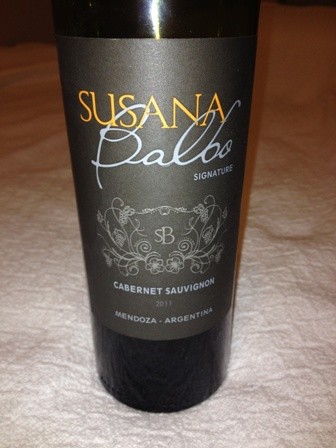
2011 Dominio Del Plata Susana Balbo Signature Cabernet Sauvignon

IMG_0163

Dominio Del Plata Susana Balbo Signature Cabernet Sauvignon

Argentina, Mendoza

Wine Tasting Note:

The nose is very fruit driven… ripe plum and blackberry, sweet carmel and a slight floral note. The nose will fool you! The palate starts with a hint of blackberry and black currant and then full-on hits you with tar and charcoal. The mid-palate is full of sweet vanilla with a touch of black pepper and there is a medium-length finish of bitter dark chocolate. The alcohol is not very evident. The acidity is medium-high. The cab component is still young and tannic, but the malbec softens the wine – just short of silky. I am not sure what to make of this wine? It is not unpleasant, but there are so many conflicting flavors that do not necessarily compliment each other… This may not be enjoyable for some people, so read this note carefully before deciding to try. Aging may not improve this much. The value was good at $18/btl – providing a significant amount of complexity. So, the best evaluation might be to describe this wine as: “interesting”.

Comments Off on 2011 Dominio Del Plata Susana Balbo Signature Cabernet Sauvignon

Filed under Mendoza, Wine from Argentina, Wine Tasting, Wine Tasting Notes

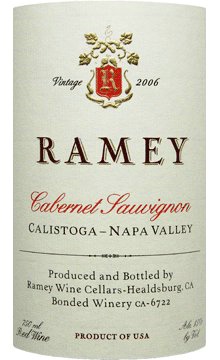
2006 Ramey Cabernet Sauvignon Calistoga

190871

Ramey Wine Cellars

California, Napa Valley, Calistoga

Wine Tasting Note:

2006 was an interesting vintage year that seemed to favor old-world style Napa producers. IMO, it was difficult to find valley floor producers with exceptional wines. Whereas, many of the mountain fruit producers (Spring, Howell, etc.) with a more subdued style (Ladera, Cain, etc.) released amazingly soft, nuanced cabernet sauvignon. This Ramey followed the line… After 30 min. decant, complex nose of blackberry, plum, cigar box and mint. This wine is black fruit forward with a mid-palate of vanilla and a medium short finish of bitter dark chocolate. The texture is a bit watery and the alcohol is not integrated well. Medium-high acidity with medium tannins. Rather disjointed and unbalanced. This is difficult to enjoy, without food. Try accompanying beef, or pasta with a rich tomato-based sauce. I don’t think this will improve with more time in the bottle. Drink now.

1 Comment

Filed under Calistoga, Napa Valley, Wine Tasting, Wine Tasting Notes

Perfect Wine?

How can any wine critic score a wine at a perfect 100?  This is one critic’s explanation at Wine Spectator Magazine:  http://www.winespectator.com/blogs/show/id/49223.

Wine Critics Impartial?

There are aspects of this piece that I agree with, especially with regard to defining wine as a snapshot of a moment in time.  The wine experience is definitely more than a scientific examination of flavor components.  This is a major reason why I was taken by wine in the first place.  Yes, of course your situation and surroundings will affect your scoring of the wine, but aren’t the critic’s reviews as an authoritative resource supposed to be impartial… and therefore tasting should occur in a neutral environment?  The more I learn about wine critics and their approach to scoring wine, the more I have come to ignore them.

Wine Critics Consistently Over-Score Wines

This drives me crazy!  I have been moving towards placing more weight on collector’s reviews for several years now.  CellarTracker scores are consistently 3-4 points lower than Parker, Kramer, Robinson, Galloni. Although, Stephen Tanzer seems a bit more conservative, if you look at a cross-section. Take some time to compare and you will see for yourself.  At least their ratings are consistent in this regard, so the scores are not likely to be a bias towards a given producer.  It almost seems as if they all want to believe the wine is better than it actually is?  Is this some subtle coordinated promotional effort to advance the wine industry as a whole?

Perfect Wine, Ah… Really?

Here are a few recent Robert Parker, Jr. perfect 100’s that I have enjoyed:

2010 Shafer Vineyards Hillside Select Cabernet Sauvignon

2006 Alban Vineyards Syrah Reva Alban Estate Vineyard

2007 Bryant Family Vineyard Cabernet Sauvignon

2007 Schrader Cellars Cabernet Sauvignon CCS

I am sorry, but the Bryant Family IMHO did not belong on this list, but I digress.  Of course, anytime you discuss RP you have to take into account his penchant for big fruity wines.  Still, are these perfect scores based on his perception when tasted, or based on projecting their profile after bottle-aging?  I wouldn’t choose any of these, keeping the  divergent criteria in mind.  Don’t get me wrong , three of these were great wines and the fourth pretty damn good too, but perfect?  I have tasted perfectly balanced 5 year old cabernet in an approachable style from Ladera, or a huge fruity, tannic monster from O’Shaughnessy that would be superior (IMO) after 10-15 years.  Although, I wouldn’t score these at 100 either.

Can a 100 Point Perfect Wine Exist?

Everyone’s palate is different AND wine truly is enhanced by the environment in which it is being consumed AND obviously the wine critics make little effort to taste in a neutral environment…  Of the wines I have enjoyed most in my life and matched my palate best, I would give none of them a perfect 100.  In each case, there was something about them that could have been a little better.  Now, I WILL say… some have been drunk in perfect settings, and I will remember them clearly my entire life!

Comments Off on Perfect Wine?

Filed under Wine Collecting, Wine Critics, Wine Tasting

2009 Atlas Peak Cabernet Sauvignon

194530

2009 Atlas Peak Cabernet Sauvignon

California, Napa Valley

Wine Tasting Note:

Blackberry, plum and vanilla on the nose. Simple palate of black fruit and a touch of bitter chocolate and oak on a medium-short finish. Medium tannins and medium-high acidity. The texture is a bit watery. Nice backbone here, but the structure is missing a mid-palate entirely. Enjoyable every day drinker from Napa Valley that represents a reasonable value. Unfortunately, there is no complexity to this wine. Other vintages have been better.

Wine Tasting Note – UPDATE 2/20/2014:

2nd Bottle of half case:

Second bottle after four months in storage has changed enough to be worthy of note. It is rare to see wine in this price range improve with age. The evaluation is essentially the same as above, but the texture is becoming more silky and the tannins more refined. At least for now, this is continuing to improve.  The same comment holds regarding simplicity, although a short aging window seems to have continued to soften the wine, making it more enjoyable. I wish this wine could magically become more interesting, but for the price, this is a very nice daily drinker.

Comments Off on 2009 Atlas Peak Cabernet Sauvignon

Filed under Cabernet Sauvignon, Napa Valley, Wine Tasting, Wine Tasting Notes

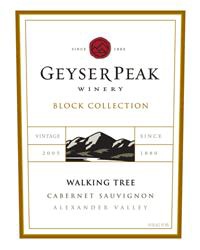
2007 Geyser Peak Winery Cabernet Sauvignon Walking Tree Vineyard

122881

Geyser Peak Winery

California, Alexander Valley

Wine Tasting Note:

Powerful aromatic nose of black fruit, spice and vanilla. Fruit forward palate of blackberry, red plum and black currant. High acidity with medium tannins. Tasted this last year. Still the same big fruit, but the tannins are beginning to soften and it is developing some texture. Needed a little time for the alcohol to blow off. The complexity is improving with the addition of more bitter chocolate in the mid-palate and a short finish with some graphite coming through. The tannins are starting to moderate and I like a red wine with some backbone, so I am going to say this wine is in its optimum drinking window. Drink now and the next couple of years, at most. At $18/btl, this wine has my vote for the best value cab sauv in California. I would expect a wine of this caliber to be in the $30-35 range in Sonoma County. I prefer not to put a number to wines if I can, but in this case I will put that aside and give it an 89. It needs more minerality, the mid-palate and finish could be stronger and the texture wasn’t there to be rated higher, but for that kind of price… this is impressive!

Comments Off on 2007 Geyser Peak Winery Cabernet Sauvignon Walking Tree Vineyard

Filed under Alexander Valley, Cabernet Sauvignon, Wine Tasting, Wine Tasting Notes

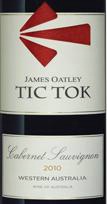
2010 Robert Oatley Vineyards, James Oatley TIC TOK Cabernet Sauvignon

255052

Robert Oatley Vineyards

Australia, Western Australia

Wine Tasting Note:

Nose of alcohol, red raspberry and spice. High acidity and medium tannins. For a low alcohol cabernet, the alcohol is obvious. The palate is full of fresh red raspberry and strawberry up front with a subtle mid-palate that introduces faint elements of eucalyptus and vanilla. The wine has a short finish of bitter, sour cherry. I found the complexity of flavors interesting, but the texture was watery and the elements didn’t come together well. This seems like a low-priced attempt at an old-world style wine, from a new-world producer. For a $10/btl cab sauv pretty decent, but I would rather spend an extra few bucks and purchase something a bit more enjoyable for a daily drinker.

Comments Off on 2010 Robert Oatley Vineyards, James Oatley TIC TOK Cabernet Sauvignon

Filed under Cabernet Sauvignon, Western Australia, Wine Tasting, Wine Tasting Notes

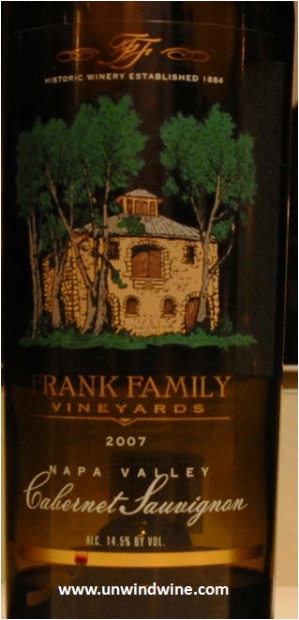
2007 Frank Family Vineyards Cabernet Sauvignon Napa Valley

190136

Frank Family Vineyards

California, Napa Valley

Wine Tasting Note:

Right out of the bottle, this wine was horribly disjointed. After a couple of hours, it started to come together. Maybe just a dead phase for the wine?. The nose is full of alcohol, vanilla and red plum. The texture is a bit thin. High acidity and medium high tannins. The palate is strange for a Napa cabernet. My first impression is of strawberry jam, but then in the mid-palate the traditional flavors show up of blackberry and plum and then leaves you with a medium length finish of lingering fruit and sweet vanilla. No minerality, or earthiness whatsoever. There has to be merlot mixed in this. The alcohol is less integrated than I would prefer. This wine had too much fruit and not enough complexity.

Comments Off on 2007 Frank Family Vineyards Cabernet Sauvignon Napa Valley

Filed under Cabernet Sauvignon, Napa Valley, Wine Tasting, Wine Tasting Notes

2008 Tenute Folonari Cabreo Il Borgo Toscana IGT

15147

Tenute Folonari

Italy, Tuscany

Wine Tasting Note:

Black cherry, blackberry, with a bit of vanilla and earthiness on the nose. Black fruit with a touch of prune on the palate initially, softening to a mid-palate of vanilla and a slightly bitter medium length chocolate finish. Good acidity with medium tannins. Nice silky texture initially, that turned a bit chewy after a few hours. Complex enough to make it interesting, but I really wish some of that earth on the nose would have come through on the palate. I enjoyed this wine… would be a good aperitif, or food wine paired with red meat, or red tomato sauce dishes.

Comments Off on 2008 Tenute Folonari Cabreo Il Borgo Toscana IGT

Filed under Chianti IGT, Super Tuscan Blend, Toscana, Wine Tasting, Wine Tasting Notes

Can We Make Heads or Tails Out of Wine Labels?

I am often flabbergasted at the “wine-speak” on so many labels. This is not a complete listing, just a shot over the bow at the most misused. Here is a go at cutting through the B.S.

American Wine Descriptors

Reserve

So, just what exactly are they reserving? Many wineries have you thinking this is the winemaker’s personal stash. Real meaning: this is the stuff we charge you more for, just because we can. Wineries are famous for including additional descriptors on this one, like “select reserve”, “private reserve”, or “premium reserve”.

Vintner Select

OK, would you really believe this one, if you saw it on a bottle? I have tasted wine from only one winery that uses this designation and fulfills the expectation: Pride Mountain Vineyards.

Estate Bottled

This is roughly what it says. The winery makes this wine from vineyards they own and control. The thought process here is, if the winemaker cares about the quality of the wine, he/she will watch over and tend to the quality of the fruit. While many of these wineries do produce very high quality wines, don’t count on it. There is a huge difference between a knowledgeable vineyard manager vs. a savvy winemaker.

Single Vineyard

All fruit used in the making of this wine came from one specific named vineyard. This CAN be a tool in selecting quality wines. If you track where the fruit originates in the wines you drink and you notice you consistently enjoy wines made from a specific vineyard… you just hit the veritable wine-o jackpot.

Single Block

All fruit used in the making of this wine came from one row, or section of one specific named vineyard. See Single Vineyard.

AVA – American Viticultural Area

This is the point of origin, such as the Napa Valley, Dry Creek, or Paso Robles (etc.) designation you see on the label. So guess what, only 85% of the fruit must come from that area to be referenced on the label. Here is another good one… by law in the U.S., if it says Cabernet Sauvignon on the label – only 75% of the wine must be made from that variety. The only restriction for the balance is, it must come from the same AVA. The possibilities stagger the mind.

Meritage

This applies when somebody paid the Meritage Association to use the name. For red wines, it represents a wine blended from any two or more of the following grape varieties: Cab Sauv, Cab Franc, Merlot, Petit Verdot, Malbec or Carmenere. Absolutely no implication of quality.

Bordeaux Blend

For red wines, it represents a wine blended from any two or more of the following grape varieties: Cab Sauv, Cab Franc, Merlot, Petit Verdot, Malbec or Carmenere. Absolutely no implication of quality. Geez, does that sound familiar? See Meritage.

European Wine Descriptors

Cru

A vineyard of notable quality, or specific terroir. Nothing to do with the quality of the wine. Single Cru – see Single Vineyard above.

Grand Cru

A vineyard producing an unusually high quality of fruit. Has a more specific meaning in the Burgundy region in France. See reference Beaune Committee of 1861, then forget you read it. You just have to ask yourself, who exactly is deciding this stuff? Also, just because the fruit is of high quality does not mean the wine is.

Premier Cru / 1er Cru

A vineyard producing an unusually high quality of fruit, just not as good as the Grand Cru. What? See reference Beaune Committee of 1861 and then forget it again.

1st Growth

Oh boy, here we go… best, most prestigious wineries in Bordeaux France. In reality, these were just the most expensive wineries at the time this classification was established – 1855. See Bordeaux Classification of 1855.

Be Skeptical of Wine-Speak and Make Your Own Evaluation

My guess is, at this point you have already lost interest, but for those of indomitable spirit… we trudge on with a few final comments.

By now you have probably figured out, what is on a wine label is so full of marketing gibberish, it is hard to distinguish what is of real relevance. Good luck on that one. In the U.S. vs. Europe, it is particularly a serious concern. In many parts of Europe, individual wine producing areas actually enforce practices to improve the quality of the wine from that area, unlike the U.S. with no such requirements.

I hear more and more from the industry that consumers are relying on their own tastes and making fewer buy decisions based on professional wine critics’ recommendations. In the same vein, it would be smart not to trust the wineries own professional claims printed on wine labels too! If you would like to share additional suspicious verbiage seen on a wine label, please email them to me at winedocg@cox.net.
Comments Off on Can We Make Heads or Tails Out of Wine Labels?

Filed under Wine Collecting, Wine Education, Wine Industry, Wine Tasting