Category Archives: Wine Tasting

Making #Wines to Drink Now, or Cellar?

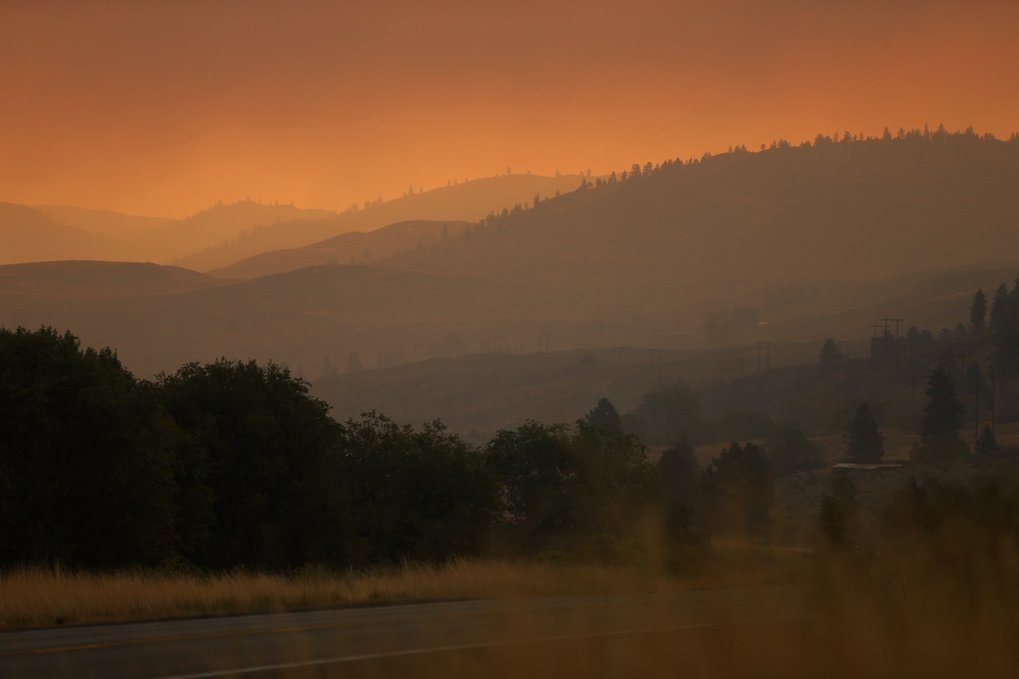
The sun barely illuminates the land under a thick fog of red smoke as seen from Highway 97 just south of Okanogan Friday August 21, 2015.

What a crazy week to have scheduled a wine tasting adventure in Washington State! Forest fires everywhere! The entire state is one big campfire… Flying into Spokane, we descended through a wall of billowing smoke. Driving down to Walla Walla the smoke cleared somewhat.

Later this week, my wife and I will be joining trade tastings and interviewing winemakers, but today we wanted to relax and stop at a couple of wineries of interest – as wine tourists. We stopped in first at K Vintners and then Five Star Cellars today and two interesting questions came to light: (tasting notes coming in future posts)

  1. Should winemakers be producing wine to drink now, versus wines to bottle age?
  2. Does making wine specifically to be drunk with food play well in the broader U.S. market?

I will tackle the first question now and the second in a follow-up piece.

Drink Now?

I was floored today. These were two respected Walla Walla producers recognized by critics and neither was focusing on structured wines more capable of aging in your cellar.

K Vintners

After one tasting experience, I am quite sure I could recognize any of their wines blind. This is not meant to suggest I did not enjoy a few of these wines, but more to emphasize their singular dimension. All of the wines are quite clearly made in a single style, utilizing similar techniques: noticeable French oak, high to very high acidity, very light and a minimum of mouth-feel, minimal finish, low to medium tannins and fruit forward.

Five Star Cellars

We tasted two vintages of their flagship wine, a Bordeaux blend called “Stellar”. The 2008 was good, showing high acidity, medium tannins and a palate of plum, blackberry, apple pie spice, graphite and touch of earthy minerality… but the 2009 was so much better, similar to the 2008 – but adding higher tannins and a fuller mouth-feel. The owner David Huse actually apologized for the additional structure. After a few minutes of conversation, it was obvious he believed their goal was to make easy drinking wines and that 2009 just didn’t fit into that focus.

Price Point, Wine Quality and Structure

I get it. Wineries have to sell their wine and in case you haven’t seen the numbers, somewhere between (depending on the study) 80 to 95% of all wines purchased in the U.S. are drunk within a week of purchase. Since we are throwing out statistics, how about this:  90% of all bottles purchased in the U.S. cost less than $12 USD. The wines we were tasting today all retailed for $40-$70/btl. Where am I going with this? Are these wineries correct in thinking that the majority of wine drinkers spending over $12/btl. want drink now, easy drinking wines? I have spent the last 20 years listening to feedback from wine enthusiasts and while very few are looking for the other end of the spectrum – rustic, cheap Chianti style wines, MOST do prefer red wines with good structure. How else could Napa Valley be able to sell so much Cabernet Sauvignon at an average price of $64.77/btl (2014 Wines & Vines) direct-to-consumer? It is certainly not because these wines are easy drinkers!

Winemaker’s View?

So how does the winemaker feel about this issue? I ask this question during interviews all the time. The answer too often is: “business sometimes dictates we make a wine for broad appeal”. At some wineries, this discussion is a non-issue. The winemaker makes a wine profile focused on quality in the classic sense and they find their market. Others I have interviewed, spend time with their customers and really understand the product their clientele wants… and then there are those that “think” they know what the average consumer wants. The perceived pressure to produce easy drinking wines in the U.S. is huge. For large volume wineries over 50,000 cases of production this discussion is irrelevant, but for the 60% of wineries in the U.S. that produce less than 5,000 cases, it is THE discussion to have. There is a place for all styles of wine in the market. My surprise came from visiting recognized, critically acclaimed wineries with this kind of thinking.

Wolf howling

Howling at the Moon!

If there is one thing I can definitively take exception to in the industry, it is this idea that wine enthusiasts (spending more than $12/btl) want flavor in red wines and don’t care about structure. Okay, I agree there are not many folks like me in the U.S. who will maintain a large enough cellar to buy young structured red wines and regularly drink 5-10 year old vintages. At the risk of boring readers by saying this again: STRUCTURE is what differentiates good wine! Red wine can taste like black, red, or blue fruit, have earthy minerality, or even exotic flavors like tobacco and tar, but these matter little without the primary structural components: Acidity, Alcohol, Tannins, Phenolic Development, Mouth-Feel (texture) and Balance. When wines are missing any of these elements, they can be unpleasant to drink, or more commonly – just boring.

Tasting note for the Five Star Cellars 2009 Stellar (Bordeaux Blend) that was supposedly not as “good” as the 2008:

The nose hints at the level of extraction with blackberry, plum and currant fruits, a touch of alcohol, fresh tobacco and earth. The palate follows with a dense fruit-forward attack that is very lively in the mouth, with high acidity and high tannins.  The vanilla comes through from the oak, but doesn’t overpower. The tannins have a plush, granular texture producing a big mouth-filling wine with a very long finish. This wine is fast approaching its optimal drinking window of 2016-2018. It is only missing a defined mid-palate… a 91 score without. This would have earned a 94-95 score with more complexity.

A grand effort by a small Washington State winery. I sincerely hope they change their focus to making more wines like this…

1 Comment

Filed under Bordeaux/Meritage Blend, Walla Walla Valley, Wine by Varietal, Wine Cellar, Wine Collecting, Wine Education, Wine Industry, Wine Tasting, Wine Tasting Notes

Why Do #Wines Taste Different? Part 2d – Vineyard Management

Vineyard Management

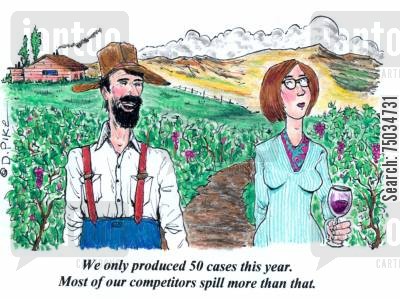
'We only produced 50 cases this year. Most of our competitors spill more than that.'

The effects of Vineyard Management are critically important, but not always easy to recognize. They usually impact wine structure: Acidity, Tannins, Alcohol, Complexity, Phenolic Development and Mouth-Feel. Choosing one practice, over another… often has little to do with science. A limited amount of empirical scientific data is available on this topic and terroir differences often demand widely different approaches. It is difficult to settle on universal best practices. These are the reasons wineries often depend on individuals with extensive experience in the local region. Does implementing these ideas have a direct observable connection to quality? Perhaps yes… at the very least, these ideas can impact the character of wine from individual vineyards. Here is a very recognizable example:

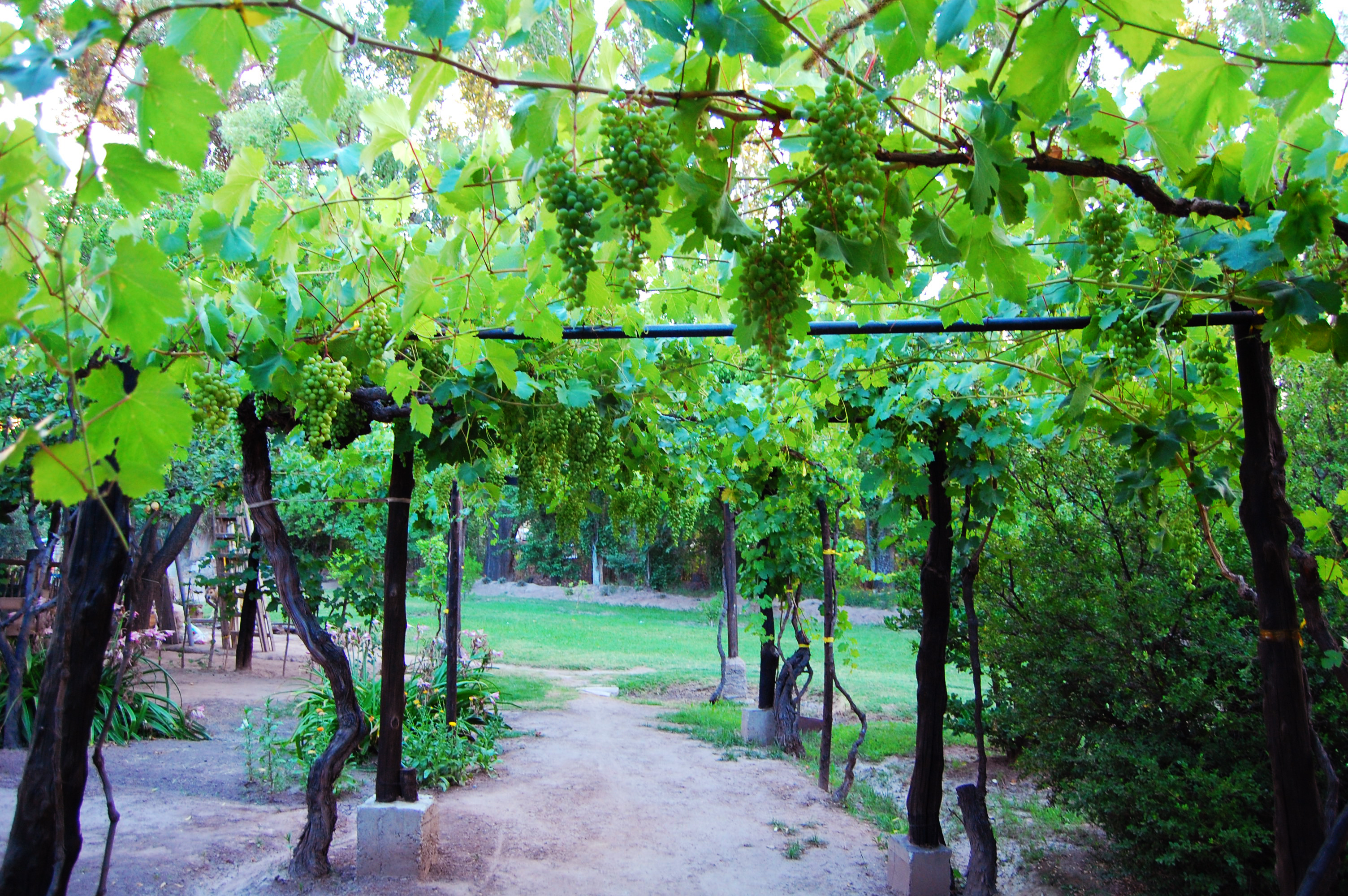
Pergola_Vineyard     (Pergola Trained)

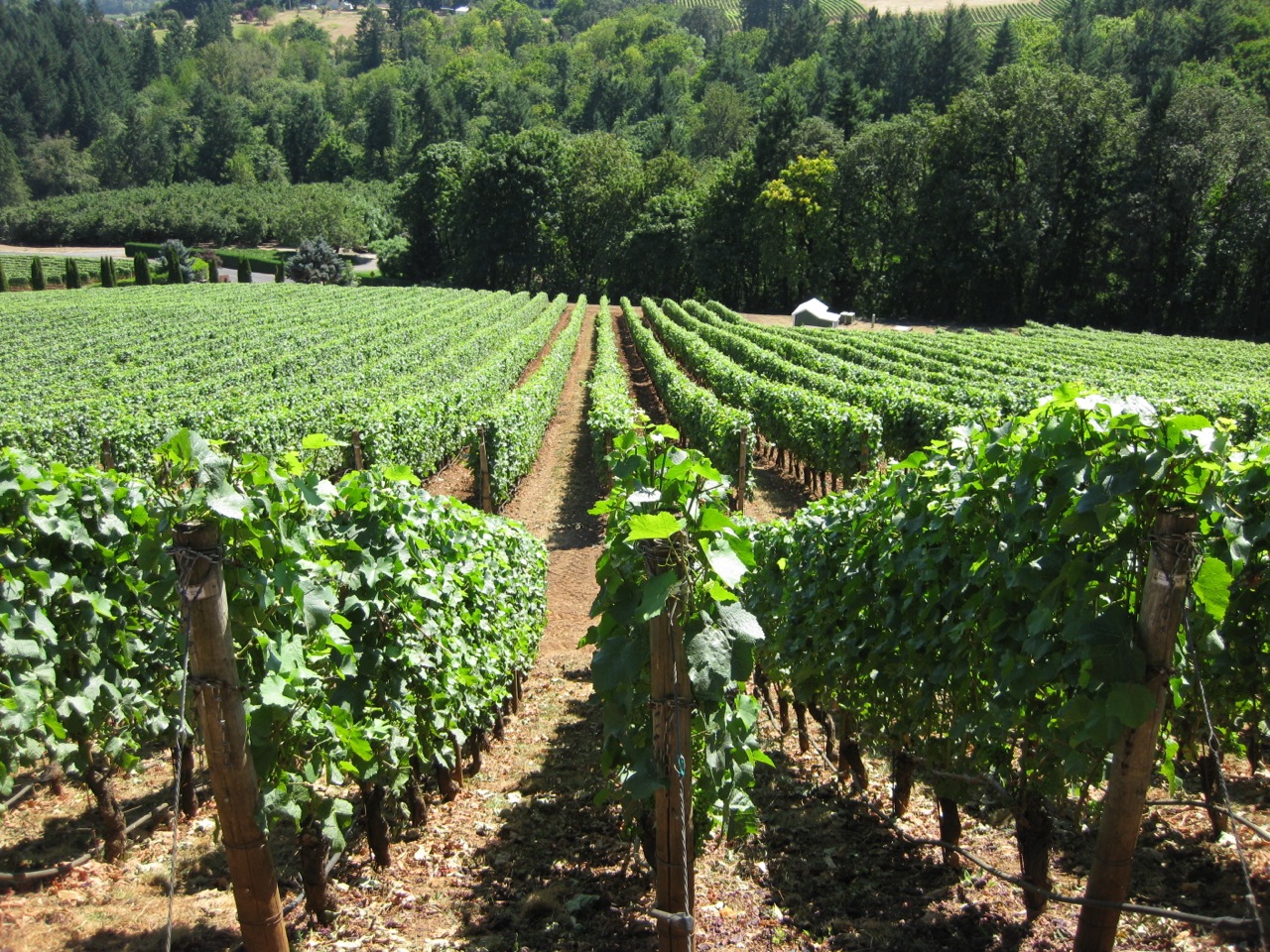
Guyot trained 1     (Guyot Trained)

Italian producers have been converting old pergola style trellising (photos above) to head-trained systems (i.e guyot). This has been a major factor in the on-going improvement in consistent quality across Italian vintages. Head-trained vines make it much easier to employ pruning strategies throughout the growing season. A major factor in accommodating annual climate variation.

Harvest Yield Management

Vineyard managers typically have experience with enough harvest variation to get a feel for the tonnage of quality fruit their vineyards can produce. Too big a yield, and the vines don’t seem to focus on producing concentrated flavors and complexity. Too small a yield and the vineyard is not financially viable to farm. In some locations, the government dictates the yield, if the winery wants to put the appellation name on the label. Yield is a reasonable indicator of basic quality. Anything over 4 tons per acre will be approaching bulk wine territory. Most premium wineries drop anywhere from a quarter to half the berries in the field every year.

Soil Supplementation

Fertilization and soil prep is a scary idea in a vineyard. Grape vines are highly efficient at growing successfully in very poor conditions, so any small change tends to have a big impact. The idea here is NOT for the vines to grow more vigorously. The optimum conditions desired for increasing harvest yield is the exact opposite of what is desired. Although, soil prep before planting vines is very common and usually deals with soil pH and plant metabolism. For example, in many wine growing areas in Arizona, it is critical that calcium carbonate and/or magnesium carbonate be mixed into the soil. So called “liming” of the soil is a vineyard tradition that has been practiced for hundreds of years. Higher pH soils tend to add acidity to the fruit, a critical component in quality wines.

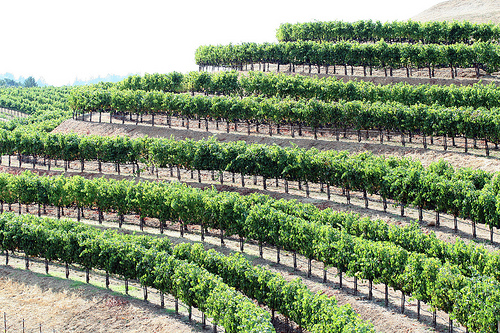
vine-rows

Pruning Strategies and Row Orientation

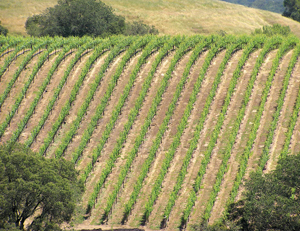
This approach is more recent. Canopy management as a criteria for producing quality fruit is a strategy that requires a significant amount of pruning labor (high cost) and therefore is mostly employed in the premium and ultra-premium wine categories. A few years ago, I interviewed Jim Duane, winemaker and vineyard manager at Seavey Vineyards in Napa Valley. With a BS in Biology and a focus on botany, he spoke passionately about meticulously pruning the vines and modifying the canopy to match each vintage’s growing conditions. The row direction decision is now made based on optimizing drainage and improving direct sun availability. Vineyards planted on relatively flat acreage in the last 20 years are almost always planted with North-South facing rows to maximize consistent sun exposure. The vineyard in the photo above is planted down the rise and is unusual in recent times. Rows today are usually planted across the rise to facilitate optimal drainage. These ideas have become common practice in the U.S., although not as pervasive in Europe.

Harvest Strategies

Single pass harvesting is the standard in the industry, but in the premium and ultra-premium category that is changing. Paloma Vineyard is an estate winery in Napa Valley that takes this idea to the extreme. Harvesting over extended periods of time, tracking rows and blocks for ripeness, or desired character. They have planted different clones of Merlot and vary the harvest timing as necessary for each. In addition, they bring in blocks early to improve structure and others later to enhance flavors. This is very labor intensive and must be a challenge to manage every year… but the results  are hard to argue with… Paloma achieved a Wine Spectator #1 wine in the world rating in 2003 and regularly earns 95-100 scores every vintage. By the way, if you are lucky enough to catch a visit with the owner Barbara, you will get an in-depth peak into the life of a winemaker as farmer and the lifestyle that comes along with it!

Gobelet vineyard

Trellising

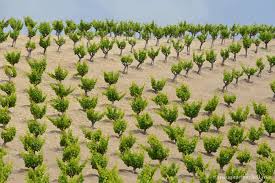
This is an Old World versus New World discussion. Many vineyards are still planted and grown the old traditional ways in Europe, i.e. Pergola (Italy), Gobelet (Spain), etc. I have seen 75 – 100 year old Zinfandel vines in Sonoma County trained in the Gobelet method. See a photo of a Gobelet trained vineyard in Spain above. These Old World style methods make no sense to me for fine wine. Head training (Guyot method & similar) clearly provides better opportunity to employ detailed pruning strategies. Oh well, I am sure THAT will start an argument with a winery in Europe somewhere…

Spring Mtn Vineyard

Terra-Forming, Terracing and Vine Spacing

I love the photo from Pride Mountain Vineyards above… Let me describe why this vineyard is so different:

This is a terra-formed terraced vineyard with a double row planting across the rise and a tight vine spacing layout. The vines in the front of the row produce riper fruit. Those in the back struggle and the fruit is more austere and structured. Everything in a Bordeaux varietal vineyard you could ever want, all in one place. This vineyard produces amazing wine. I doubt many vineyard owners would go to the expense of preparing a vineyard site this way.

Irrigation and Dry Farming

This is another one that will get me in trouble… This is one idea where I agree with the Old World thinking. In my experience, having tasted thousands of wines… There is a noticeable difference in wines from dry-farmed fruit versus irrigated. Why is there a difference? Is there verifiable science behind it? Not likely, but if I were to guess… dry-farmed vines struggle more, the roots drive deeper into the earth and build additional complexity in the wine?

The End

I have had quite enough of what has turned into a very lengthy discussion. There were literally too many contributing factors affecting wine flavors and structure to even scratch the surface in these few pieces. I hope the examples provided and the recommendations offered made the information a little less dry and I apologize to the Old World Wineries in advance for representing their growing regions poorly. I just haven’t interviewed enough European winemakers to understand their local wine growing practices in this kind of detail. It is my hope to rectify that someday 🙂 Anyone interested in subsidizing an old Sommelier to make a trip (or two) over to wineries in Europe? Strictly in the interest of discovery and wine research to educate a U.S. wine industry thirsting for knowledge…

Comments Off on Why Do #Wines Taste Different? Part 2d – Vineyard Management

Filed under Wine Education, Wine Industry, Wine Tasting, Wine Travel

Why Do Wines Taste Different? – Part 2c: Soil Types

“Voodoo Magic” in Wine?

Voodoo Juice

(Unrelated Copyrighted Trademark used to illustrate the idea)

Winemaking can be complex chemistry, artistic expression, or a mixture of the two, depending on the winery. That first “science-based” option is certainly the most accessible and also the reason so many winemakers have chemistry degrees. This approach (topic of the first piece in this series) utilizes empirical processes that have a direct, identifiable impact on the wine. Climate (topic of the previous piece in this series)  is another easy to recognize factor when tasting wine (with training), but these last two pieces in the series are about the “voodoo” in the wine: soil type and  vineyard management. I doubt many consumers would recognize the importance of this topic and most high-production bulk wineries rarely care, but for an estate winery under 50,000 cases of production… it is the key to differentiating an individual wine label . That is why you see so much maneuvering in the U.S. to establish new AVA’s (American Viticultural Areas). Winery owners are trying to attach special significance to the fruit source (vineyard location). Developing a unique wine profile is critical to marketing strategies for these producers. As a consumer, I am usually only interested in the “voodoo”, if I have visited that vineyard at the estate. Analysis of soil and vineyard management is just too dry a topic to review without some sort of personal connection. Does the appellation factor into your choice in wine? Do you look for “Rutherford”, or “Margaux” on the label, before you select your Cabernet Sauvignon/blend?

Soil Types

I am reasonably sure no one is interested in a chemistry primer on soil composition, so I will try to move this discussion towards general soil categories. These vineyard site characteristics can have recognizable effects on quality and flavor. Let’s bypass mineral composition and move directly to key factors affecting the vines. There are many different vineyard soil types: Silt, Sand, Loam, Clay, Gravel, etc. There are even more specific sub-types: Calcareous, Schist, Shale, etc. Although, these soils all have just a few tangible characteristics that have well-known effects on the vines.

Water Drainage and Free Organic Matter – Soils that do not drain well, or are too fertile produce horrible wine. When vines grow vigorously, the berries are larger, the juice after press is less concentrated and the resulting wine is one dimensional. Examples: Poor Soil – Loam, Silt. Better Soil – Gravel, Sand.

Soil pH – Basic soil (higher pH) is the key here – think regions like Champagne, Loire, West Paso Robles and other locations with calcareous soils high in calcium carbonate. All the anecdotal evidence for this shows basic soils produce acidic wine – a key component to the structure of quality wine. I won’t bore you with the theoretical chemistry, but evidence seems to confirm this idea. Better Soils – Calcareous, Chalk, Marl.

Soil Depth – An impermeable layer should not be less than 40″ below the surface for dry-farming of the vines (dry-farming should be the goal).

Water Retention – This may sound contradictory, but the best vineyard sites have both good drainage at the site AND good water retention in the soil. These characteristics exist and are excellent for dry-farming vineyards (no irrigation).

Varietal Soil Preferences

Interestingly, when specific varietals are grown in an area over long periods of time (decades+) successfully, the vines seem to adapt to the terroir. This optimization has never been formally studied, but general observations abound in the world wine community supporting this idea. Currently, vineyard root stock for each varietal is available in many slightly different clone options adapted to different climatic and soil conditions. The growers choice of which clone to plant can be a make, or break business decision. Areas like Burgundy, where Pinot Noir has been grown for more than 500 years, have allowed the vines to adapt naturally and you can tell the difference in quality.

Grape varietals often have their own soil preferences:

  • Cabernet Sauvignon produces the best wine when grown in Gravel and Volcanic soils.
  • Merlot produces the best wine when grown in Sandy Clay.
  • Chardonnay and Pinot Noir produces the best wine when grown in Chalky soils.

Some varietals seem to do well in many different soil types, but manifest radically different flavors:

  • Sauvignon Blanc has tropical fruit flavors when produced in Marlborough (New Zealand) and lemon and/or grapefruit flavors when produced in Napa Valley (California).
  • Zinfandel tends toward Strawberry flavors when from Dry Creek (Sonoma County), but can have strong jammy blackberry and blueberry notes when produced in West Paso Robles (Central California Coast).

Vineyard - Larkmead Vineyards

Estate Wineries Embracing Vineyard Variation

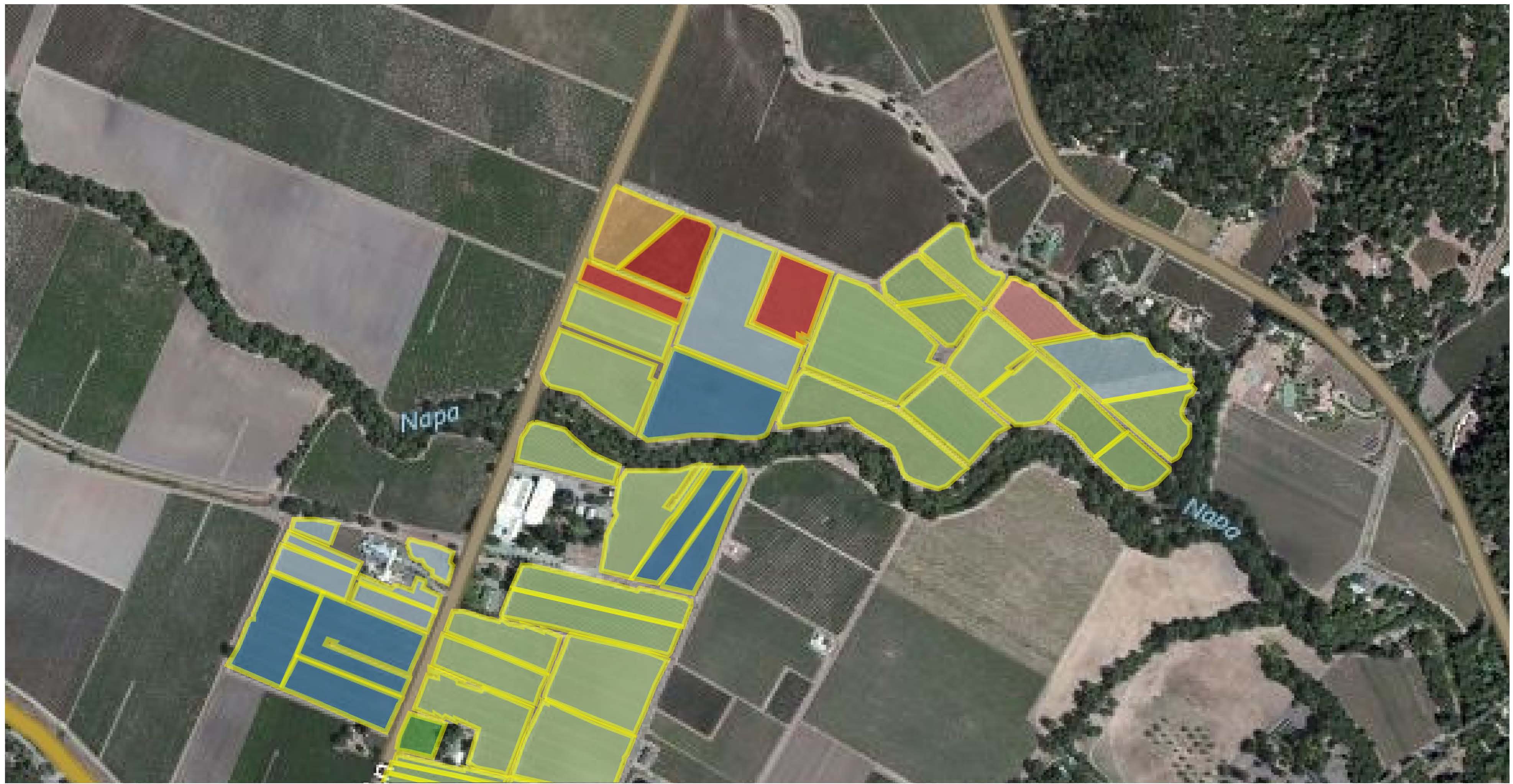
A few years ago the head winemaker Dan Petroski at Larkmead Vineyards offered the best explanation I have heard for optimization of variable growing conditions at a single vineyard site. In recent years, Larkmead has invested heavily in their belief that soils and micro-terroir make a difference in the quality of the wine. Their estate vineyards (108 acres planted) have been separated into 40+ separate vineyard blocks, some quite small (against typical industry thinking). Some of these vineyard sections were re-planted to change row direction and take advantage of improved sun orientation and drainage characteristics. The blocks were separated based on soil testing and observation to define clearly different growing conditions. Where this gets really interesting is their further investment in numerous smaller stainless steel fermentation tanks. For those who say terroir impact on wine is a fallacy, they need to taste the lot to lot differences side-by-side at an estate winery using this vineyard strategy. This system of wine production allows the winemaker to take advantage of distinctly different wines and offer them as separately bottled vineyard designate releases, or blend the individual blocks to achieve a better, more complex product.

My Previous Recommendations

Now, let’s put this information to use (remember the “voodoo”). In past pieces, I have suggested that certain growing regions tend to generally produce better quality over-all. Let’s explore a few reasons why…

Valley Floors (in the flood plain) – These locations tend to have a high percentage of silt, but not always. For example, the right bank of the Garonne River in Bordeaux has sandy clay soil (premier Merlot region in the world). Putting aside complex locations like Bordeaux and speaking in generalities, valley floor locations produce simpler wines that often are missing structure… especially when grown in warm climates, examples: Puglia, Italy or Inland Valleys, California. There are some interesting exceptions though. Certain varietals (like Tempranillo) can grow in these locations (i.e. Ribero del Duero) and thrive, but I would be careful if you are searching out quality. Know your varietals and their optimal growing regions, unless you are comfortable experimenting with hit, or miss results.

Mountain/Hill Sides – These locations tend to be virtually barren, with well-drained schist, slate, granitic (etc.) topsoils. In many cases, wine grapes are the only crop these soils can support. Again, this seems contradictory, but these regions can offer perfect conditions for many different wine grape varietals. Examples of Mountain/Hill type optimal growing regions: Syrah – Northern Rhone, Nebbiolo – Barolo, Riesling – Mosel, Cabernet Sauvignon – Spring Mountain.

Examples of a few optimal growing regions by varietal: Cabernet Sauvignon – Napa Valley, Left Bank Bordeaux; Merlot – Right Bank Bordeaux, Spring Mountain; Pinot Noir – Burgundy, Willamette Valley; Syrah – Rhone Valley, Barossa Valley; Malbec – Mendoza, Riesling – Mosel, Chenin Blanc – Loire Valley, Swartland, Stellenbosch.

Magic-pot-witchcraft

The Voodoo

No one really knows for sure what specific chemical composition is changed due to these soil factors. Neither is it known the process by which these soils change the character of the wine, but I can tell you, a trained palate can taste wine blind and describe the type of terroir it originates from.

Next…

Is this topic never-ending? Yes! The potential for exploring variability in wine character is quite literally endless. Although, I will endeavor to finish this series in my next piece with an evaluation of Vineyard Management and its impact on wine.

3 Comments

Filed under Wine Collecting, Wine Education, Wine Industry, Wine Tasting, Wine Travel

Why Do Wines Taste So Different? Part 1: Winemaking Strategies

INTRODUCTION

“Hey, it’s all made from grapes, right?”

funny-man-tasting-wine-glass

Early in my wine drinking years, this was my mantra and justification for buying cheap wine. As you drink more wine and increase your wine budget, you start to realize that every vineyard, winemaker and label can taste radically different. How is this? It doesn’t seem to make sense. Well, I will try to put some of that Sommelier training to good use and explain why and how individual wines can taste so different. We will start with Winemaker Techniques in Part One and then move on to Vineyard Management in Part Two. I will focus on red wine in this piece, because it has the most diverse flavor potential.

You may ask, why should anyone care? Good question. Many people feel, “If it tastes good, I drink it.” For those who feel that way, I get it… but for those that are looking to understand why they enjoy a certain wine and not another… read on.

PART ONE

How Do Winemakers Affect Wine Flavors and Aromas?

Grape Varietal Selection?

Many inexperienced wine drinkers do not realize that specific grape varietals have very distinct flavor profiles. There are literally 100’s of grape varieties, but under ten (number varies based on opinion) noble varieties most commonly grown and made into wine across the world. Here are just two examples to provide a point of reference:

Pinot Noir – Fruit flavors of cherry, cranberry, raspberry, etc. Herbal and mineral notes of mint, earth, limestone rock, etc., depending on terroir. This wine is mostly less acidic and has very limited tannins. It can have a silky mouthfeel, but never a voluptuous mouth-coating texture. Not commonly made to bottle age, with the exception of wines from Burgundy, France.
Cabernet Sauvignon – Fruit flavors of blackberry, black currant, black plum, etc. Herbal and mineral notes of tobacco, graphite, earth, etc., depending on terroir. This wine can be very acidic and have very high tannins. It can be watery, silky, or very rich in texture. Very commonly bottle aged and often improves substantially over time.

Inoculating the Juice with Commercial Yeasts, or Allow Natural Yeasts to Ferment?

This is a controversial topic in the industry. Some winemakers swear natural yeasts add complexity and interest to the wine. Commercial yeasts may add to a “cleaner” flavor profile, but offer a taste that appears to be more manipulated. Wild yeasts may contribute to a more natural, complex character.

Use Extended Cold Soak, Before Fermentation?

This can contribute to a more “extracted” wine. The idea is to take the time and extract as much flavor as possible from the skins, pips and flesh of the grapes. Wines that are cold soaked tend to have rich, deep colors. They may also be fruitier, but I have not noticed this consistently. The challenge is preventing natural fermentation during the process. The tanks must be kept in refrigerated areas during cold soak. This option ties up tank space and potentially limits production, adding cost to the vinification process.

Pump Over, or Punch Down the Cap During Fermentation?

You wouldn’t think this would make a difference, but I have consistently noticed wines fermented with a pump-over process tend be more refined and elegant as a whole.

Ferment in Stainless Steel Tanks, Plastic Containers, or Oak Barrels?

There are those that claim stainless steel can add to minerality, but I have not seen this consistently. Plastic is basically neutral, but when the juice is fermented in oak barrels and then the wine is aged in oak too… you often end-up with very oaky tasting wines. For example,  these Northern California producers tend to have this flavor profile: Silver Oak and Caymus. Although, they may, or may not make their wine this way.

Block Harvest Vines by Area, Vinify and Blend?

Estate wineries that use this method produce better wines – period. Micro-terroir is a concept that is very real. Numerous factors can cause block variation in the fruit. These differences influence variable fruit characteristics: more acidity, riper, additional minerality, etc. The real talent is the winemaker’s palate and experience that can determine the appropriate blend to build a fine wine profile.

Age on the Lees?

This produces softer wines, but adds yeast, or butter flavors. I enjoy this character, even more in white wine. I think this is more of a personal preference consideration.

Ferment with the Full Grape Clusters?

This is often confused with Carbonic Maceration, a process used on inexpensive wines to add enhanced fruit, or “candy” (bubblegum) flavors. Full cluster fermentation is a much less intrusive process. This technique can add a deeper fruit character to the wine. I enjoy wines utilizing this process.

Include the Stems During Fermentation?

In the hands of a master winemaker, this can add a significant amount of interest to the wine – improving tannic structure and adding briarwood flavors. When not handled well, it can truly make wines undrinkable. For a winemaker, experimenting with this is like playing with fire.

Include Pressed Juice, or Only Free-Run Juice?

This decision can add a significant amount of cost to winemaking. Only a third to half the extracted fruit juice is typically free-run. After that is collected, the pressed juice steadily becomes thinner, less complex and more rustic, as more pressure is applied. For example, one ultra-premium winery I know, uses only free-run juice and sells their pressed juice to other wineries.

Filter, or Fine the Wine?

Historically, this was always  done. Today, with more modern wine producing technology, it has become a decision. Previously, this was required to remove impurities from the wine and improve clarity. Today, when omitted, it can offer a more highly textured character to the resulting wine.

Extend the Maceration?

Maceration is the process that uses the fruit’s own weight to break the skins and extract the free-run juice. Extending this process works well with the Cold Soak option discussed above. When done together, there are notable differences in the wine. These wines tend to be softer and more extracted. Very interesting wines can be produced by blending this with traditionally produced wine. In colder vintage years, this can help to offset the more rustic character of the wine.

Allow Residual Sugar to Remain and/or Add Fruit Juice After Fermentation?

These are more common options in the U.S. today. The Predator is an example of such a wine. Many of these are sold in big volume across the U.S. Personally, I do not like these wines. They give me a headache and are lousy paired with food.

Age in Stainless Steel Tanks, New American/French/Hungarian Oak, or Neutral Oak Barrels?

There is more experimentation with this idea today than in the past. Previously, you would never have seen red wines aged in Stainless. Today, I run into these more and more. Regarding the choice to use new, or neutral oak barrels… personally, I am not a fan of oaky wines. For me, the only advantage of new oak is to deliver the toasted flavors that will be discussed below. I think wines often taste better when aged in a less manipulated neutral oak style.

Use Light, Medium, or Heavy Toasted Oak Barrels for Aging?

Toasting the oak barrels in which wine is aged can add surprisingly pleasing flavors. My favorite flavors from this option are baking spice and cinnamon, but it can also impart other characteristics such as a smokey aftertaste.

Conclusion

Now that all this information is at your fingertips, what can you do with it? Of course, you can always impress your friends with your wine knowledge at dinner parties… or you could put it to good use investigating new wines you might enjoy. My personal favorite is discussing pros and cons of these techniques with winemakers when my wife and I are vacationing in wine country. However you put it to use, the understanding of how wine is made can truly add interest to your enjoyment of wine!

Comments Off on Why Do Wines Taste So Different? Part 1: Winemaking Strategies

Filed under Wine Education, Wine Tasting

Best Value Wine Destination in the U.S.A.?

value pic

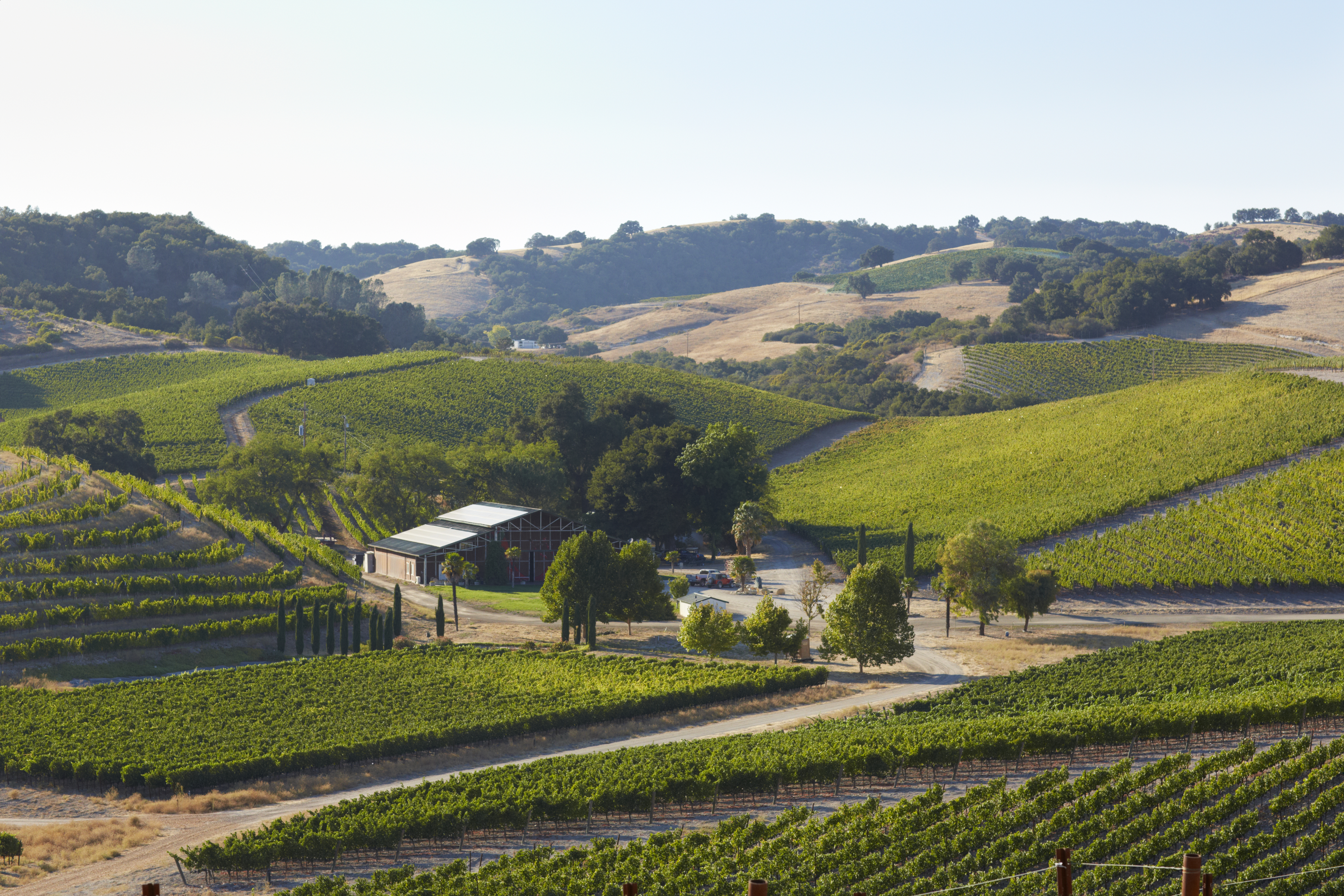
I was recently involved in a discussion regarding preferred wine tourism destinations among serious wine drinkers / collectors. Napa Valley is consistently drubbed for its utter lack of value. Average tasting room fees are $25 – $40/pp… to access top quality, it is not uncommon to pay $75/pp. Now granted, these wineries are so gorgeous – Napa Valley itself creates its own ambiance, but let’s move past honeymoons and anniversaries and talk year-in and year-out wine tourism destinations. My wife and I have vacationed in Napa at least 10 times in the last 20 years and while it was previously my favorite location, it is now third on my list behind the California Central Coast and Sonoma County. To make things worse, Napa tasting rooms have steadily become more impersonal, making me feel like one of the massive herd, or a bother, rather than a valued guest.

Yes, my favorite wine destination is the Santa Barbara and San Luis Obispo Counties area in California!

Destination Comparison

Cuisine / Restaurant SceneWinner Napa Valley

The Central Coast is improving, but still has catching up to do.

Tasting Rm FeesWinner Central Coast

1/3 to 1/2 the cost of Napa.

Tasting Rm AtmosphereWinner Central Coast

The Central Coast is a big winner here. I have been getting tired of the attitude in Napa. The tasting rooms are so much friendlier almost anywhere else. I miss 10+ years ago when wine tasting was casual and inviting!

Lodging ValueWinner Central Coast

1/2 the cost of Napa with several resort quality properties to choose from.

Quality of WineWinner Central Coast

Slight edge, not because any single wine is superior, but because overall – the wines approach Napa in quality and the selection is amazingly diverse. There are top quality producers of Syrah, Cabernet Sauv, Zinfandel, Pinot Noir and Chardonnay here… in Southern Rhone, Bordeaux and Burgundy styles. All of this diversity is driven by an area with crazy climate variability.

SceneryWinner Napa Valley

Maybe not as cozy as Napa Valley, but the hill and mountain regions west of Hwy 101 are very picturesque.

BeachWinner Central Coast

No Beaches near Napa. This region has Pismo Beach.

Winery ArchitectureWinner Napa Valley

Napa has a big edge here, but some wineries are starting to spend big money in the Central Coast area.

l'aventure winery

l’aventure winery

A Paso Robles Vineyard & Winery

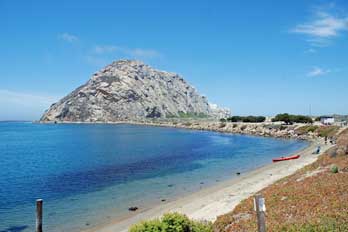
Morro bay pic

Morro Bay, CA

Central Coast Winery Suggestions

(arranged from South to North)

Santa Barbara County

Carr Vineyards – All wines are good, but their 100% Cab Franc is special and reasonably priced.

Jaffurs Wine Cellars Quality Southern Rhone style wines that offer great value.

Brewer- Clifton Pinot Noir and Chardonnay. Their Chardonnay is Burgundy style and fantastic!

Qupe – Beautiful, refined Syrah by a master winemaker.

Andrew Murray Vineyards The best value quality Syrah in the U.S. hands down.

Melville Winery Great values in Burgundy style Pinot Noir.

San Luis Obispo County

Laetitia Vineyard & Winery – Fine quality sparkling wines in a broad selection of styles.

L’Aventure Winery – Balanced Hedonism Incarnate (is that possible?). These wines are massive, powerful… and perfection.

Peachy Canyon Winery No winery makes more different single vineyard Zinfandels. If you are a Zin Master, you must visit Peachy.

Tobin James Cellars Their tasting room is definitely the most fun in the area!

Justin Cellars This is your bastion for Bordeaux style wine in the area. Their Cab Sauv and Merlot blends are very good! These wines are approaching the quality of the best in Napa.

Herman Story Wines THE BEST Southern Rhone Style Wines in the United States at prices that will cause you to do a double-take.

Other Wineries of Note Some of best wineries in the world are making amazing wine here, but are expensive and difficult to arrange access:  Alban Vineyards, Saxum Vineyards and Sea Smoke Estate Vineyards.

New Destinations My wife and I will be traveling to Walla Walla, WA this fall, six years after our last trip. I am hoping this location has much to show! I am looking for my next wine destination to add to our list! I will update our findings on this site after our trip!

2 Comments

Filed under Wine Industry, Wine Tasting, Wine Travel

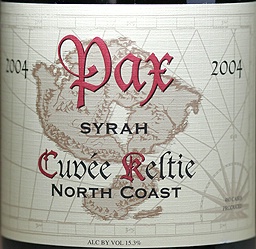
Pax Cuvee Keltie Syrah North Coast

22118


Pax Wine Cellars

2004 Cuvee Keltie Syrah North Coast

California, North Coast

Wine Tasting Note:

Initially, this was too hot and closed directly out of the bottle. After a one hour decant: blackberry and mint on the nose. The nose had a bit too much alcohol to enjoy. 11 years in the bottle and still plenty of structure with medium-high tannins and acidity. As you would expect, the freshness of the fruit is gone. The palate is of blackberry, black currant and bitter dark chocolate with a short finish. The alcohol is evident, but not over-whelming. The big winner here is the mouth-feel. A beautiful Northern Rhone kind of character that starts a little oily and finishes with mouth-coating, grainy tannins that were a little to the rustic side of velvetty. This wine has the structure to sit in the cellar much longer, but the fruit will not last. Best drinking window is/was probably 2012-2016. I have seen other recent tasting notes that describes a fruit-forward wine with a sweet finish. This bottle was very dry and had a subdued fruit character.

All-in-all a nice effort to produce an age-able, structured Syrah with a Rhone feel. This would have been a 95+ wine, if the alcohol component had been more balanced against the total profile.

2 Comments

Filed under Cool Climate Wine, North Coast, Syrah/Shiraz, U.S. Wines by Region, Wine Tasting, Wine Tasting Notes

Stephan Vineyards L’Aventure and Friend

I decided to stand-up a couple of my favorites for my birthday and decided it would be a L’Aventure night!

I am a huge fan of red blends, especially Southern Rhone style. In my opinion, L’Aventure is the quintessential producer in this category in the USA. The winemaker and owner Stephan Asseo is a French ex-pat that moved to the U.S. to make red-blends from the fabulous Terroir on the West Side of Paso Robles. He was looking to escape the French limitations of the AOC laws and he has done it in a big way. L’Aventure wines capture the perfect balance of the big red Paso profile, while still maintaining elegance and balance. The Estate Cuvee in some vintage years, has easily made it into my top 50 list of best bottles of all time. If you like Robert Parker Jr. picks, you will adore these wines. If you enjoy Stephen Tanzer’s picks you will enjoy these wines and marvel at the finesse of wines with such power.

Mr. Asseo often uses Cab Sauv in his red wines and I appreciate this working outside of traditional boundaries. You don’t often see Syrah and Mourvedre blended with Cab Sauv and Petit Verdot in a wine, but in the hands of a master winemaker, the winery is able to encourage just the right contribution from each to make a harmonious whole. Mr. Asseo is also a block blender extraordinaire… with 58 acres separated into 40 blocks, each vinified separately, then blended… he has developed a system to coax the just the right character from each Micro-Terroir and has the palate to blend them properly. Virtually all L’Aventure wines are comparatively high in alcohol, but are well balanced and do not seem hot. L’Aventure wines are definitely priced within the premium space in the marketplace, but they are also one of the very few producers in this category that continually delivers on value.

I enjoyed these wines with friends and was unable to take detailed notes, so I will only be able to provide general impressions. The group had a wonderful time and enjoyed the wine immensely. In my mind, it is always preferable to share a special bottle at a romantic dinner, or with friends!

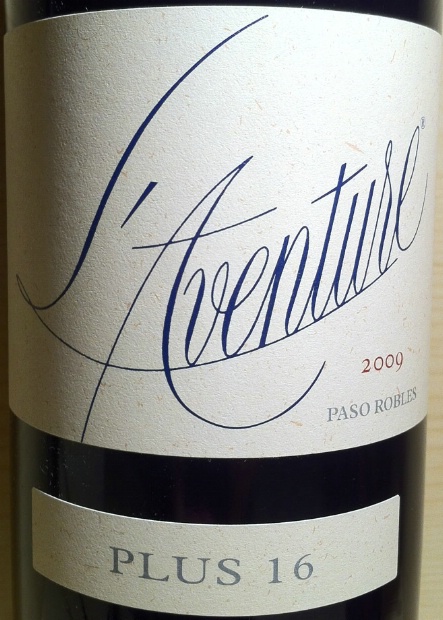
Plus 16

2009 L’Aventure Plus 16

California, Paso Robles

This wine was more “true” Southern Rhone in profile with 42% Mourvedre in the mix. A touch earthy in character (from the Mourvedre), with all of the beautiful blue and black fruit that they usually coax from their grapes. A slightly heavier mouth-feel, with great balance. A little lighter on the structure, even with 42% Cab Sauv. It is possible, the six years in a bottle have softened the tannins and acidity a bit. This wine is definitely in its prime drinking window, perhaps 2015-2017. If you have this in your cellar, don’t let this sit too much longer!

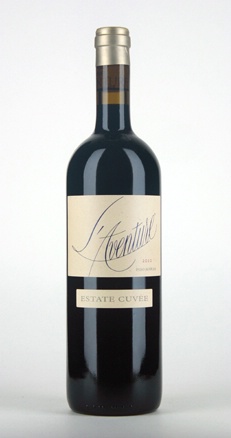
Estate Cuvee

2010 L’Aventure Estate Cuvee

California, Paso Robles

Another “Wow” moment with an Estate Cuvee. A big, powerful red, with more structure than the Plus 16. Less earthy with no Mourvedre here, instead – a liberal dose of 16% Petit Verdot. An unbelievable 15.7% alcohol and you can barely tell it is an adult beverage. Soft, plush texture and a nice backbone. Just a gorgeous wine, drinking beautifully at five years in the bottle. Drinking window of 2015-2020, depending on your feeling about tannic structure.

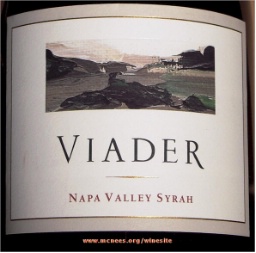
Viader

2007 Viader Syrah

California, Napa Valley

The Viader is a 100% Syrah blended from two different clones – Rhone and Barossa. I really enjoyed this wine, the others in the group, not so much. The drawback, the 14.9% alcohol was very evident. This Viader wine had a refined, silky texture that I thoroughly appreciated after the mouth-coating L’Aventure wines. This was right on its drinking window with wonderful black fruit, nice acidity and a good tannic backbone. Drinking window of 2013-2016. If not for the hot profile, this wine would have held its own against the two previously enjoyed. I will make an observation here that I have noticed many times previously. Napa premium wine producers better develop an understanding of the changing palate of the American wine drinker, or they will be left behind by other wine regions in the U.S. Hot tasting wines are losing their appeal. Realistically, the alcohol over-shadows any subtle flavors that might be experienced with the hors d’oeuvres, or an accompanying meal.

Conclusion

Balance in a well-made wine still wins the day. If the winemaker goes big… he/she better have a deft hand at counter-balancing the hedonistic character of the wine. The Estate Cuvee was a gem!

Comments Off on Stephan Vineyards L’Aventure and Friend

Filed under Napa Valley, Paso Robles, Rhone Blend, U.S. Wines by Region, Wine Tasting, Wine Tasting Notes

Winemaker Interview – Sally Johnson-Blum of Pride Mountain Vineyards

Please follow my winemaker interview series! You can find this and other interviews at the following link:

http://winemakerinterviewseries.net/2015/03/01/winemaker-interview-sally-johnson-blum-of-pride-mountain-vineyards/

Comments Off on Winemaker Interview – Sally Johnson-Blum of Pride Mountain Vineyards

Filed under Wine Tasting, Wine Tasting Notes, Winemaker Interview

Shafer Vineyards Wine Tasting and Visit – Napa Valley, Stags Leap AVA

Shafer-Vineyards1

.

I was really looking forward to visiting Shafer on this trip. It was expensive, but I wanted to connect with the same winery that had produced those great vintages of One Point Five and Relentless.  I envisioned writing this crazy post that would make you want to jump on an airplane right now and drive directly to the winery.

.

Shafer-Tasting-Room

Tasting Experience

As you approach the winery, this is a hilly site that hits you with a luxurious feel of rolling vineyards.  It was a gorgeous facility and the tasting room was well-appointed.  The whole experience was just as the description sounds – expensive, stuffy, high-brow.  My wife and I were tasting with a group of eight consumers.  The group tasted the current releases, including the Hillside Select that had a retail price of $250/btl.  I spoke to several in the group afterwards and they had already moved on, asking me to recommend other sites in Napa.  Not that the wines weren’t good… just that the experience was not engaging and did not leave a lasting impression.  For the price of the tasting and the cost of these wines, you would expect something different.  The Shafer experience is a throw-back to an American wine experience long past.  Today, even the wine drinker able to afford this collection, is looking for a more relaxed presentation.

The Shafer 2014 Releases

2012 Shafer Chardonnay – Carneros, Red Shoulder Vineyard

Lots of citrus on the nose with citrus AND tropical fruit flavors in front on the palate.  The tropical fruit character was a nice change from other Napa Chardonnays.  The lack of malolactic fermentation adds to the perception of very high acidity, which is a nice counter-point to the creamy mouth-feel.  Very Old World winemaking here – lots of new French Oak and a full 14 months on the lees.  A very nice Chardonnay and the second best wine of the day, in my opinion.

2012 Shafer Merlot – Napa Valley

Nose was a bit unusual with a floral character from the 6% Malbec.  Once the carmelized butter hits the nose, you know where this is going… a rich, toasty oak experience.  The wine is fruit-forward with typical plum flavors in front, but the mid-palate catches you off-guard with a very bitter and sharp dark chocolate flavor that makes the wine difficult to drink.  Also, you would expect a little more mouth-feel from a high-end Merlot like this.  The wine’s structure had high tannins and high acidity.

2011 Shafer One Point Five – Stags Leap (100% Cabernet Sauvignon)

I didn’t know what to expect with this.  All the talk of how poor the growing season was in 2011, I was hoping the winemaker had taken an approach aiming to work with the fruit, instead of fight it.  Unfortunately, that was not the case.  Boysenberry, plum and fresh tobacco on the nose.  The palate was fruit-forward with a little more red/black berries, than currant and plum.  The mid-palate transitioned to pleasant dark chocolate and fresh tobacco, with a very weak finish.  The finish highlights the problem with this wine.  The structure included high acidity, but only medium tannins, missing the structure needed for proper aging.  The balance was good, but the mouth-feel wasn’t there.  I would guess a drinking window of another five years, or less, by which time the balance will be lost.  The tasting offered two impressions:

  • Fruit from a cool year that was picked too early, due to the rain during harvest that year
  • A winemaker that attempted a traditional Napa Cab, instead of one with a silkier, lighter elegance – to match the fruit from such a difficult growing season

2011 Shafer Relentless – Napa Valley (Syrah blend)

The Syrah fared much better in the cooler 2011 year… as you would expect from a varietal that stands up to cooler temperatures well.  Fortifying this blend with Petit Sirah adds plushness to the mouthfeel and deep color.  Minty on the nose with lots of plum in front on the palate.  The mid-palate moves to pleasant dark chocolate with a medium length finish.  What I liked most about this wine was the character of the tannins.  No grittiness, or bite… the mouth-drying tannins were very soft and smooth.  The wine’s structure had high tannins and high acidity.  This Syrah blend will age well.

2010 Shafer Hillside Select – Stags Leap (100% Cabernet Sauvignon)

By far, this was the most enjoyable wine of the tasting.  Very fruity plum on the nose with a touch of tobacco and menthol.  A blackberry and plum fruit-forward palate with a very long, luxurious dark chocolate finish.  Beautifully balanced with soft tannins and a nice acidic backbone.  The wine was soft, but not particularly vibrant in the mouth.  A very refined style and the best wine of the tasting.  An excellent Napa Cabernet, but at $250/btl, difficult to justify the price.  I wonder where the 2011 vintage will take them?

Understanding the Shafer Message

Once the wine tasting was complete, the group discussed wine availability with the attendant.  This is where the whole experience goes awry.  So, apparently Shafer is a winery 100% committed to the three-tier distribution system.  They sell-out through distribution most years.  Only 15-20% of production is used for on-site tastings, or sold direct to the consumer… and they make sure you know it.  Limited availability is stressed.  I have no idea what message they are trying to craft for the consumer, but it comes across as being very detached.  I have tasted at many wineries whose total production is committed to allocation, having no wine to sell, but at least there… they apologize and help people to understand how the tastings are pulling wine away from previously allocated purchases.  I recognize supply and demand issues as well as the next guy, but at least they could be apologetic regarding the circumstances…

Conclusion

In the past, I have purchased Shafer wines via wine brokers.  The wines maintain value, but do not seem to appreciate much on the open market, so many 5-10 year old vintages can be acquired at roughly the same price as current releases.  Without a feeling of connection to the winery, my future Shafer purchases will be based solely on QPR (quality to price ratio) and in most years, that will be a hard sell.

Comments Off on Shafer Vineyards Wine Tasting and Visit – Napa Valley, Stags Leap AVA

Filed under Napa Valley, U.S. Wines by Region, Wine Tasting, Wine Tasting Notes

Winemaker Interview – David Ramey of Ramey Cellars

Winemaking Aristocracy

Please follow my winemaker interview series! You can find this and other interviews at the following link:

http://winemakerinterviewseries.net/2015/01/05/winemaker-interview-david-ramey-of-ramey-cellars/

Comments Off on Winemaker Interview – David Ramey of Ramey Cellars

Filed under Bordeaux/Meritage Blend, Chardonnay, Napa Valley, Sonoma County, U.S. Wines by Region, Wine by Varietal, Wine Education, Wine Tasting, Wine Tasting Notes, Winemaker Interview