

Monthly Archives: October 2017

Italy: North vs. South – A Red Wine Blind Tasting


The Wine


  • Zenato – 2012 Alanera – Veneto, Italy

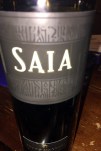
  • Fuedo Maccari – 2012 Saia – Sicily, Italy

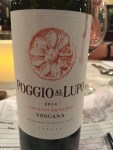
  • Tenuta Sette Ponti – 2014 Poggio al Lupo – Tuscany, Italy

  • Planeta – 2015 La Segreta – Sicily, Italy

  • Altesino – 2013 Rosso – Tuscany, Italy

  • Planeta – 2011 Burdese – Sicily, Italy

The Setup

A Young’s Market (wine distributor) rep hosted this blind tasting at Alessia’s Ristorante (Mesa, AZ). All wines were drunk while enjoying a charcuterie platter.

  • For the purposes of this tasting, it was assumed Tuscany was “South”.
  • Northern Italy is cooler than Southern: cooler climates generally produce wines with more acidity.
  • Northern Italy generally utilizes a different winemaking style: Southern Italy tends to make easier drinking red wine, versus Northern where reds tend to have more tannin and can be bottle aged. Tuscany in Central Italy can make both styles, but the Sangiovese and Cab Sauv grapes that dominate this area are not difficult to recognize.
  • The ringer:
    • Unusual winemaking processes commonly used by producers in the Western Veneto area (North) can produce fruity, rich red wines:
      • Appassimento – a process for drying of grapes and concentrating flavors (think raisins)
      • Ripasso – a process where additional skins from previously pressed fruit is added to the must to add structure

Wine Tasting Notes  & Comments

So, I landed five out of six for North/South growing region and the one ringer DID fool me. The Zenato wine was made Appassimento style and I thought it was Southern. The wine selections was great, but I missed having a traditional Barolo (North region) in the mix and it would have been fun to add a Dolcetto, Barbera (both North varietals), or Aglianico (South varietal) that might trick us. Montepulciano d’Abruzzo is a classic southern wine and probably should have been represented instead of multiple wines from Sicily.

Before we begin with the tasting notes, an observation about my palate. I enjoy fruity wines with the best of them, but they need to have some structure. Flabby, grape juice tasting wines are not my favorite, in fact I can enjoy big, young Napa Cabernet Sauvignon. Keep that in mind when reading the notes below…

Zenato – My favorite wine of the night. Lots of fruit both red and black on the nose and palate. Medium-low acidity and tannin with a dark chocolate mid-palate and finish. There was an interesting almost tar-like finishing note, with violets. Something like the finish of a good aged Barbaresco… The wine had some structure, but the complexity was the real draw. This is a drink now wine. Best drinking window 2016-2018.

Fuedo Maccari – My number two from the list. Saia is one of the few wines coming out of Sicily with a reputation preceding it. This is a fruit forward wine of black fruit and dark chocolate, with medium acidity and medium-low tannins. There is a touch of sweetness. This is a lighter, softer wine, but a bit muscular compared to a typical Nero d’Avola. These Sicilian Nero d’Avola wines are fantastic value red table wines, but definitely don’t elevate to the level of product coming from better mainland producers. Saia is arguably the best of the Sicilian group, but will cost you a few dollars more. For those who enjoy a consistently fruity wine year over year, easy drinking – with some complexity, this would be a solid selection. Best drinking window: 2015-2019.

Tenuta Sette Ponti – This was a very disappointing, overpriced wine. I would choose their Crognolo label for much less money, or their Oreno label for a little more. High tannins and acidity make up its structure. The wine is not fruit forward and primarily presents an extremely bitter chocolate palate with some earthy character. You could say: “with some bottle age this may tone down”… but there is not enough balance to think it will improve drastically. The texture is good, with a long finish. Best drinking window: 2020-2030.

Planeta

La Segreta – Fruit forward with all red fruit on the nose and palate. The structure has no tannins and low acidity. The texture is slightly watery. This wine is past its drinking window. You can tell this is a drink now wine, that should have been drunk: 2014-2016. The 50% Nero d’Avola and 20% Merlot in this mix was a match made for a drink now table wine.

Burdese – Slightly fruit forward with red fruit on the nose and palate. Strong dark chocolate character on the mid-palate and finish. The cab franc adds a slightly spicy character. The structure was high in both tannins and acidity. This wine still needs more time in the bottle. Could make an effective food wine. Best drinking window: 2019-2022.

Altesino – Fruit forward with red and black fruits on the nose and palate. There was a forest floor character to the nose that blows off after about 20 mins. This is a very average Rosso di Montalcino with a very little bit of Brunello character. It is easy drinking and without much structure. The typical dark chocolate finish is there. Pretty decent, but maybe I just want to compare it too much with the much more expensive Brunello wines.

Fun Stuff

We invited our neighbors to join us and we all had a great time, including dinner afterwards. There were four other couples at the event and everyone enjoyed themselves. The rep from Young’s Market was fairly knowledgeable and added interest. If you haven’t tried a blind tasting, give it a shot. It adds a little extra entertainment to a tasting and the suspense of your assessment adds to the experience.
Comments Off on Italy: North vs. South – A Red Wine Blind Tasting

Filed under Wine Tasting

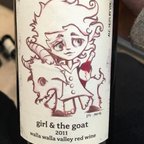
2012 Saviah Cellars Girl & the Goat

2012 Saviah Cellars Girl & the Goat

Walla Walla AVA, WA

Wine Tasting Note:

Rich, fruity blackberry, plum and spice on the nose. Fruit forward blackberry, plum and black currant on the palate, moving to a mid-palate and finish of copious amounts of dark chocolate. Spicy white pepper and cinnamon undertones. Medium-high acidity and medium tannin structure. Nice silky mouth-feel with an extra long finish. Super well-balanced wine. Drinking great right now… best window: 2016-2019. I wish this was more widely available than just in the restaurant in Chicago. I was gifted this bottle by Richard Funk the winemaker/owner at Saviah Cellars who took on the challenge of making this wine for Stephanie Izard – owner of Girl & the Goat. This wine is produced from his near perfect estate Petit Verdot vintage in Walla Walla during 2012. This is a superlative wine for drinking by itself and with food. I drank this with a coffee rubbed NY strip and it was a great match. 50% Petit Verdot, 25% Cab Sauv, 25% Cab Franc.

I don’t know whether the vision for this wine was the chef’s, or the winemaker’s, but this turned out to be a wonderful wine. Richard Funk is a great guy. I really enjoyed spending time with him during our last trip to  Walla Walla. He really hit a home run with this wine and I hope that Petit Verdot vineyard of his produces more great vintages in the future!

Comments Off on 2012 Saviah Cellars Girl & the Goat

Filed under Bordeaux/Meritage Blend, U.S. Wines by Region, Walla Walla Valley, Wine by Varietal, Wine Tasting, Wine Tasting Notes

Climate Change and Wine


Not to minimize, or take away from the tragedy currently unfolding in Napa/Sonoma… our prayers go out to the families who are dealing with such terrible loss.

It is difficult to discuss causes this early, but I think all of us can easily recognize these fires are being worsened by very dry conditions. I have been talking to folks in the industry for months about the unseasonably hot and dry growing season this year and its impact, well before these fires added a horrible punctuation mark to the conversation. This should put the topic of climate change front and center in the minds of those in the wine industry – not just in the U.S., but globally…

Rising Trends

The long-term impact of global warming should have the largest effect on vineyard varietal selection. In the next 20 years will we see Napa/Sonoma start replanting vineyards to warm climate varietals? Will the vineyards start to look more like the Southern Rhone? In 20 years will Oregon/Washington State become the new Napa?

The short-term impact will be on harvest timing/strategies and winemaking. Before the fires, I saw a few CA winemakers chatting on Facebook about how the unusually hot harvest in 2017 might cause them to adjust their approach from past years. It will likely be the estate wineries that can be flexible and creative enough to weather this transition well (pun?).

Let’s start with a very important basic presumption: balanced wines are preferred and desirable. Napa moving to easy drinking Lodi Zinfandel style wines just doesn’t seem like an option to me. I have spoken to several winemakers over the past five years that are already experimenting with interesting techniques… These conversations have led me to realize that the steady trend toward more single vineyard wines and estate wineries is happening for many reasons beyond marketing strategies. Winemakers are reaching the conclusion that more control over the growing process is vital to the production of premium quality wines. These techniques may have a more far-reaching impact though: as options to minimize the effect of a warming climate…

How Can the Industry Adjust to Climate Change Now?

I am sure there are much smarter people out there with more training and great ideas on this topic, but this thought occurred to me recently…

Multiple Harvest Windows?

This strategy is basically, separating a vineyard into blocks and varying the harvest timing… requiring multiple harvest passes at different times in one vineyard. I can’t tell you how many other winemakers have told me this is a gimmicky, trendy technique and is a waste of time and money. I have tried to see the negative viewpoint, but the final consideration always comes back to the supporting science.

Before a winemaker can consider this alternative strategy, he/she has to either: be working for an estate winery, or have influence and control over the grower. I have talked to several winemakers/winegrowers who split harvest timing across several days/weeks to handle individual vineyard blocks separately. This can take advantage of rustic elements present in the fruit from earlier harvest vs. more advanced flavors/phenolic development from later harvest. Although, if the nights are not at least cool during Fall harvest season, good acidity levels will still be difficult to achieve. Earlier harvest can also control sugar in the must (fruit) and subsequent alcohol content in the wine. Some are taking this thinking a step further and investing in the equipment and resources to perform small-batch fermentation of each separately harvested block… to add complexity and balance via blending. In a world where Fall is becoming warmer, an interesting investigation might be whether earlier harvest in one block could help offset the impact of a more traditionally timed harvest in another?

Popular Wine Grape Varieties and Vineyard Location

The Bordeaux grape varieties that comprise the majority of red wine currently sold in the world (Cab Sauv, Cab Franc, Merlot, Petit Verdot, Malbec & Carmenere), do not produce classic wine styles when grown in warmer climates. That doesn’t mean there aren’t varietals grown in warm climates that don’t produce structured, balanced wines… Syrah, Grenache, Aglianico, Tannat, Tempranillo (to name a few)… but to go down this path, the majority of the world’s vineyards ( from 35th to 45th parallels) would have to be replanted AND the world would have to be re-educated on which varietals to drink.

When grown in a warm climate, the most common wine grape varieties in the world, tend to produce simple, easier drinking wines that do not pair well with food. Regardless of the necessities driven by global warming, it is unlikely that consumers will accept new styles of wine simply because current vineyards are not planted in cooler climates.

Forest Fires, Vineyard Fires & Climate Change

There will never be a good approach to bringing these pieces together. Vineyards need to be starved of water and nutrients in a carefully controlled process to concentrate flavors and produce complex premium wines. Vineyards cannot be over-watered, which means they will always be “dry” by definition. As global warming continues, it will be critical to clear an open space around vineyards, so scrub and forest cannot easily transfer fire conditions by proximity. I can’t tell you how many vineyards in the mountains around Napa and Sonoma are nestled in and completely surrounded by forest. What makes for a beautiful setting, may cause a fire risk that is no longer acceptable. Any change along these lines could dramatically change the picturesque nature of wine country (California?) moving forward.

Change is a disruptor we all have difficulty contending with in many areas of our lives. It is likely wineries and wine enthusiasts alike will have to change expectations in coming years.

1 Comment

Filed under Wine Education, Wine Industry

Can You Trust a Wine Recommendation?

Everyone tastes wine differently. Although, I think it is important to note from where the recommendation is coming. A friend you drink with frequently and know what they enjoy? Sure. An attendant at a wine store? Not so much…

So, maybe you can trust friends, or family to make a reasonable recommendation, but can you trust your wine retailer? I attended a wine tasting hosted by Total Wine this evening and was so dumbfounded by the event, it seemed important to write about. See the brochure for the event below. Perhaps you have attended something similar at the Total Wine near you?

Wine Re-Sellers

A new store manager introduced herself and it seemed the intent of the event was to meet some of her higher volume customers. I purchase enough wine and spirits from the Total Wine near me to have earned a membership in the top tier of their Total Discovery club. This was a free event for a select group.

I have never tasted such a poor selection geared toward wine enthusiasts in one place. What kind of impression was the new manager trying to make? Either, she was never trained to select quality wines, or this event was used as an opportunity to push a bunch of awful wine with higher profit margins. Either way, a sad proposition. The previous manager at least included a few better wines in every event and made it worth attending. This was outright torture. I happen to overhear a customer asking how she could dislike so many of the wines and the attendant responded something like this: “These wines might not appeal to everyone. You should stretch your thinking to include other wine styles.” Oh my gosh, she was pulling the shame card. As if the poor, unsophisticated know-nothing wine drinker could just open their mind… and appreciate other “important” wine styles. The assumption is suggested that we are totally incapable of judging impartially what a “good” wine is. While this approach was nearly insulting, the idea is one I have used before in discussions with wine enthusiasts. That is… if the wines are actually selected to represent good examples of their region of origin. In this case, it was used as an excuse.

So, how does the average consumer investigate and select wines to purchase? Too often, you are stuck depending on recommendations from wine attendants that share a supposedly educated opinion regarding the quality of available wine carried in their inventory. So, what if these attendants are self-serving and recommend wines that they are told to promote? Perhaps at a higher profit? This is a clear betrayal of trust. This night, I heard memorized talking points taken from marketing pieces with very little relevance to the actual product. Do any of these wine educated people have a personal opinion?

The Wines

  •  Mailly – NV Champagne Grand Cru Delice
  • Albrecht – 2015 Pinot Gris
  • Amici – 2015 Chardonnay
  • Ceja – 2009 Pinot Noir
  • Ringland – 2014 Shiraz Barossa Valley
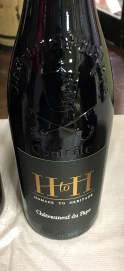
  • H to H – 2015 Chateauneuf du Pape
  • Truett Hurst – 2015 One Armed Man
  • Titus – 2014 Cabernet Suavignon Napa Valley

Wine Tasting Notes and Comments

Mailly – I have never tasted a Mailly Champagne I liked. This producer threw the time-honored Champagne flavor profiles out the window to make what they must think us crazy Americans will buy! Champagne should be clean and crisp and the bubbles should dance on your tongue. This was their Demi-Sec (slightly sweet) variety. The wine was thick and rich and cloyingly sweet. It had a strong bitter aftertaste. The typical yeasty smell of some champagnes was on the nose, but on the palate it seemed to add a buttery character to the wine. Save your money and buy some Mumm Cuvee instead, or spend a little extra to buy a Piper-Heidsieck Cuvee.

Albrecht – What happened to Albrecht Pinot Gris? My memory of their wines puts them in the same category as Trimbach for quality. Maybe it was this vintage? This was tasteless with no aroma. For a similar price, try a Trimbach PG instead.

Amici – This is a totally manipulated Chardonnay, with too much oak. There was a strong bitter flavor that often comes from a malolactic fermentation that did not go as planned. This is rich and buttery, but the fruit is not fresh and it should have had more acidity. Way down on my list. For less money, try the Sonoma-Cutrer Sonoma Coast Chardonnay and experience a proper entry level oaked Chardonnay.

Ceja – The first reasonable quality wine of the night. This offered a fairly average representation of a typical Carneros Pinot Noir. I am not a big fan of all that fresh red cherry in these wines, but at least this one was pretty typical. Try Schug, or Acacia Carneros Pinot Noir instead for something a little more interesting at about the same price.

Ringland – Ugh, sweet medicinal cough syrup. ’nuff said.

H to H – The second of the two reasonable wines. This is a fair representation of a Chateauneuf du Pape and at this price point: a good effort. It misses the jammy fruit, tannins and acidic structure you would expect. On the other hand, it IS hard to find a good CDP for less than $40/btl.

Truett Hurst – We were told this wine was better than “The Prisoner” and once tasted, you will never go back. This “One Armed Man” tasted like it really needed the other arm. The wine tasted mostly like a cheap Paso or Lodi Zinfandel. The Prisoner blend doesn’t hit you in the face with the Zin and other varietals are added to bring tannins and acidity to the party. For a few dollars more, find The Prisoner on sale and enjoy.

Titus – I am not sure I can even put this in the average Napa cab category. This is over-oaked and manipulated to add a soft, smooth texture at the expense of the freshness of the fruit. A young Napa cab should have fresh fruit, high acidity and tannins. This wine was short on all the character that makes a Napa cab special. For near the same price, try the Baldacci Four Brothers Cab Sauv and taste what a Napa wine should be at this price.

What Can You Do?

Here is a simple suggestion: read the back of the bottle, or do a quick internet search at the winery website first… then ask the attendant their opinion. If what you are told is the same, run away as far and as fast as you can AND be suspicious if this bottle just happens to be their favorite. Try other shops/stores and look for someone who will give you their actual opinion. If it varies from what is printed on the bottle, you are in luck! Then, hopefully you get a follow-up question similar to: what do you like?, or what other wines do you already buy? There’s your evidence of a keeper, a wine attendant you can trust!

1 Comment

Filed under Wine Education, Wine Tasting, Wine Tasting Notes

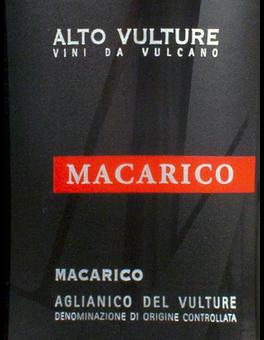
2006 Macarico Aglianico del Vulture

2006 Macarico Aglianico del Vulture

Basilicata, Italy

Wine Tasting Note:

Fruity nose of blackberry, plum and black currant with hints of leather and pepper. After 11 years this is still a BIG wine. All the black fruit comes through on the palate with loads of white pepper that turns to black pepper on the finish. The earth shows as brambly fruit and leather, beginning on the mid-palate and getting stronger during a very long finish. This wine is still very tannic and the acidity is high. The fruit is still fresh, but starting to show age. Best drinking window: 2016-2022. This drinks very much like a young Gigondas Southern Rhone wine heavy on Syrah in the blend. Personally, I can enjoy strong tannins, when the wine is complex and balanced like this. If you don’t know Rhone wines, the closest domestic comparison would be young, robust Napa Cabernet Sauvignon. Like Napa Cabs, this varietal tends to pair well with BBQ and red meat. Aglianico is always a good value, always ages well and is the best varietal of Southern Italy!

Comments Off on 2006 Macarico Aglianico del Vulture

Filed under Wine Tasting