Tag Archives: California

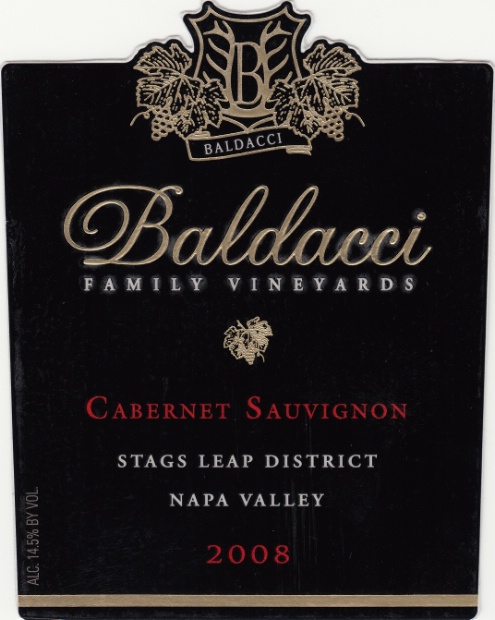
Baldacci Family Vineyards Cabernet Sauvignon Stags Leap

Baldacci

Baldacci Family Vineyards

Black Label Cabernet Sauvignon

Stags Leap District, Napa Valley

Tasting Note:

Beautiful Napa Cab in the middle of its drinking window! Drinking Baldacci Stags Leap Cabs over the last 20 years, I am struck by how they always over-deliver at their price. This bottle cost $46 in 2010 and is drinking like a $70+ Napa Cab! Blackberry and black currant on the nose with tar and leather. Still fruit-forward after 8 years of aging, with blackberry and black currant in front, transitioning to a mid-palate of dark chocolate, leather, underbrush and tar. The wine has a lengthy, slightly hot finish. Gorgeous rich mouth-feel, full and sensuous. The tannins have resolved well and are just under the surface. The acidity is high, but this paired perfectly with a rib-eye steak. Without food, the acidity would have been a bit much. The signature Cab character of graphite and tobacco are missing, but regardless, my wife and I really enjoyed this bottle with steaks for dinner!

Comments Off on Baldacci Family Vineyards Cabernet Sauvignon Stags Leap

Filed under Cabernet Sauvignon, Napa Valley, Stags Leap District, Wine by Varietal, Wine Tasting, Wine Tasting Notes

Best Value Wine Destination in the U.S.A.?

value pic

I was recently involved in a discussion regarding preferred wine tourism destinations among serious wine drinkers / collectors. Napa Valley is consistently drubbed for its utter lack of value. Average tasting room fees are $25 – $40/pp… to access top quality, it is not uncommon to pay $75/pp. Now granted, these wineries are so gorgeous – Napa Valley itself creates its own ambiance, but let’s move past honeymoons and anniversaries and talk year-in and year-out wine tourism destinations. My wife and I have vacationed in Napa at least 10 times in the last 20 years and while it was previously my favorite location, it is now third on my list behind the California Central Coast and Sonoma County. To make things worse, Napa tasting rooms have steadily become more impersonal, making me feel like one of the massive herd, or a bother, rather than a valued guest.

Yes, my favorite wine destination is the Santa Barbara and San Luis Obispo Counties area in California!

Destination Comparison

Cuisine / Restaurant SceneWinner Napa Valley

The Central Coast is improving, but still has catching up to do.

Tasting Rm FeesWinner Central Coast

1/3 to 1/2 the cost of Napa.

Tasting Rm AtmosphereWinner Central Coast

The Central Coast is a big winner here. I have been getting tired of the attitude in Napa. The tasting rooms are so much friendlier almost anywhere else. I miss 10+ years ago when wine tasting was casual and inviting!

Lodging ValueWinner Central Coast

1/2 the cost of Napa with several resort quality properties to choose from.

Quality of WineWinner Central Coast

Slight edge, not because any single wine is superior, but because overall – the wines approach Napa in quality and the selection is amazingly diverse. There are top quality producers of Syrah, Cabernet Sauv, Zinfandel, Pinot Noir and Chardonnay here… in Southern Rhone, Bordeaux and Burgundy styles. All of this diversity is driven by an area with crazy climate variability.

SceneryWinner Napa Valley

Maybe not as cozy as Napa Valley, but the hill and mountain regions west of Hwy 101 are very picturesque.

BeachWinner Central Coast

No Beaches near Napa. This region has Pismo Beach.

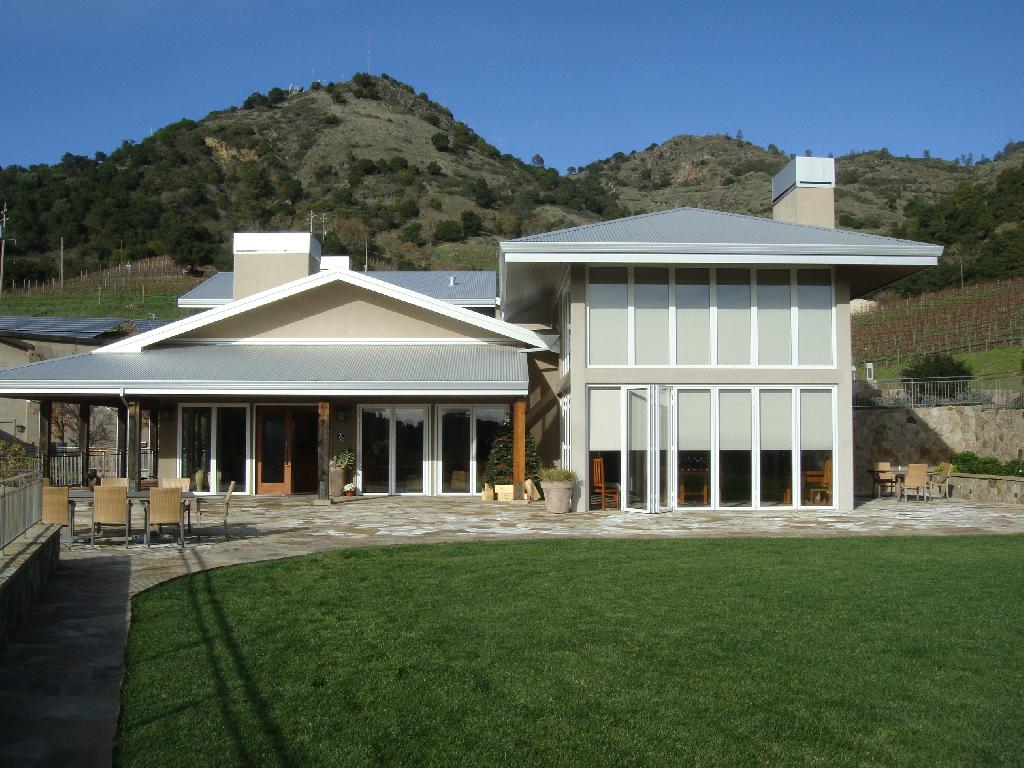
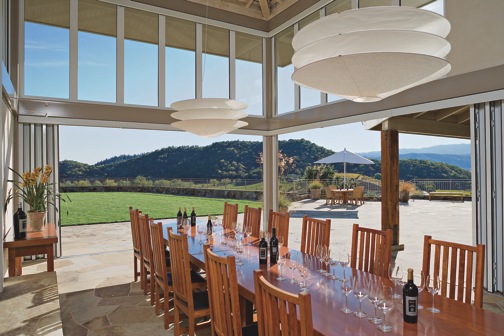
Winery ArchitectureWinner Napa Valley

Napa has a big edge here, but some wineries are starting to spend big money in the Central Coast area.

l'aventure winery

l’aventure winery

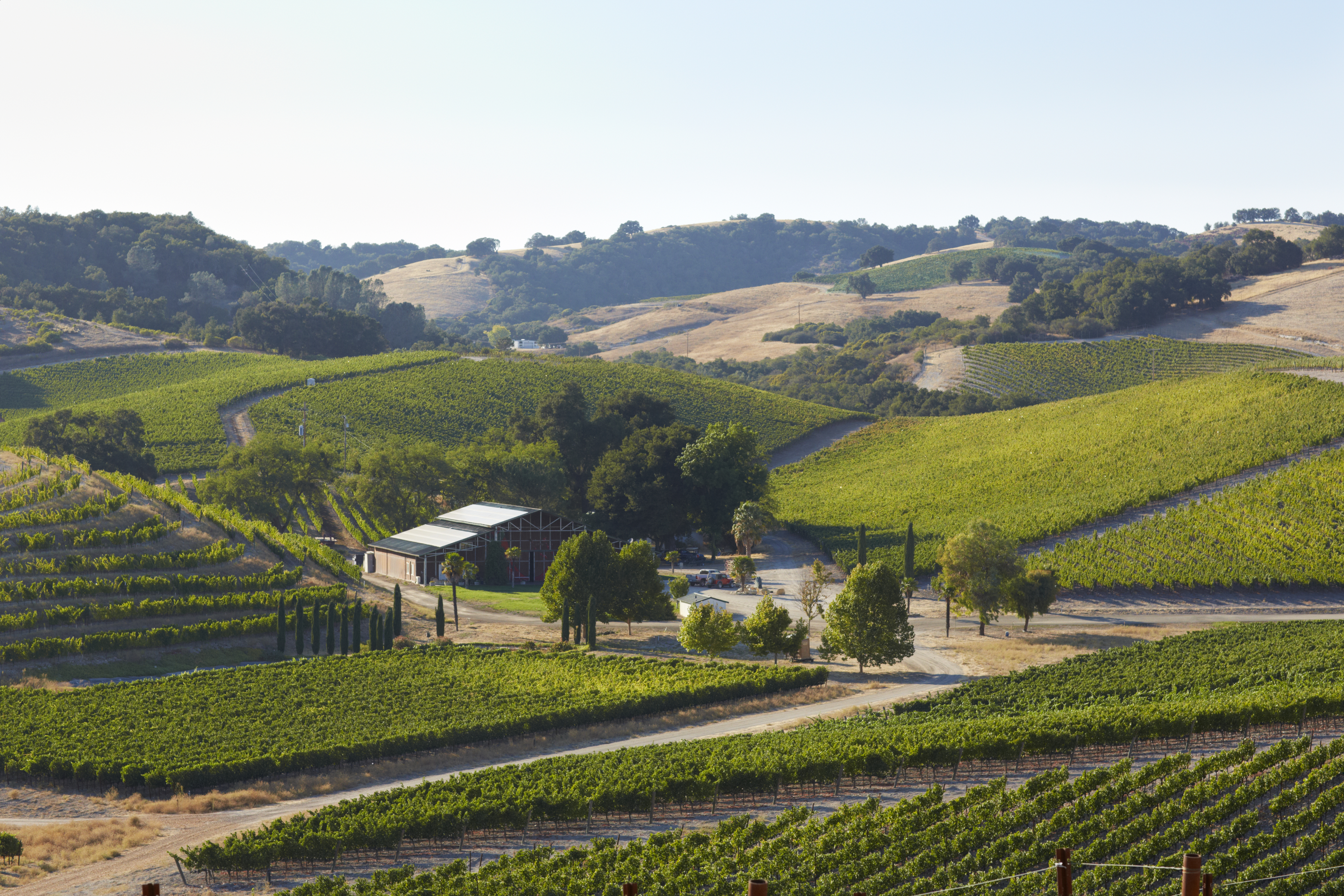
A Paso Robles Vineyard & Winery

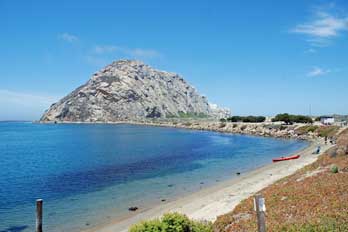
Morro bay pic

Morro Bay, CA

Central Coast Winery Suggestions

(arranged from South to North)

Santa Barbara County

Carr Vineyards – All wines are good, but their 100% Cab Franc is special and reasonably priced.

Jaffurs Wine Cellars Quality Southern Rhone style wines that offer great value.

Brewer- Clifton Pinot Noir and Chardonnay. Their Chardonnay is Burgundy style and fantastic!

Qupe – Beautiful, refined Syrah by a master winemaker.

Andrew Murray Vineyards The best value quality Syrah in the U.S. hands down.

Melville Winery Great values in Burgundy style Pinot Noir.

San Luis Obispo County

Laetitia Vineyard & Winery – Fine quality sparkling wines in a broad selection of styles.

L’Aventure Winery – Balanced Hedonism Incarnate (is that possible?). These wines are massive, powerful… and perfection.

Peachy Canyon Winery No winery makes more different single vineyard Zinfandels. If you are a Zin Master, you must visit Peachy.

Tobin James Cellars Their tasting room is definitely the most fun in the area!

Justin Cellars This is your bastion for Bordeaux style wine in the area. Their Cab Sauv and Merlot blends are very good! These wines are approaching the quality of the best in Napa.

Herman Story Wines THE BEST Southern Rhone Style Wines in the United States at prices that will cause you to do a double-take.

Other Wineries of Note Some of best wineries in the world are making amazing wine here, but are expensive and difficult to arrange access:  Alban Vineyards, Saxum Vineyards and Sea Smoke Estate Vineyards.

New Destinations My wife and I will be traveling to Walla Walla, WA this fall, six years after our last trip. I am hoping this location has much to show! I am looking for my next wine destination to add to our list! I will update our findings on this site after our trip!

2 Comments

Filed under Wine Industry, Wine Tasting, Wine Travel

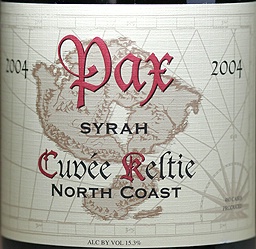
Pax Cuvee Keltie Syrah North Coast

22118


Pax Wine Cellars

2004 Cuvee Keltie Syrah North Coast

California, North Coast

Wine Tasting Note:

Initially, this was too hot and closed directly out of the bottle. After a one hour decant: blackberry and mint on the nose. The nose had a bit too much alcohol to enjoy. 11 years in the bottle and still plenty of structure with medium-high tannins and acidity. As you would expect, the freshness of the fruit is gone. The palate is of blackberry, black currant and bitter dark chocolate with a short finish. The alcohol is evident, but not over-whelming. The big winner here is the mouth-feel. A beautiful Northern Rhone kind of character that starts a little oily and finishes with mouth-coating, grainy tannins that were a little to the rustic side of velvetty. This wine has the structure to sit in the cellar much longer, but the fruit will not last. Best drinking window is/was probably 2012-2016. I have seen other recent tasting notes that describes a fruit-forward wine with a sweet finish. This bottle was very dry and had a subdued fruit character.

All-in-all a nice effort to produce an age-able, structured Syrah with a Rhone feel. This would have been a 95+ wine, if the alcohol component had been more balanced against the total profile.

2 Comments

Filed under Cool Climate Wine, North Coast, Syrah/Shiraz, U.S. Wines by Region, Wine Tasting, Wine Tasting Notes

Winemaker Interview – Sally Johnson-Blum of Pride Mountain Vineyards

Please follow my winemaker interview series! You can find this and other interviews at the following link:

http://winemakerinterviewseries.net/2015/03/01/winemaker-interview-sally-johnson-blum-of-pride-mountain-vineyards/

Comments Off on Winemaker Interview – Sally Johnson-Blum of Pride Mountain Vineyards

Filed under Wine Tasting, Wine Tasting Notes, Winemaker Interview

Shafer Vineyards Wine Tasting and Visit – Napa Valley, Stags Leap AVA

Shafer-Vineyards1

.

I was really looking forward to visiting Shafer on this trip. It was expensive, but I wanted to connect with the same winery that had produced those great vintages of One Point Five and Relentless.  I envisioned writing this crazy post that would make you want to jump on an airplane right now and drive directly to the winery.

.

Shafer-Tasting-Room

Tasting Experience

As you approach the winery, this is a hilly site that hits you with a luxurious feel of rolling vineyards.  It was a gorgeous facility and the tasting room was well-appointed.  The whole experience was just as the description sounds – expensive, stuffy, high-brow.  My wife and I were tasting with a group of eight consumers.  The group tasted the current releases, including the Hillside Select that had a retail price of $250/btl.  I spoke to several in the group afterwards and they had already moved on, asking me to recommend other sites in Napa.  Not that the wines weren’t good… just that the experience was not engaging and did not leave a lasting impression.  For the price of the tasting and the cost of these wines, you would expect something different.  The Shafer experience is a throw-back to an American wine experience long past.  Today, even the wine drinker able to afford this collection, is looking for a more relaxed presentation.

The Shafer 2014 Releases

2012 Shafer Chardonnay – Carneros, Red Shoulder Vineyard

Lots of citrus on the nose with citrus AND tropical fruit flavors in front on the palate.  The tropical fruit character was a nice change from other Napa Chardonnays.  The lack of malolactic fermentation adds to the perception of very high acidity, which is a nice counter-point to the creamy mouth-feel.  Very Old World winemaking here – lots of new French Oak and a full 14 months on the lees.  A very nice Chardonnay and the second best wine of the day, in my opinion.

2012 Shafer Merlot – Napa Valley

Nose was a bit unusual with a floral character from the 6% Malbec.  Once the carmelized butter hits the nose, you know where this is going… a rich, toasty oak experience.  The wine is fruit-forward with typical plum flavors in front, but the mid-palate catches you off-guard with a very bitter and sharp dark chocolate flavor that makes the wine difficult to drink.  Also, you would expect a little more mouth-feel from a high-end Merlot like this.  The wine’s structure had high tannins and high acidity.

2011 Shafer One Point Five – Stags Leap (100% Cabernet Sauvignon)

I didn’t know what to expect with this.  All the talk of how poor the growing season was in 2011, I was hoping the winemaker had taken an approach aiming to work with the fruit, instead of fight it.  Unfortunately, that was not the case.  Boysenberry, plum and fresh tobacco on the nose.  The palate was fruit-forward with a little more red/black berries, than currant and plum.  The mid-palate transitioned to pleasant dark chocolate and fresh tobacco, with a very weak finish.  The finish highlights the problem with this wine.  The structure included high acidity, but only medium tannins, missing the structure needed for proper aging.  The balance was good, but the mouth-feel wasn’t there.  I would guess a drinking window of another five years, or less, by which time the balance will be lost.  The tasting offered two impressions:

  • Fruit from a cool year that was picked too early, due to the rain during harvest that year
  • A winemaker that attempted a traditional Napa Cab, instead of one with a silkier, lighter elegance – to match the fruit from such a difficult growing season

2011 Shafer Relentless – Napa Valley (Syrah blend)

The Syrah fared much better in the cooler 2011 year… as you would expect from a varietal that stands up to cooler temperatures well.  Fortifying this blend with Petit Sirah adds plushness to the mouthfeel and deep color.  Minty on the nose with lots of plum in front on the palate.  The mid-palate moves to pleasant dark chocolate with a medium length finish.  What I liked most about this wine was the character of the tannins.  No grittiness, or bite… the mouth-drying tannins were very soft and smooth.  The wine’s structure had high tannins and high acidity.  This Syrah blend will age well.

2010 Shafer Hillside Select – Stags Leap (100% Cabernet Sauvignon)

By far, this was the most enjoyable wine of the tasting.  Very fruity plum on the nose with a touch of tobacco and menthol.  A blackberry and plum fruit-forward palate with a very long, luxurious dark chocolate finish.  Beautifully balanced with soft tannins and a nice acidic backbone.  The wine was soft, but not particularly vibrant in the mouth.  A very refined style and the best wine of the tasting.  An excellent Napa Cabernet, but at $250/btl, difficult to justify the price.  I wonder where the 2011 vintage will take them?

Understanding the Shafer Message

Once the wine tasting was complete, the group discussed wine availability with the attendant.  This is where the whole experience goes awry.  So, apparently Shafer is a winery 100% committed to the three-tier distribution system.  They sell-out through distribution most years.  Only 15-20% of production is used for on-site tastings, or sold direct to the consumer… and they make sure you know it.  Limited availability is stressed.  I have no idea what message they are trying to craft for the consumer, but it comes across as being very detached.  I have tasted at many wineries whose total production is committed to allocation, having no wine to sell, but at least there… they apologize and help people to understand how the tastings are pulling wine away from previously allocated purchases.  I recognize supply and demand issues as well as the next guy, but at least they could be apologetic regarding the circumstances…

Conclusion

In the past, I have purchased Shafer wines via wine brokers.  The wines maintain value, but do not seem to appreciate much on the open market, so many 5-10 year old vintages can be acquired at roughly the same price as current releases.  Without a feeling of connection to the winery, my future Shafer purchases will be based solely on QPR (quality to price ratio) and in most years, that will be a hard sell.

Comments Off on Shafer Vineyards Wine Tasting and Visit – Napa Valley, Stags Leap AVA

Filed under Napa Valley, U.S. Wines by Region, Wine Tasting, Wine Tasting Notes

Winemaker Interview – David Ramey of Ramey Cellars

Winemaking Aristocracy

Please follow my winemaker interview series! You can find this and other interviews at the following link:

http://winemakerinterviewseries.net/2015/01/05/winemaker-interview-david-ramey-of-ramey-cellars/

Comments Off on Winemaker Interview – David Ramey of Ramey Cellars

Filed under Bordeaux/Meritage Blend, Chardonnay, Napa Valley, Sonoma County, U.S. Wines by Region, Wine by Varietal, Wine Education, Wine Tasting, Wine Tasting Notes, Winemaker Interview

Follow-up to: “Cabernet Sauvignon Blend Comparison”

A few comments from readers outside the U.S. highlighted the cultural bias I showed in this piece.  So, for my readers outside the U.S., I decided to write a follow-up with that in mind…

Bias Cartoon

I have written before about cultural differences and how it affects wine culture and wine jobs around the world.  It is difficult to shed the result of our up-bringing.  My point has always been – evaluating the quality of a wine is the same around the world, but whether it is enjoyed with or without food… or which foods pair best to local palates – are not simple questions with easy answers.

Cultural “Liberties”

I took many cultural “liberties” in the previous piece, assuming a shared understanding.  Also, I SHOULD have offered an evaluation regarding the best wine-food pairing…  As a starting point, keep in mind, all four wines were essentially Bordeaux style blends, the wines were similar in profile and this style of wine pairs well generally with red meat.

When I hold a tasting of varietally similar wines like these, it definitely allows a focus on evaluating structure and balance vs. flavors/aromas.  A more technical approach, but one I prefer. If you read my tasting notes, I ALWAYS discuss the structure and balance of the wine – regardless of the pairing.  I tend to evaluate wines based on how well they are made vs. how much I enjoy them.  This is the FIRST concept I was taught in formal Sommelier training.  The French wine was BY FAR the best balanced wine at the table.  So, in a tasting of similar style wines, it offered the best wine-food pairing of the four.  Which wine did I enjoy the most without food?  The 1993 Beringer Private Reserve.

In my opinion, this “Cultural Bias” is the biggest challenge that a wine professional can face when trying to bridge the chasm between Old and New World locations:  accommodating the local wine culture.  This affects every discipline in the wine industry, affecting how the wine is made, how it is marketed, serving decisions…  Perhaps, this thinking explains the importance of an involved U.S. importer to a European producer.

Cultural Differences

In the U.S., it is more common to enjoy wine without food.  One of the challenges I had to overcome in my training, but it also affects how I approach evaluating wine for my U.S. audience.  I believe there are a few ideas differentiating wine drinkers in the U.S. from many other locations around the world:

1) A significant share of the wine consumed in the U.S. is enjoyed before, or after dinner, without food.

2) Americans are looking for a less formal and relaxed wine experience.

3) When paired with food, wine flavors should enhance food flavors, rather than just complement the flavors.  Wine is not often consumed primarily to clear the palate as is common in Europe.

In closing, I was asked for a better description of the food prepared and enjoyed with the wines. So, here it is:

Beef Short Ribs – braised with a balsamic reduction for 3 hours in a pressure cooker.  They were rich, meaty, and very tender.

Mac & Cheese – a uniquely American comfort food.  This is an extremely rich pasta dish made with butter, cream and lots of cheese.  In this case we made the pasta from scratch vs. pre-packaged.

Succotash – another uniquely American dish.  A mixture of corn, butter beans (we subbed cannelloni) and okra (we subbed zucchini) in a light butter sauce with salt pork flavoring.

1 Comment

Filed under Food Pairing, Wine Education, Wine Industry, Wine Tasting

Cabernet Sauvignon Blend Comparison

See a follow-up to this post at:  https://coolclimatewine.wordpress.com/2014/12/28/follow-up-to-cabernet-sauvignon-blend-comparison/

Tasted Friday, December 26, 2014

INTRODUCTION

I selected one each Bordeaux, Napa and Tuscan Cabernet Sauvignon blend to pair with dinner for this get-together. We invited friends over for a meal of braised beef short ribs, home-made mac & cheese with gruyere & cheddar sauce and succotash. All the wines paired extremely well with the meal served.

The Le Petit Haut Lafitte was the standout of the night. This was extremely well-balanced, with good structure and had a very pretty, refined character that spoke of a well-made wine. A mix between Old and New World with a fruit-forward palate.

The surprise of the night was the ’93 Beringer. Wow, what a great aged Napa Cab. Just an excellent bottle-aged wine. This wine was made to age well and actually has a few years left in it, if anyone has this in their cellar… it isn’t dead yet!

FLIGHT 1 – CABERNET SAUVIGNON BLENDS (4 NOTES)

All great choices and enjoyed by all!

USA, California, Napa Valley

After one hour decant. This was the most surprising wine of the night. At 21 years old this bottle was singing! The nose showed plum, blackberry, black cherry, graphite and earth. The freshness of fruit on the palate was nothing short of amazing for a ’93. The palate followed the nose with beautiful fruit. The structure was spectacular for an aged wine, with medium-high tannins, good acidity and well-integrated alcohol. Nice mid-palate of tobacco that added complexity, but the mouth-feel is what got me. The balance was good and the tannins had a great velvety texture that filled the mouth. It needed more layering of flavors and a stronger finish to move in to the exceptional category though. This wine actually has a few more years under its belt! This is my first Napa cab sauv that has stood-up well to 20 years of bottle aging.

France, Bordeaux, Graves, Pessac-Léognan

After one hour decant. This was the most spectacular wine of the evening. It was extremely well-balanced, with a refined, classically old world character… while still being fruit forward. The wine showed great QPR and is a substantial effort for a second label. Plum, blackberry, creme brulee, tobacco and earth were on the nose. The palate follows the nose. The wine is very accessible for only five years in the bottle. I would suggest your prime drinking window to be 2016-2018. I don’t believe this wine will age successfully beyond that. Everyone at the dinner agreed this was the best wine of the evening. With medium-high tannins and strong acidity the structure was spot-on. The alcohol was noticeable, but did not dominate. This contributed to a superb pairing with braised short ribs. This is the best value I have tasted from Bordeaux in a long time.

USA, California, Napa Valley

After 30 min. decant. Popped this half bottle looking to see how close this wine is to its drinking window. This needs another few more years. The nose is full of plum and rich red tomato. The palate is fruit forward with plum and blackberry moving to a hint of tomato. Nice spicy character leaning towards cinnamon and clove. The wine had medium-high tannins with very high acidity. It was slightly hot and not integrated enough yet to be well-balanced. This was definitely starting to move towards a soft mouth-feel. I enjoyed this now, but believe it will be much better when I pop the next bottle in a couple of years.

Italy, Tuscany, Toscana IGT

After 60 min. decant. This improved with more time in the glass. Fruit on the nose was of cherry and plum with vanilla and herbal mint. The nose was too hot to really enjoy. The palate followed the nose. Medium-high tannins and high acidity for good structure, but not well-balanced. The alcohol was very noticeable. The other characteristics were a little out of kilter. I will save the next bottle for a couple of years, hoping it will come together.

Comments Off on Cabernet Sauvignon Blend Comparison

Filed under Bordeaux, Bordeaux/Meritage Blend, French Wine, Italian Wine, Napa Valley, Super Tuscan Blend, Toscana, U.S. Wines by Region, Wine Tasting, Wine Tasting Notes

Breaking Down Winemaking Styles

During a recent trip to Napa-Sonoma, California, I had the opportunity to interview several winemakers and talk with tasting room managers in the premium wine segment.  The discussion produced a large amount of material, but a few ideas stood out. One question continued to run over and over in my mind:  does a winery begin with some sort of vision for the final product?  If so, how does it come to be…

Is Wine Style Part of the Business Plan?


**INSERT Dilbert cartoon HERE** ©Scott Adams


Folks, I am not able to include this Dilbert cartoon, but you simply must click on this Link and check it out.  Funny stuff and right on point for this commentary.  This cartoon was excerpted from: Washington Business Journal, “Is your vision statement for real?”, Mar 17, 2011, Link Here.  Good read!  Unfortunately, even non-profit commentary use must still respect creative property!


The Vision

In the over $25/btl retail segment, I would say the wine itself easily contributes 2/3 (or more) to the brand identity.  Can you develop a brand, without developing a vision for the product?  I find this kind of discussion fascinating…

Is it important for employees and customers to understand that vision?

Should a Winery Have a “Wine Style”?

Every winery has a story to tell that differentiates them from the thousands of other producers in the marketplace.  That story is the cornerstone of each label.  So, what does this have to do with winemaking? Everything!  The questions posed in these interviews uncovered a glimpse into that underlying vision and ultimately how they wish their wines to be perceived by both their own organization and the consumer.

Why would an owner choose the difficult premium wine segment of the market in the first place?  There must be a calling, or a passion driving that decision?  Framing that story in a way that can capture a wine enthusiast’s imagination… is a message worth crafting.  So, where could wine style fit into this picture?  In this price category, more than any fancy, gimicky label design, or strategic marketing plan, the wine itself defines the brand.  If this thinking is sound, then the style of wine produced IS the winery’s identity.  Following this logic, finding a way to bring the story behind making the wine directly to the consumer is absolutely critical to building the brand.  If you look at wineries in this way, what stories do they have in common?  After interviewing enough winemakers / owners, you start to see commonalities.  In my opinion, the choice of wine style seems to manifest in one of three different ways:

1.  Begin With the Quality of the Fruit  –  Wine should express the character of the fruit and Terroir

  • This is the winemaker as viticulturist view.  Requires an emphasis on the wine growing.  With a complementary view of nurturing the vines to produce supreme quality fruit.  This is best implemented in an estate winery situation.

Impact on the Wine – Tends to add complexity and layering of flavors.  These wines often have a more defined mid-palate. This style is frequently made to be fruit-forward and emphasizes clarity and freshness.  This approach will usually drive good structure, but may not emphasize balance and often has a varietally correct flavor profile.  This style is typified by the winemaker as farmer – often with formal training in biology, botany, or agriculture and the winemaker leans heavily on learning his trade through internships and experience.

2.  Begin With Analyzing the Fruit  –  Better wine through better chemistry

  • This is the winemaker as technologist view.  Monitor and measure everything.  Wine is a mixture of chemical components and the optimum desired profile can be identified and reproduced.

Impact on the Wine – Brings more consistent quality.  These wines tend to focus on correct ratios.  There is rarely a desired component missing, but the product can often lack finesse.  Tannins, acidity, alcohol, phenolic development all carefully measured to arrive at the optimal formula generally accepted by the industry.  This style is typified by the winemaker with a UC Davis MS in Enology, who has taken the technological training completely to heart.

3.  Begin at the End  –  Start with a clear vision for the final product

  • This is the winemaker as artist view.  Where the winemaker is the star and bringer of quality.  This demands a winemaker as leader, who can leverage a history of experience, knowledge and technique to drive the wine to match his vision.

Impact on the Wine – These wines tend to be either elegant and composed, or knock your socks off with a focused over-the-top approach.  Focusing on the elegant approach…  Whether, or not the fruit is up to muster, these winemakers find a way to make the wine balanced and have great mouth-feel.  These most often are classically styled wines, with good structure, acidity, tannins and texture.  Flavors and aromas are less of an emphasis.  This style is typified by the winemaker as the leader and star – having a decade, or two of experience, always knowing the right decision to make, regardless of vintage variation.

Most wineries mix some combination of these ideas, but one of these philosophies typically shines through.

Does One Style Produce Better Wine?

The answer is most definitely no, but the wines within each style category do tend to have similar characteristics.  I enjoy wines in my cellar from producers that fall into all three categories, depending on my mood.

As a consumer, does identifying the story behind your favorite winery matter?

This time the answer is most definitely yes.  If you are like myself and many of the wine enthusiasts I know, we enjoy quality wines, but like to vary flavors and styles.  You may recognize these different styles in your favorite wines.

I have always found this to be sound advice:  “The key to finding new wines you are likely to enjoy, is to track the winemakers and vineyards.”  Pay attention to this information for your favorite wines and it will help you find other labels worth trying.  Connecting to the story behind your favorite winemakers and favorite vineyards can make your wine appreciation much richer.

5 Comments

Filed under Wine Education, Wine Industry, Wine Tasting, Winemaker Interview

2014 Napa–Sonoma Winemaking Trends

'I'm not putting it out. There's enough oak in this Chardonnay to keep this fire going all night.'

Source Material

I have interviewed 12 winemakers from the area by phone and in-person over the past few months.  Many have been from very well-known, high-profile producers. The material has provided a few new perspectives.  Some of these observations may only apply to estate wineries where there is more control over wine growing strategies, while others are specific to the winemaking.  I will not compare individual winemakers, or wineries.  It would be an injustice to each of them.  Although, I will be making an effort to tell each of their stories in separate pieces later.

Recent Winemaking Trends in Premium Wines

More Block Harvesting and Corresponding Small Lot Fermentation

I am running into this strategy at more estate wineries and if they are not already doing it, they are thinking about it.  Separately fermenting smaller, individually harvested, vineyard lots is happening more in this region than ever before.  Wineries are making a major investment in large numbers of smaller fermentation tanks, moving away from the full harvest approach and much larger tanks.  This trend is allowing winemakers to more effectively capture the individual character of fruit grown within differing micro-terroirs in individually fermented batch lots used for later blending.

Impact on the Wine –  Improved complexity and structure. Isolating individual characteristics from the fruit to bring a greater sense of unique “place” to the wine.

Winemakers Exerting Greater Influence on Viticulture

Estate Winemakers are insisting on more input into the decisions in the vineyard.  They are investigating different micro-climates and soil types on a much smaller scale than ever before.  This trend is increasing their influence with viticultural decisions that affect the final product such as:  separate farming and harvesting of individual vineyard blocks, row orientation, irrigation and pruning strategies (or lack of), etc.

Impact on the Wine – Better planning to accommodate vintage variation.  Ability to experiment with vineyard practices that can compliment the style of wine being made.

Varying the Harvest Timing with Small Block Harvesting

This is a bit controversial, but I am hearing it being discussed more.  Harvest timing is one of the major decisions affecting the wine.  It can effect tannins, acidity and phenolics… blending individual lots harvested at different times can change many characteristics of the final product, for example:

  • Tannins – Earlier harvest can make tannins more rustic.  Also, the ripeness of the pips can have a huge impact on the texture of the tannins (dusty, grainy, rounder, etc.).
  • Acidity – Earlier harvest can often provide increased acidity.
  • Phenolics – This is the touchy-feely area of this practice.  Identifying the preferred level of phenolic development is as much art, as science, but there is no doubt ripeness affects this category too.
  • Sugar – Harvest timing will effect the amount of sugars in the juice.

Impact on the Wine – Virtually all aspects of the wine’s character are potentially affected by this.

Less Interaction with the Wine During Production

This philosophy is leading to experimentation. Here are a few techniques that are being used, or discussed more frequently:

  • More wineries are moving to automated pump-over closed tank fermentation, versus open container punch-down.  Some industry folk say punch-down “shocks” the wine.  I have been paying closer attention to this in the past year, after seeing its widespread use during a trip to Italian wine country last year.
  • Lots of discussion going on regarding the need for extended cold-soak prior to ferment to extract color.
  • More natural yeast fermentation, instead of inoculation.
  • Lighter pressing of the fruit. One winemaker talked of just using gravity to press the first-run juice.
  • Skipping removal of the lees after ferment and waiting until a later date to separate the wine.
  • Controlling temperature to slow down the duration of the ferment.
  • Less fining and filtering, which reduces the amount of pumping and moving of the wine.

Impact on the Wine – The intangibles seem to be most affected by this approach.  These techniques may soften the attack of the wine, add elegance and affect mouth-feel.

Extended Maceration for Red Wine

This relates to extending the contact of the wine with the skins and sometimes the lees and/or stems. I actually spoke to one winemaker that talked of 60 days for ferment and maceration.  The more traditional thinking is 10-15 days…  This is expensive for wineries.  It requires either investment in more fermentation tanks, or reducing capacity for production.  Several winemakers spoke of wanting to experiment with this for whites too.

Impact on the Wine – Differing opinions on this, but for my palate, it changes the character of the tannins substantially and at the same time adds complexity.  I am not sure there is more extraction, but it definitely affects the texture.

Whole Cluster Fermentation for Red Wine

This technique requires using the whole grape cluster (stems and all) for the ferment, rather than the usual de-stemmed berries.  Almost all winemakers I talked to were including a percentage of their blend with wine fermented this way.  Several winemakers claimed that a whole cluster ferment by definition will add natural carbonic maceration to the mix.  Some of these wines do appear to be more aromatic…

Impact on the Wine – It may add more of a mid-palate to some wines.  Often, these wines seem to have a fresher, fruitier character (carbonic maceration?).  Bottom line, these wines ARE more complex, but better complex?  Some winemakers claim it has much to do with the terroir.  Apparently, some terroirs do not produce fruit that works well with this process.

Focus on Balance

Ah, the holy grail of wine!  For so many years Napa producers have been known for their big, extracted, high alcohol cabs.  I think the pendulum is finally starting to swing back a bit.  While these producers will never move back to the true French Bordeaux style, more winemakers are talking of balance and I am starting to taste it in more Napa wines.  A beautiful trend!

Conclusion

It is so good to see sophisticated wine palates (winemakers) changing the decisions being made in the vineyard.  While vineyard management is certainly farming, having a trained palate influencing the approach for each individual block and making adjustments for each vintage… is a very, very good thing for the industry.

Many of these techniques and ideas have been around the industry a very long time, but tend to be newly adopted in areas of California.  To be fair, not all winemakers are fans of this direction and produce fantastic wines anyway.  A clear indication of how much there is still to learn, about growing and making wine.

Why are following these trends important?

  • For Wine Enthusiasts – It may help you:
    • Identify techniques that produce wines you prefer
    • Build a dialogue with your favorite wineries
    • Understanding a winery’s approach, may help you to understand which labels match your palate
  • For Industry Professionals – Understanding how influential wine producing regions are changing their thinking is important to:
    • Wine pairing decisions
    • Building context for a strategy to develop a commercial wine list representative of a broad range of styles
    • A glimpse into the future of where the industry is headed


P.S. – I hope folks are enjoying these kind of pieces.  I don’t see much written that tries to make the technical more accessible and relevant to the public audience.    HAPPY HOLIDAYS AND BEST WISHES TO YOU AND YOUR FAMILIES!

1 Comment

Filed under Wine Education, Wine Industry, Winemaker Interview