Category Archives: Wine Industry

Value Wines in California

What represents value in wine?

Quality vs. price, or drinkability vs. price? I choose the former, rather than the latter. Structure, acidity, tannins, texture are all important components of an enjoyable, rather than boring wine.

Hidden Gems

Cab Sauv Daily Drinker

Geyser Peak Walking Tree Vineyard

Street price – $15-$20/btl.

Syrah Daily Drinker

Andrew Murray (all releases)

Club pricing – $20-$30/btl.

Zinfandel Daily Drinker

Peachy Canyon Westside Vineyard

Street price – $15-$20/btl.

Pinot Noir Daily Drinker

Meiomi Belle Glos

Street price – $15-20/btl. (killed me not to pick an Oregon pinot here)

Premium Merlot

Paloma. Definitely the BEST U.S. made merlot being produced today.

$60/btl. from the winery a great value

Premium Cabernet Sauvignon

Jordan

Street price – $45-$55/btl.

Premium Old World Style Cabernet Sauvignon

Ladera

Street price – $65-$70/btl.

Premium Pinot Noir

Inman Family OGV

Street price – $35-40/btl.

Comments Off on Value Wines in California

Filed under Cool Climate Wine, Wine Industry, Wine Tasting, Wine Travel

The 3-Step Distribution Melodrama

Wine in the U.S. will eventually follow the same market maturation process as most other industries. Consolidation is happening everywhere. The protection of the legislated 3-step distribution model cannot last forever. The business logistics model has an inherent cost and marketing advantage… Small independent wineries will have to embrace the consumer direct model and the internet, and/or do the hard work of building a local/regional presence to prosper. Look at where the craft breweries are going with their marketing model… Controlling your destiny by finding your own customer base should become the answer. Small business failure is unfortunate, but real-world. It will do no good to rail at the unfairness of change. Business owner’s need to move forward. The market rewards those who engage their customers and offer perceived value. The creativity to provide industry leadership will be recognized and rewarded in the end.

Comments Off on The 3-Step Distribution Melodrama

Filed under Wine Collecting, Wine Industry, Wine Tasting

Great Classified Bordeaux under $100/btl?

Classic Bordeaux

Having developed my palate with California wines, the last five years I have been on a mission to find aged Classified Bordeaux I enjoy under $100 and trying to justify the value vs. old world style blends out of California. These selections are based on my personal palate and preferences and were purchased under $100/btl…

2006 Pontet Canet

The clear winner. Lighter more refined Old World character, but still fruit forward. Fantastic balance with great structure.

Leoville Barton, Rauzan Segla

Honorable mention.

Napa Equivalents to Classic Bordeaux

Here is the problem – for every enjoyable aged Classified Bordeaux under $100, there is a California equivalent for at least 25% less. In my opinion, the closest Napa producers to Old World European styles are in the Howell Mountain area.

2006 Ladera

The clear New World winner. Similar to Pontet Canet, a lighter more refined style, but still fruit forward. Good balance with great structure.

Anderson’s Conn Valley and Seavey

Very old world, very good AND 25% less.

Justify Paying $100+/btl for Bordeaux?

Is there a justification for paying the premium? In my case, I buy a small selection of Bordeaux… just to be able to compare and add diversity to my cellar.

Comments Off on Great Classified Bordeaux under $100/btl?

Filed under Cool Climate Wine, Wine Industry, Wine Tasting, Wine Travel

Defining “Cool Climate” Wines

Everything in the wine world seems better evaluated in the context of its impact on taste: terroir, winemaking technique, storage, etc. Ultimately, all processes have the potential to impact taste and should be considered in both qualitative and quantitative terms regarding their impact on flavors and aromas in the final product.

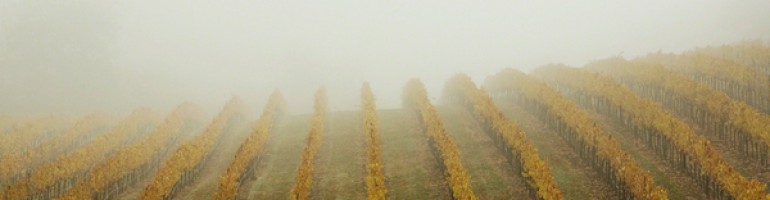
So what is “cool climate” and why is it important to wine? “Cool Climate” wine can be defined as any wine made from a warm climate wine grape varietal grown in a region where the temps are in the lower range of the vines’ tolerance. The challenge for growers is there must also be sufficient sunlight to ripen the grapes. So, the quality of the fruit tends to be higher in areas where the growing season has enough sunlight to ripen the grapes and enhance the development of phenols, but cool to cold nights to raise the acidity. These wines tend to have structure, be more balanced, have less alcohol, include more complexity, have higher acidity and generally be more interesting. If big, fruity, alcoholic wines like many Napa Cabs are your faves, this category of wine may not be on top of your list…

I think most everyone would agree, white wines are just not interesting enough, unless grown in cool climate regions, but red wines are an entirely different matter. Many warm climate red regions produce excellent reds, i.e. Southern France, Spain and Italy. I have tasted cool climate produced syrahs, tempranillos, cabernet sauvs and cabernet francs. In my opinion, cabernet becomes too vegetal when grown in climates that push the cooler temp angle too much. Whereas syrah in particular, benefits greatly from this approach. My favorite red wine is syrah made from fruit grown in cool climate vineyards. Try searching them out and tasting them side-by-side with warm climate production… you will taste the difference. If you enjoy complex, structured wines, these wines will be for you!
Comments Off on Defining “Cool Climate” Wines

Filed under Cool Climate Wine, Wine Industry, Wine Tasting, Wine Travel

3-Step Wine Distribution & Internet Retailers

Acquiring wine via the internet can be a real education. Years back, it was just a convenient way to diversify my purchases adding more European wines. Then, it opened my eyes to overstock re-sellers like Cinderella Wine and Last Bottle and I realized there were strategies to lowering your wine cost. I live in a state that by law forces 3-step retail wine distribution in most situations. So, the use of online retailers to stock my cellar has become my method for lessening the impact of this misguided statute. Many local wine and spirits distributors in AZ have a sub-par fine wines selection. Those that do have a nice portfolio are more interested in restaurant sales. Wine shops here offer minimal service, and special ordering wine can be a real nightmare.


Once you go down the online path, you find sites like: Wine-Searcher. Ultimately though, you make the journey back to the large online retailers like: K&L, Zachys, Wine.com, Wine House, etc. I buy primarily from the West Coast, to shorten the time in transit and lower the freight cost. Although, I have started working with East Coast online retailers, because the European wine importers there seem to offer a much larger French and Italian selection.

How do I select which online retailers to work with? In order of importance:
Manages weather-hold issues well.
Broad, diverse selection.
Price.
Accessible service rep to deal with problems.
Lowest shipping cost.
Willing to accumulate case quantities before shipping.


I wish I could support local wine businesses and I would prefer to, but I haven’t found local sources that are willing, or knowledgeable enough to have a discussion like a K&L Wines rep. The lack of Wine Education in the retail wine space is tragic.

Comments Off on 3-Step Wine Distribution & Internet Retailers

Filed under Wine Industry, Wine Tasting, Wine Travel