There has been so much published in the media about this issue in the last year, since the last two Silicon Valley Bank reports on the status of the industry. The report is at this link: https://www.svb.com/trends-insights/reports/wine-report. Here is a typical example of media reaction at this link: https://www.nytimes.com/2022/02/07/dining/drinks/wine-millennials.html. There is such a simple answer, but I never see it being discussed in the industry. Yes, it includes advertising, but not in the way you might think.
Cultural Component of Wine Consumption
In many European countries, wine is thought of as a companion to food, not typically to be drunk as a cocktail on its own. This common viewpoint in many countries places wine on the dinner table to act as a flavor enhancer, much the same way as seasonings, or sauces would be viewed. It is a cultural concept. I did not grow up thinking of wine this way. It was a learned behavior for me, after I was introduced to fine wines and cuisine TOGETHER. The question is: how could you change cultural norms to include this thinking? NOT, how does the industry convince Millennials to drink more wine…
The Answer Is a Focus on Food
This does not seem intuitive, unless you dive into the European fine dining concept a little more deeply. Many countries take pride in and raise their children to think of natural local foods and the local culinary tradition as a part of their identity. I am not suggesting this should be the goal here, but it does give you an insight into how this wine pairing tradition could begin in the U.S. Investing money in a media campaign would be critical, but not to simply advertise wine, strangely… the media content would need to be focused on how the wine enhances the FOOD experience. Currently in the U.S., younger generations view wine more as a “cocktail” to be drunk on its own. With this viewpoint, wine is a poor value compared to Beer, Cider, Hard Seltzers and Spirits/Cocktails. A perception that could have a huge affect on future demand and ultimately wine production. It is all a matter of changing perceptions…
Famous Chefs as Spokespersons for Wine?
I am not an advertising exec, but it seems fairly clear. Think of it this way: a professional chef would never be trained without a wine pairing education. The wine industry must begin creating marketing content around cuisine, with the appropriate accompanying wine. Pay famous Chefs from the Food Channel to be out front, not winemakers. Have them talk about their favorite wine-food pairings and why. I am sure other creatives would have even more engaging ideas for marketing using this theme.
Could Culinary be the Savior of the Wine Industry?
I am no genius. Who knows? It might work. I would think the industry would not find it too difficult to fund a marketing board that could tackle such a large ad campaign… IF it was viewed as important enough to influence wine consumption trends in the U.S. I am curious, can anyone else out there see the merit in this idea?
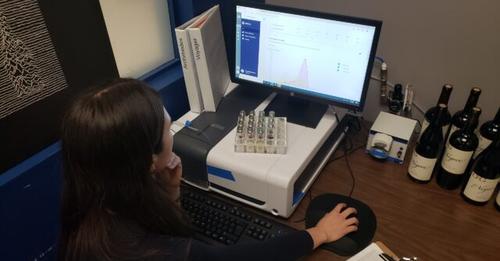
This pic and the reason for this piece came from a recent article posted at a wine media outlet called the Wine Industry Network here is the link: Predicting Palates: Can Artificial Intelligence Improve Wine Buying? – Wine Industry Advisor. I typically enjoy this website. The author piqued my interest and I decided to dive deeper. I felt the article needed more perspective. This topic really requires an effort to validate the solution, to have relevance.
Past and Future Attempts at Wine AI
This particular software branded as “Tasty” by name is similar in concept to others like “Quini” (if not in process), all have one very major flaw… Very few consumers have the trained palate and sensory awareness required to describe what they are tasting and how they perceive the wine components. I have been approached by software developers before and none had an appreciation for a trained palate and what it brings. These techno driven business models providing wine related services are all smoke and mirrors. Sounds great, until you dive a little deeper and find the missing piece. The idea that a straight chemical analysis, or even an analyzed database of wine tasting notes could provide any real insight into how wine is perceived by the human palate is misguided. Software can certainly accumulate, organize and label wine data, but how does that data have any relevance – unless it is filtered through human perception?
What Is Missing?
I have put some thought into this before and shared those ideas with other software developers in the past. The baseline in the software database must be established with trained professionals first – and not with WSET 4, MW, or CSW certified pros. The calibration has to be with Master Somms (MS) who evaluate consumer palates in restaurants on a daily basis. Once the underlying premise is established and the work is done to connect the human palate (sensory experience) to the chemical evaluation, the concept still requires a short consumer educational program to provide a shared vocabulary. That vocabulary is the vehicle for the shared human wine experience. Which words are chosen to describe each individual sensory experience? Is there a common understanding of what flavors/components they represent? I have yet to be introduced to software that attempts to address these concerns. Without that effort, the whole endeavor is a major waste of time and money.
Am I Biased?
I don’t think so. Regardless of my Somm training, I make my primary living in the technology and automation field. Perhaps that background gives me a little authority here. I most definitely believe the goal of these “AI” software products is achievable, it just requires more trade awareness to succeed.
I have seen businesses transition from results-based to task-based company structure and culture. I believe this is a growing trend and I am guessing, many of you are either dealing with this change, or will see it in the near future. If you are a senior manager considering transitioning your company based on this business theory, I respectfully ask you to consider this story and the theoretical example it sets.
COMMON CHALLENGES AND “THE PROMISE”
Worsening labor environment and the challenges associated:
Insufficient qualified labor
Popularity of job-hopping and the acceptance of 2-3 year job tenure as normal – making it difficult for companies to invest in training
Modern generations unwilling to invest time in career growth and a “work-their-way-up-the-ladder” philosophy – acquiring incremental knowledge, skills and experience along the way
Loss of respect for “knowledge as power” (driving successful outcomes)
Trend to automate business processes to achieve efficiency gains
The “everyone is a winner” popular culture
The common belief that younger generations will only accept consensus-based management as a work culture
Any manager at any level in any business will recognize these issues. Senior and executive managers from large to medium sized companies around the country are struggling to find the answers. This situation has become so challenging in recent years that there has been near desperation to find any modern business theory that can successfully address the issues. Thus “The Promise”…
If a business is willing to separate itself from a focus on RESULTS, managers can supervise successful task completion instead and achieve the same, or better outcomes.
What Does Task Oriented Management Structure Look Like?
This business theory virtually requires specialty software to achieve its goals and has created demand for a completely new category of integrated business OPERATIONS software (activity, task, inventory, sales order, payables/receivables and finance package) that is unique to each industry/trade. Once the transition is started, the concept begins to feed on itself, drawing from the common belief that software automation alone can deliver improved efficiencies. “Six Sigma” certification becomes a must-have for senior operations managers (perverting the original idea). The training is needed to create extremely detailed industry/trade specific process maps. These process maps are incorporated into new software solutions that become the basis of a frontline daily task/activity structure and management process. The next obvious conclusion is: if the software monitors activities and task completion, why would you need as many supervisors?
I will not go into the details of a world with a long list of supervised To-Do items for every employee, but I will provide a glimpse into what comes with this task-oriented focus. As you might guess, this structure affects company culture, employee attitudes, business administration and goal-setting in unexpected ways.
Does the Medicine Cure the Disease, or Just Mask the Symptoms?
If employees and companies are no longer willing/able to spend 3-5 years to train an employee, doesn’t it make sense to implement a system where the only knowledge needed is to complete a few highly detailed repetitive tasks? With this change, you now have employees whose only performance metric is task completion. What happens when no one understands how their assigned tasks affect the success of the company? If this is the result, the company Mission Statement becomes meaningless. What happens to quality control (original idea behind “Six Sigma”)? The new software is not managing the quality of the work, only completion of task – and all those frontline supervisors were just let go. This is when the company begins to realize they need more problem resolution staff to make decisions regarding loss tolerance and then of course early risk management assessment becomes much more real and requires staffing too.
Process Improvement
As this theory is implemented, business process becomes the software and vice-versa. The resulting task automated culture drives employees to focus internally. As completion of tasks is how employees are now measured, it becomes more important than commitments to clients, customer satisfaction… essentially everything else. There is no room for customization to individual customer requests, or even incorporating frontline internal ideas for improvement.
Employee Development
Even if employees are encouraged to move between roles and learn different tasks, the old expectation that experienced personnel will deliver improved business performance is lost. Think of what happens to the perception of trade and industry knowledge. It becomes viewed as a liability and an impediment to the process-based task structure. As success by remaining on-mission is no longer the focus, only senior management is left to incorporate broader business concepts. It becomes difficult for middle management and frontline personnel to translate task activities into achieving important outcomes, such as profitability, cost control and customer retention.
A focus away from results literally institutionalizes the acknowledgement that companies cannot find enough talented and/or career oriented individuals to deliver on established goals. This idea becomes a part of the company culture. Any effort by middle management to develop top-performing talent is not needed to train for task completion and is therefore a waste of time. This thinking fits well with our current popular culture famous for teaching our kids everyone gets a trophy for participating. This celebration of mediocrity has infiltrated business theory in the last decade and task-based business theory is strangely a perfect fit.
Coaching is Confrontation?
Social skills have been diminishing in the workforce and with it the ability to manage conflict constructively. Without the skills to communicate through it, conflict is now to be avoided. At one time, conflict was defined by interactions with an angry client, or upset supervisor. Generational changes have HR managers beginning to view decision-making and coaching as conflict, i.e. a supervisor explaining a resolution to a problem is now a co-worker imposing their will. I have worked for companies where HR has required consensus-based management style (explained as facilitating employee retention), sometimes requiring lengthy discussions and days to get anything done. Task based structure can help to mitigate these issues. In this environment, coaching is limited to proper completion of process and decision-making is more about capacity and deadlines. As task orientation now aligns with the latest hot HR issues, we find another reason to find it appealing.
CONCLUSIONS
I am sure it is clear on which side of this question I fall. Just because this business philosophy has numerous challenges, doesn’t mean a consultant, or management team might not be able to overcome them. One thing I do know, once employees are trained to believe that results are less important than task completion, any idea of quality control goes out the window. I do miss the days of the great business influencers of the 80s/90s Peter Drucker and Tom Peters. These consultants espoused philosophies that at their core were about results: (paraphrasing here) “business activities are useless if they can’t be measured” and “employees with entrepreneurial spirit are most likely to influence customer retention”. Business ideas lost in time…
Exploration of Premium Sangiovese Wines, Outside of Montalcino
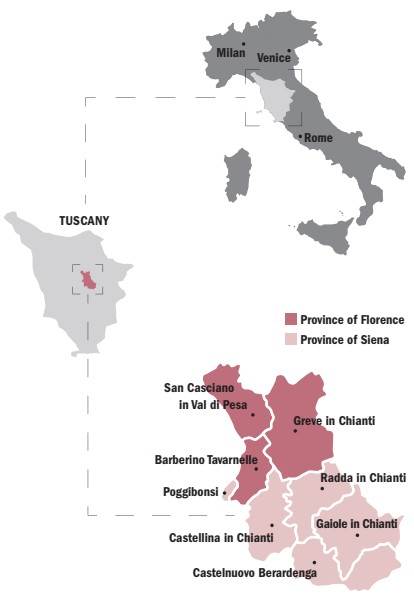
New Communes (sub-regions) Established by Statute in Italy
The trend in Italy the last two years has been to establish new wine sub-regions in existing wine areas. Historic Sangiovese wine growing regions are being significantly impacted. I have not explored Sangiovese in this kind of depth before, outside of Montalcino (Brunello, Sangiovese clone). Certainly, nothing like the effort I have put into Cabernet Sauvignon, and Syrah. These recent changes in Italian wine laws had me wondering: could there be enough unique wine character from Sangiovese to justify this many new sub-regions in Central Italy?
Can Italian Terroir Produce Sangiovese Wines Different Enough to Justify The Changes?
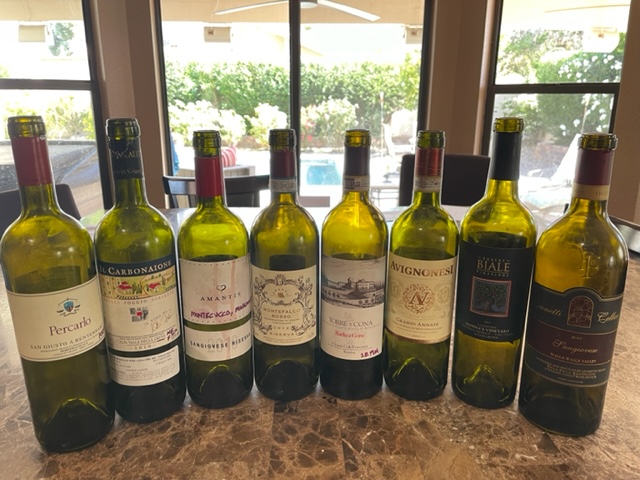
I decided to investigate this idea with a group of wine collector friends I meet with regularly. In the beginning of the year, I began looking through all the U.S. wine auctions trying to find 10 year old Sangiovese wines from various Italian regions outside of Montalcino (Brunello). To give this a fair evaluation, 10 years of bottle age seemed as if it might be close to the optimum drinking window for these wines. I wanted to taste the best potential versions of these wines for the comparison. While doing the research, I found a couple of U.S. made Sangiovese wines from respected producers and thought it would be fun to add these to the comparison. The tasting was held in my home just this last weekend and produced interesting results. There were a few disagreements across the group, but generally our impressions were similar enough. Here are my notes and scoring in the order of my best score first. I did not take detailed tasting notes, but did record my overall impressions.
Nobile di Montepulciano – Montepulciano Region, Italy
#1) 2012 Avignonesi Grandi Annate – 94/100 pts
This region is just east of Montalcino. Don’t get it confused with Montepulciano d’Abruzzo. That is a completely different region and grape variety. Through history, this area has been well-known for the quality of its wine production, often just called “Nobile”. Thomas Jefferson mentioned this area as his favorite wine region.
Wine Notes
This was very near a great wine, quality on the order of the bordeaux style wines produced nearby in Bolgheri. It was nicely balanced, with fruit, acidity and tannin in roughly equal measure. Just enough fruit to enjoy on its own and just enough acid/tannin to work paired with foods. It was not big and structured like many of the Chianti area wines I have tasted. It had a lighter feel with a perceived finesse. The flavor profile was typical Sangiovese red cherry, but only slightly tart. This was an impressive effort for a 100% Sangiovese. This wine could make you believe Sangiovese deserves a place as one of the world’s great varietals.
Radda – Chianti Classico Region, Italy
#2) 2011 San Giusto a Rentennano Percarlo – 93/100
This is one of the better-known Sangiovese labels, from one of the most respected Chianti Classico wineries. 100% Sangiovese from the selected best fruit of the Tuscany region. This is not your typical Chianti Classico wine. 30+ day maceration, 30+ day ferment in concrete tanks, 20+ months in French oak barrels and 18+ months in bottle in the producer’s cellar. 3.5+ years before release… That attention to detail built an excellent wine, if not a wine that could carry the DOCG label. This wine is a definite example of why Italian IGT does NOT mean an inferior wine. Not sure the value was as special, but the wine was excellent and another great example of what Sangiovese wine can be in the right hands.
Wine Notes
This was a very similar wine to #1 above, but not quite as refined. The finesse was evident here too, but not quite the same mouth-feel and therefore one point less.
This was the surprise of the evening for me. Over 60% Sangio, 20% Merlot and a few percent of these: Canaiolo, Colorino, Petit Verdot. This area is viewed as “up and coming” and is just Southwest of Montalcino. Maremma is the younger brother of the Bolgheri region and the area has been making great value IGT bordeaux style blends for some time now.
Wine Notes
This was nothing like the first two wines, complex and layered with high acidity. Fruit-forward but not extracted, this hit the sweet spot for an Old World wine that could appeal to a New World palate. Of course, they had the luxury of blending varieties here and that can make a difference with the right winemaker. With reasonable value, I will be keeping an eye out for this producer in the future.
Napa Region, USA
#4) 2011 Biale SangioveseNonna Vineyard – 91/100
The two most well-known Sangiovese wines in Napa are this and the Del Dotto bottlings. The winery was kind enough to sell us a bottle from their library specifically for this tasting! This winery operated through prohibition and this particular wine has a family history, the vineyard was planted by the current owner’s grandmother.
Wine Notes
This was the softest of the wines tasted. The mouth-feel was excellent and was definitely still fruit-forward after 11 years in the bottle. It was light on acidity at medium-minus and had medium tannin. This was an enjoyable wine. It had just enough Old World character to identify as such. This is another of those wines that may have been better a few years ago. Not past its drinking window, but perhaps nearing it.
Montefalco – Umbria Region, Italy
#5) 2012 Adanti Montefalco Rosso Riserva – 91/100
This area is in Umbria and while the area is known for its Sagrantino DOC, it has its own denomination for its Rosso DOC that must be no more than 25% Sagrantino and no less than 60% Sangiovese. This bottling also had 20% Merlot. This was a powerhouse wine, even after 10 years in the bottle. The Sangiovese dominates, but the Sagrantino pulled it towards a Southern Rhone type feel. I really enjoy Sagrantino wines and if you haven’t tried one, you should track down a good example to enjoy for yourself.
Wine Notes
This was a bold, fruity wine, with medium plus acidity and tannin. Old World wine drinkers may find this a bit too extracted for their palate, but this was balanced enough not to feel hit over the head with too much oak, or too much fruit like many modern day Napa Cab Sauv’s.
Colli Fiorentini – Chianti Region, Italy
#6) 2013 Torre a Cona Badia a Corte Riserva – 89/100
This is a highly regarded sub-region of Chianti that now has its own denomination. This bottling is typically 100% Sangiovese. The area is North of Chianti Classico and attempts to focus on lighter, aromatic versions of Sangiovese.
Wine Notes
This is another wine that may have been better had we opened it a few years ago. Lighter styles of wine can sometimes be limited in their capacity for bottle aging. This wine was a reasonable representative of a typical Chianti, but was too disjointed. It showed too much tannin and acid for its age and the fruit and mouth-feel weren’t there to round out the package. Would have been great with a tomato based pasta dish, but was lacking on its own.
Walla Walla Region, USA
#7) 2011 Leonetti Sangiovese – 89/100
This is a well-known premium bordeaux style producer in Washington state. Their Sangiovese label is grown and produced every year in Walla Walla and this was the most expensive bottle of wine in the group. The wine is 87% Sangiovese and 13% Syrah.
Wine Notes
This reminded me of a better than average typical Italian Chianti. Very “one-note”, but definitely varietally-correct. Not as soft as the other U.S. wine we tasted. Would have been a good food wine, but certainly nothing special to mention.
Greve – Chianti Classico Region, Italy
#8) 2010 Podere Poggio Scalette Il Carbonaione – 88/100 This winery is well-respected for its Tuscany styled IGT blended wines. This bottling was 100% Sangiovese from several vineyards located in Greve. Not sure why this needed an IGT designation, instead of DOCG. This area now has their own regional denomination.
Wine Notes
This was an uninspiring average Italian Chianti. With age, it had lost its fruit and was thin with nothing to balance out the acid and tannin. Not undrinkable, but given the choice, would prefer a different wine.
Observations & Conclusions
The differences between these wines had more to do with winemaking style and blending varieties, than the Sangiovese fruit itself. Although, there was enough diversity to claim we experienced various different styles of Sangiovese dominated wines. There is more to “terroir” than just soil and climate. If other contributing factors define these regions as unique, so be it. There is a clear marketing advantage to differentiating these wine “communes” and promoting a specific regional style. It will remain to be seen whether all these new sub-regions will be justified in the long-run, or the average wine enthusiast will just find it too confusing to care. I have mentioned DOC, DOCG and IGT classifications several times in this article. If you would like a quick explanation, here is a link: Wine-Searcher – Wine Labels Italy
Here are a few conclusions I drew from the tasting:
Sangiovese fruit alone may not show enough diversity at the premium level to support this many different style designations. Although, the Brunello clone grown in Montalcino is certainly a cut above the others.
Sangiovese is a fabulous blending grape. It carries structure with it, high acidity and tannin, if the winemaking style allows it.
In the U.S., we do produce Old World style Sangiovese wine that compares well with the Italian labels.
Finally, generally Sangiovese wine can be made with finesse. Not sure what I was expecting, but I did not anticipate the subtler wines we found in this tasting.




 Douglas Levin - Trained, Certified Advanced Sommelier and Wine Writer
 Cool Climate Wine