
Tag Archives: Food

Devour AZ: Can Fine Dining Survive?

I recently attended the event #DevourAZ organized by #LocalFirstAZ and had the opportunity to interview several local executive chefs presenting a local mid to high tier take on the Phoenix restaurant experience. The result was a startling realization regarding new trends in the local fine dining scene.

Local First AZ (link at: https://localfirstaz.com/news) is an organization established to promote the AZ Food & Beverage industry. If you live in AZ, check out their website for other local events throughout the year. Arizona Desert Botanical Gardens in Phoenix, AZ (link at: https://dbg.org/) was closed for this private event. Great garden venue and a perfect choice for eating and drinking in an enjoyable, relaxed setting. DBG was a great place to enjoy the temperate AZ winter weather and discover new favorites on the AZ food & beverage scene. There were lots of prepared local foods with wine, beer and spirits showcasing Arizona restaurants, distributors and beverage producers. This event was sold-out well in advance, so if you are interested in attending next year, make sure to buy tickets early.
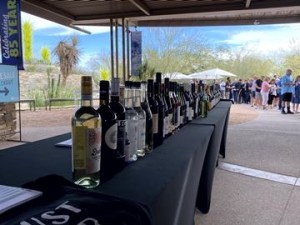
Loads of wine, beer and spirits to taste.

THE INTERVIEWS

All four chefs I spoke to, shared the same two-part message: a reasonably priced fine dining experience is now beyond even the upper-income dining community and younger generations are significantly changing their restaurant preferences. As a Boomer generation diner, I am accustomed to a white tablecloth, multi-course, curated food & wine experience. If you are of the same mindset, be prepared… it is all changing.

POST-COVID PRICE CHALLENGES

One of the more well-known curated fine-dining restaurants in my area is Monarch Cafe in Scottsdale. I checked their most recent menu and the per-plate cost has risen to $150-$250 per plate, plus beverage. A friend recently told me he dropped $1,000 on a recent Monarch visit for two with a pre-fixe menu, two bottles of wine and tip for the evening. He doesn’t plan to go back any time soon… There are choices in Phoenix that can get you near the experience for $500-$600, but it is a compromise. There is only one traditional fine-dining restaurant left in Phoenix that allows you to bring your own wine for a corkage fee. These prices will significantly limit the pool of potential clients for this category of restaurant and is pushing those restaurants still trying, to either close their doors, or change their menu, service AND business model.

The issue for restaurants and bars during COVID was just finding help. Now, it is making a new business plan work with huge increases in competitive wages and on-going service inflation. None of the chefs I spoke to were investing in significant server training and all were trying to find a simpler approach to a menu that did not require lengthy explanations of flavors and pairings to sell the experience. They all said servers in this market with the needed experience/knowledge to offer a traditional fine-dining experience are now at $60K-$75K/yr. income level with salary and tips… and are disappearing. Add 25-50% to that for the major centers of fine-dining like San Fran, Chicago and New York.

CHANGES IN BEVERAGE

Wine prices have continued to move higher in the U.S., having been the most expensive dinner beverage option for some time now. This has been my pet-peeve for years. With wineries moving towards the premium category for more than a decade AND the total lack of interest exhibited by volume producers to offer decent quality at lower price points… the entire U.S. industry has been shooting itself in the foot… as percentage wine consumption is dropping by double digits. The industry will lose entire generations of wine drinkers at this rate. In Italy, Germany and France, a $20 USD carafe of red wine at a restaurant competes on quality favorably with the $40-$50 bottles of U.S. wine I have purchased at restaurants.

These factors are causing the chefs I interviewed to cut their wine & craft beer (yes, beer consumption is now dropping too) inventories in half and move towards craft cocktail programs. Cocktails don’t require premium spirits brands, spoilage is a minimum, is a much smaller investment and can offer a very diverse flavor spectrum with little effort… and is much easier for untrained servers to support.
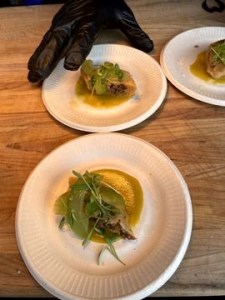
Bites from numerous restaurants serving many different dishes/flavors.

CHANGES IN MENUS/FOOD STYLES

The younger generations seem to be less interested in a 3-4 course traditional meal, than they are in a multi-plate, tapas-style experience. I understand that this approach can offer a more diverse flavor spectrum, but it totally ignores the idea of curating flavor and beverage pairings. For any of you that have had formal training, this is anathema to the old-world European style experience. European cuisines have experienced generations of being honed to find the most complementary flavors and beverages. Millions have been spent on promoting complimentary local food and beverage styles that are identified with a specific location, or region.

There is the service aspect here too. These chefs told me they can compose tapas style menus that describe simpler single flavor profiles that don’t require a trained server to explain. This approach offers a lower payroll cost, corresponding to a lower bill at the end of the meal.

FUTURE OF FINE-DINING

I have been mourning the loss of fine-dining in Phoenix for a couple years now and wracking my brain to look for alternatives to showcase curated food and beverage at a reasonable price. This is what I have come up with and I would appreciate your feedback.

I first thought that the American Wine Society (link at: https://americanwinesociety.org/) was the answer, but there has been significant push-back on including the idea of curated menus with wine tasting. I am hoping this myopic view of wine will change and the leadership will recognize how important food is to the wine experience. I still have hope this is possible and am continuing my efforts to move local AWS chapters in this direction.

I have begun building PowerPoint templates to assist inexperienced enthusiasts in effectively hosting curated food & wine experiences in their homes. If we are going to save the idea of pairing flavors and beverage in the dining experience, it may be possible to do this 8-10 people at a time, with a private experience in local homes. Would there be enough interest to build networks of small groups with this theme in mind? I am hoping…

2 Comments

Filed under Fine Dining, Food Pairing, Restaurant, Restaurant Review, Sommelier, Spirits, Wine Education, Wine Industry, Wine Marketing, Wine Tasting

Can You Identify Wines Matching Your Taste? Part 1 – Wine Without Food

2011-07-06-wine

Wine online has become such a gimmicky topic. Today, we have wine questionnaires that profess to tell us which wine we will prefer. If we like strong coffee, or bitter dark chocolate, we will enjoy this wine, or that… such bull. Many trained wine professionals choose to define wine styles by defining categories of wine. I will try something similar, but approach it from the opposite viewpoint: by categorizing wine enthusiast preferences. This two part series will break the issue apart into primary categories: those who enjoy wine by itself and those who prefer wine with food. This will be my opportunity to share a few observations with you from my experience.

With Food, or Not?

The first question your server in a restaurant should always ask is: “Will you be enjoying a beverage before, after, or with your meal tonight?” Next, “Beer, wine, cocktail?” For those answering wine with your meal, the final question should be: “to assist you with a wine selection, which dish(es) are you considering?” These questions are at the core of what a properly trained fine dining waiter/waitress does: pair food and wine… but not everyone in the U.S. drinks wine with food. So, unlike most Old World restaurants/bars, a U.S. wine service attendant has to think differently and broaden their mind to include clients that drink wine before, or after a meal, or those who drink wine like many beer drinkers: “I just want to go out today/tonight, hang-out and have a few.”

Which Type of Drinker are YOU?

Wine produced in Europe in traditional Old World styles is specifically made to taste its best when paired with food. Although, there are many European wines made to drink without food today, all the traditional labels are meant to be food friendly. Keep this in mind, when you are searching out a new wine to try. How do you determine if your palate is geared to wine with food? If you are a “Foodie” that can appreciate nuanced, or bold vs. subtle flavors, or velvetty vs. silky textures, or enjoy sweet & salty together, or appreciate how acidity breaks through richness… if you are not drinking wine with food, you should give it a try. If you enjoy wine on its own, it is likely you experience alcoholic beverages differently than “Foodie” types. I believe there are two categories here. Those who: enjoy how wine (or alcoholic beverages) makes them feel, or those that focus on how it tastes.

All About the Wine Experience?

The focus on experiencing wine without food puts you in the “feel” category. When you prefer to enjoy a conversation over a glass of wine, relax with or without friends taking in atmosphere and enjoying social pursuits, you are unlikely to be a wine drinker overly concerned about structure in wine, or looking for complex/subtle flavors. In fact, many I have run into with this preference, find these types of wines annoying. This isn’t wrong, bad, or unsophisticated, it is just who you are – embrace it. It is probably the largest category of wine drinker in the U.S. It is OK to be all about finding good atmosphere and drinking straight-forward, easy-drinking wines. So, how do you find these wines and stay away from the others? Wine critics are unlikely to review lower-cost, simple wines. This is a serious missing piece in wine culture: professionals typically don’t review this category of wine. In my opinion, this is a contributor to many wine drinkers being turned-off by the supposed high-brow attitudes in the biz. Here are some mandatory descriptors for wines like this, if you can find a review:  low to medium acidity, little or no tannins and fruit-forward (fruity taste first).

All About the Taste?

A little more “complex” may be good for you. This kind of consumer should put a little effort into exploration, attend wine tastings and decide whether you enjoy the common categories of these flavors: earthy (dirt, bramble), mineral (crushed rock), funk (forest floor/manure), kerosene (petrol), herbal/spice (mint, pepper/cinnamon), vegetal (tobacco, tomato) and floral (violets, honeysuckle). For this category of drinker, the next two elements are most critical: residual sugar (sweetness) and high/low alcohol. The usual easy-drinking wine has at least some residual sugar and an average alcohol content in these ranges: reds 13-15%, whites 12-14%. These characteristics contribute to the description you may want to learn that ensures the wine will taste “good” to you. For example, this request to an attendant: “I prefer low acid, low tannin, fruit-forward wines that have some residual sugar and are easy-drinking.”

Suggested Wines

This category of consumer will likely enjoy these easy-to-find U.S. origin wines. Examples: Ravenswood Lodi Old Vine & Peachy Canyon Westside Zinfandels, Apothic Red (sweet & buttery – if you like that), Meiomi Pinot Noir (rich style vs. other PN), Andrew Murray Tous Les Jours Syrah, Robert Hall Cuvee de Robles, Sonoma-Cutrer Sonoma Coast, Twisted & Chateau Souverain Chardonnays, Handley Anderson Valley Gewurtztraminer or Chateau Ste. Michelle Riesling (for a little adventure) .

This is probably the best website on the net to find this type of wine reviewed: https://www.reversewinesnob.com/ . Enjoy!

Next up:

Part 2 – Wine with Food

Comments Off on Can You Identify Wines Matching Your Taste? Part 1 – Wine Without Food

Filed under Wine Education, Wine Tasting

New and Old World Style Food – Wine Pairings?

Cartoon Bar-minister-priest-rabbi

A Frenchman Walks into a Bar in Mendocino, and…

My wife and I were recently in a winery tasting room in Mendocino County enjoying several wines and a gentleman from France joined us at the tasting bar.  This producer happened to offer a cool-climate Syrah mixed with 20% cool-climate Zinfandel and Viognier.  A very light style of wine, with the Zin adding a brighter red fruit character.  I remarked that I wished I had a bottle of this wine to pair with our Turkey and stuffing dinner from a few nights before… and wow, both the attendant and the Frenchman laughed out loud!

Is Food & Wine Pairing THAT Different in the U.S.?

At the time, I didn’t think much of it, but it stuck with me and eventually had me thinking about the nature of food – wine pairings.  Is a Sommelier‘s job different in Europe vs. the United States?  Does the European restaurant patron look for something different, than their American counterpart?  I began turning over my Somm training in my head and realized, there really are two separate and distinct points of view to this discussion:

1st View

When pairing with foods, wines should contribute to mouth-feel, exhibit balance to complement the food textures, but primarily – the wine should clear the palate between bites.  The idea being: clearing the palate with wine allows you to fully experience the flavors of the food in each bite.

2nd View

When pairing with foods, wine should compliment the flavors in the food and ENHANCE its enjoyment.  In this case, a wine is selected based on pairing the wine and food flavors so the whole is tastier than the parts.

I know EXACTLY what that Frenchman was thinking… in his mind, that fruit-forward wine interfered with the taste of the food.  I thought back to his preferred wines at the tasting bar.  He purchased the most acidic Pinot Noir that was the least fruity and the best balanced (BTW, I enjoyed it too).  His thinking regarding the pairing was completely at odds with mine.  Lighter Zins (with good acidity) are a great pairing with turkey and gravy, because the wine compliments the food.  These two people were so against that kind of thinking, that they had laughed when it was suggested.  A strange experience, but very instructive.

Another Wine Job That Requires an Understanding of Cultural Preferences?

Sometime back, I wrote a piece on the cultural differences affecting the wine marketing and media manager position.  So, now the Somm position is affected by this too?  OK, I am not saying my preference here matches everyone in the U.S., but the wine education training I have done, has shown it to be true – at least in my small sample.  Does this mean Somm training and certification should include the regional and cultural preferences of local wine consumers, NOT just regional cuisine?  Could this also mean, there is no one definitive training approach to content that will apply to both the Old and New Worlds?

Feedback

For the professional Somms reading this, what has your experience been?  Am I painting to broad a brush on the issue? I don’t read much talk about this on wine related websites.  Is this observation and discussion relevant?

12 Comments

Filed under Food Pairing, Sommelier, Wine Education, Wine Industry, Wine Tasting