
Returning Faulted Wine?

Refusing Faulted Wine at a Bar, or Restaurant?

Have you ordered a glass of wine while out and find it tastes a little strange? Did you send it back and request a glass from a new bottle? Or maybe, ordered a bottle, only to find it didn’t taste as it should? Now, you know why wine enthusiasts smell the cork upon opening a bottle… The first situation above is quite common, the latter is rare, but it does happen. I will mention the most common wine faults here, but the primary focus will be:

How to handle the decision to send the wine back.

The appropriate conversation to engage the server when sending wine back.

Quick Review of Common Wine Faults

These are the most common:

Oxidization

Overexposure of wine to air/oxygen. Oxidized wines lose brightness in both color and flavor. Red wine turns brownish-orange and can have a vinegar and/or caramelized (sometimes buttery) flavor. This is very common when you are served wine by the glass. Sometimes, a glass can be poured after days of storing an open bottle.

Heat Damage

This occurs when wines are exposed to temps over 80 F for prolonged periods, or over 90 F for shorter periods. Cooked wines develop a jammy, sweet character that can taste like stewed fruit. This can be very common in places like Arizona, where I live. Wine must be stored under 70 F and away from light to remain in good condition after a few months. In places like AZ, this means storage in coolers during the Summer months. Some on-premise businesses turn their wine inventory quickly enough that room temp storage can be acceptable, but keep an eye out to determine if you plan to return.

When bottles experience high heat, the corks often leak, so you get a double hit from Oxidization AND Heat. This problem can sometimes be identified by inspecting the cork for wine stain to the very top.

Cork Taint or TCA

This was more common in years past. Technology has made it less so, but it still happens. TCA can have a taste/aroma similar to wet dog/newspaper. There are some that say 1/10 bottles with real cork closures will experience this. In my experience, it has been closer to 1/20 bottles.

Sulfur Fault

This results from improperly handling the addition of sulfites to wine. Sulfites are a natural byproduct of fermentation, but it is very common for winemakers to add sulfites as a preservative. When this is not handled correctly, it can cause burnt matchstick, rotten egg, or garlic flavors/odors. Biodynamic wines do not permit the addition of sulfites, if you are looking for sulfite-free wine.

Secondary Fermentation

This occurs when a small amount of residual sugar reactivates the yeast and adds carbonation to the wine. Some wine varieties are made purposely in this “frizzante” style, like Moscato d’Asti, but think of a Cabernet Sauvignon with bubbles…

Microbial Fault

This occurs when the winery and production areas are not kept clean. Certain of these faults can be part of the wine style, such as Brettanomyces. This adds that barnyard aroma to some wines and can become an acquired taste. There are additional “off” flavors and odors caused by other microbes too.

How to Handle the Decision

If you have identified any of these faults (or others), keep in mind, at most bars and restaurants they are serviced by distributors who will always take back winery faulted bottles. In the case of heat and oxidization, it is totally preventable and the management on-premise needs to know about the inventory storage problem. This issue is the primary reason mark-ups are so high for wine service. There are 4-5 6 oz. pours in a bottle. Some businesses try to recoup their entire profit in one glass purchased, others two. Either way, they are covered. Don’t accept odd tasting wine. If you can identify the fault, share it with the server. Let them know there is a solid reason for the return and they will have the information needed to deal with their supplier.

There is another discussion on the topic of returning wine, which I will address briefly. When the consumer doesn’t enjoy the wine selected… as the buyer, it is your job to engage the server and help them to understand what wine characteristics you enjoy. Although, sometimes the server does not have enough experience to assist, or they have not been trained to identify flavors/aromas in wine. This is the area where the decision has to be what you are comfortable with. Most restaurants and bars, will replace wines you don’t like, if you share your comments. At some establishments, this can turn into an argument and affect your service, so think twice about how you handle this scenario specifically.

How to Discuss the Return Request

Be confident in your identification of odd flavors/aromas and explain what you are experiencing. Share any clear evidence with the server, such as: the cork stained to the top for heat, or the horrible odor on the cork for TCA. I experience Oxidization Fault very frequently. I would say 1/5th to 1/3rd of all wine I order by the glass is oxidized and I almost always send it back. The restaurants/bars know when the bottle has been open too long. Any management worth their salt will mark their by-the-glass inventory with the date opened.

Where does the Responsibility Lie?

All small production wineries should be willing to replace bottles with faults caused by their production. The same applies to distributors and restaurants/bars for faults caused by their handling and storage. Be comfortable that there is always a mistake along the way that causes these issues and it is not your responsibility to suffer through dealing with it. Wine is a luxury item and producers, suppliers and servers should treat their service like it is a premium product.

Comments Off on Returning Faulted Wine?

Filed under Restaurant, Wine Education, Wine Industry

Earth, Wine and Fire Wine Dinner Review

Background

If you don’t have a Fleming’s in your town, or have just not had dinner at this restaurant chain before, bear with me. I will try to provide some reference. Fleming’s is a high-end steakhouse, similar in style to Ruth’s Chris, but not quite as expensive. They have been running a four course wine dinner special (branded as the title of this review) paired with Wagner Family wines (Caymus label) and my wife and I decided to give it a try. There were two options: Earth – vegetarian and Fire – meat. We selected Fire. Our overall experience was one step down from true gourmet, but very enjoyable. This is the full detail.

Salad Course

Dish: BURRATA WITH NORTH ATLANTIC LOBSTER

Wine: 2018 SEA SUN, CHARDONNAY 90 pts. (100 pt. system) or 16 pts. (20 pt. system)

Wine Note: Sweet citrus nose with lemon-lime mousse on the palate. High acidity and a fair amount of oak. If you like stainless chardonnay, this is not your wine. My wife and I prefer Old World style oaked chardonnay, so the very fruit forward profile was a little out of character. Nice mouthfeel. I would guess, the winemaker allowed some extended lees contact. Enjoyable chard for our palates and the acidity paired very well with the burrata. Some aging potential, if you like to lay down your wines.

If you have never had burrata, it is a soft cheese a little like mozzarella in flavor, but creamy and richer. Love the stuff and the fresher, the better. This burrata was excellent, but it was the other components that were a little disappointing. The lobster did not seem really fresh (we ARE in land-locked AZ, I suppose) and needed to be poached in butter. Lobster flavor was a little off and weak. The parmesan cheese crisp flavor (on top) almost over-powered the more delicate burrata below. Still… pretty enjoyable and an excellent pairing with the acidic Chardonnay.

2nd Course

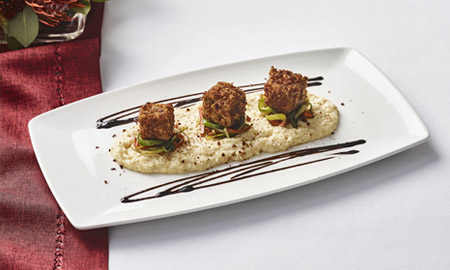
Dish: COCONUT-CRUSTED PORK BELLY

Wine: NV RED SCHOONER, MALBEC 89 pts. (100 pt. system) or 15.5 pts. (20 pt. system)

Wine Note: Fruity nose with a little burn from the alcohol. Palate is filled with red and black fruit – black plum, blackberry and boysenberry. Medium acidity and medium minus tannins. A touch of residual sugar. Lighter, smooth mouthfeel. Very easy drinking red with a bit of structure. Successful for the style of wine it was meant to be. Drink now, don’t hold.

The pork belly was very tasty and the grits were fabulous! Our restaurant added goat cheese, instead of cheddar (on the website) – fantastic idea. The vegetable medley included (not shown below) was seasoned with spicy chiles. I pushed my veggies aside, in order to really enjoy the grits. The fruity, sweet wine was needed to pair with the leftover spiciness from the veggies. Turned out to be a pretty fair wine pairing with the fat from the pork belly and spice.

3rd Course

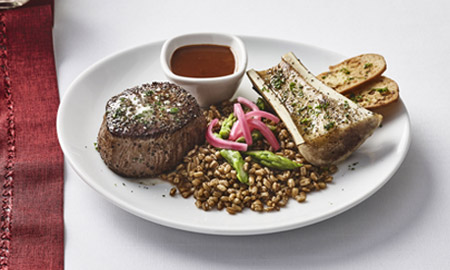
Dish: FILET MIGNON & BONE MARROW

Wine: 2019 CAYMUS VINEYARDS, CABERNET SAUVIGNON – NAPA VALLEY 87 pts. (100 pt. system) or 15 pts. (20 pt. system)

Wine Note: OK, you Caymus fans out there, I get it. Easy drinking Cali cab, but I just can’t do it. There is so much oak, as the joke goes, I could set the dang wine on fire. Fruity nose, but lacking freshness due to the over-powering oak. Blackberry and black currant on the palate, with some dark chocolate in the middle. Medium minus tannin and medium acidity. Simple wine flavor profile. I am sorry, neither my wife, or I could finish this wine. Just not a good match for our palates.

The filet was seasoned well and perfectly prepared. I have had better bone marrow. It needed to have more of the fat rendered out. Altho I will say, the filet with a bit of bone marrow on top was a pretty tasty bite.

Dessert Course

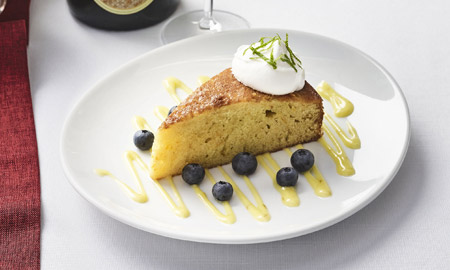
Dish: ORANGE OLIVE OIL CAKE

Wine: NV EMMOLO, SPARKLING – CALIFORNIA 89 pts. (100 pt. system) or 15.5 pts. (20 pt. system)

Wine Note: Citrus fruit on the nose. Palate of primarily lemon with a touch of tropical fruit. This is a cuvee style sparkling with a small amount of residual sugar. High acidity. Nice mouthfeel with a medium length finish to round it out. This could be more interesting with some bottle age. Has enough of a backbone to enjoy in 3-5 years.

If you have not had olive oil cake – no, it does not taste like olive oil, but it IS very moist. I have had the orange version before and this was quite good. The tart lemon coulis drizzled on the plate was a nice addition. The citrus flavor in the cake paired very nicely with the sparkling wine.

Dining Experience and Rating

In general, this was a serious white tablecloth experience. Great service from our waiter, she was friendly and engaging. One of the managers stopped by twice to check in on us. I felt like there was a genuine interest in making sure the experience was enjoyable. I felt a bit rushed tho. This is the kind of meal that takes time to work your way through. I understand they want to turn tables, but for this kind of bill, you expect the time to have an experience. I would score the experience at a 92/100, or a 2 of 3 star equivalent. The meal was very good (especially the steak), but could have been better and the service was really excellent.

Comments Off on Earth, Wine and Fire Wine Dinner Review

Filed under Cabernet Sauvignon, Chardonnay, Fine Dining, Food Pairing, Malbec, Napa Valley, Restaurant Review, Wine Tasting, Wine Tasting Notes

Judging-Scoring Wines

Risky Business

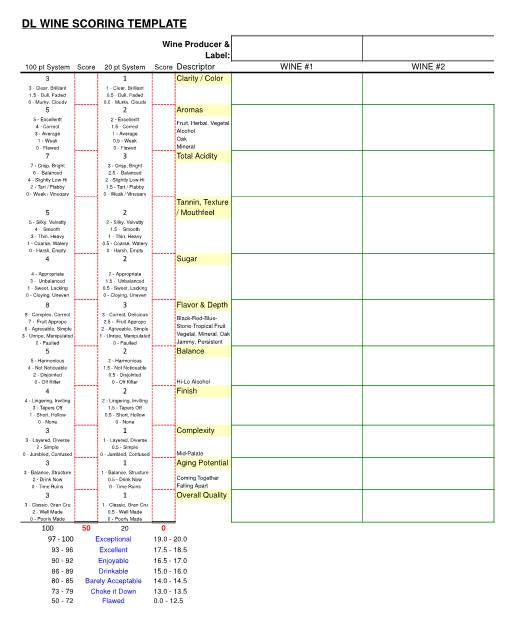
At the risk of upsetting every wine critic/judge out there, I set out to create a wine scoring system that matched my view of fine wine. I will include this scoring template at the end of the article, for those that might be like-minded. Email me if you would like a self-calculating spreadsheet copy.

My Motivation

After pro Sommelier training (where scoring was discouraged), I was exposed to the WSET scoring method and wine judging courses. Both used a variation of the UC Davis 20 Point Scoring System. I was shocked how these systems were unable to separate amateur from premium wines effectively. In these classes, we scored fruit wines (cherry, blueberry, strawberry, etc.) and vitis labrusca wines (Concord, Chambourcin, Catawba, etc.). These wines were near undrinkable for me and were being given the same scores as mediocre Cali Cabernet. The methodology and scoring systems taught in these classes were intended to be appropriate for both amateur and fine wines. Although, away from class these same people would explain the intent of these systems was to score wines based on a comparison of LIKE wines. This is not how I understood the training and it is likely the public views this scoring similarly. This experience motivated me to build a scoring system that is weighted properly and could be used to provide comparatively accurate scores for amateur, professional AND fine wines, without a bias.

The Evaluation Criteria

First, it was necessary to determine what separates fine wine, from other wines. In that evaluation, I arrived at the following characteristics that are under-represented in the UC Davis System: Balance, Complexity, Finish and Aging Potential. All of these measures are intended to be scored in the UC Davis “Quality” category, but to make the scores more comparatively accurate, I decided these characteristics needed their own point categories. I then looked at what seemed to be weighted incorrectly in the UC Davis System and arrived at: Clarity, Color and Acidity. Four of twenty points for clarity and color is 20% of the score. This is weighted too heavily towards mediocre wines. Acidity was only 5% of the score – not weighted heavily enough. I realized, if I reduced the points for clarity and color, increased points for acidity and added balance, complexity, finish and aging potential categories… I might be able to devise a scoring system that could properly measure a Concord wine (for example) and build an appropriate score against say… an aged Bordeaux Gran Cru.

A Wine Scoring Template

Now I was ready to put my scoring template together. I realized that many media outlets still use the old Robert Parker 100 pt system and decided to add it to my template. I wanted to help both systems arrive at a roughly equivalent score. I realized this could only be done, if I started the 100 pt score at 50, instead of 0. You will see what I mean below. The closer the wine came to the premium category, the better my 100 pt method seemed to arrive at an accurate score. It was the opposite with my 20 pt method, albeit much closer to reality than the UC Davis 20 pt method.

After the long explanation, here is my effort to build a scoring system that can evaluate both a poor blueberry wine and a Gran Cru Bordeaux – with the same template – done accurately and with a logical systematic approach.

In the past, my Somm training won out and I tried not to add scores to my tasting notes. In retrospect, I think this was mostly due to being uncomfortable with the systems available. I intend to use my scoring template moving forward and hopefully develop consistency and comparative accuracy across my tasting notes.

Feedback

I would be very interested in other opinions regarding both the thinking that drove this creative process AND the relative accuracy using this scoring system. I am also open to modifying aspects, if the changes fit within the logic model used to build it. Please feel free to leave your comments on this page. Thanks!

Comments Off on Judging-Scoring Wines

Filed under Wine Critics, Wine Education, Wine Industry, Wine Marketing, Wine Tasting, Wine Tasting Notes

Wine Additives

This is an important topic and a good article from the “A Matter of Taste” site on the topic. If you are a wine enthusiast, it might be something to consider for future purchases. If you are interested, use the link to access the website here:

Link to Article on Wine Additives

European Wines vs. U.S.

This issue highlights the local AVA, DOCG, AOC (etc.) regulations/laws. Some of the typical U.S. additives are not permitted in much of Europe: chaptalization, acidifying and fining agents, etc. The chemical additives category may be an even more important topic of discussion. I have found generally, I NEVER get headaches from French/Italian fine wines. Hit or miss with U.S. product.

What is your experience? Do you think it could be additives? If so, the only option to change this, is speak with your dollars. When visiting tasting rooms and talking to retailers, ask about additives. If you can’t obtain the info, consider that in your buying decision. I am a huge proponent of listing ingredients on wine labels. If you just can’t part from your faves, consider one of the several wine filtering utensils available in the aftermarket… but consider these too. Could they be using chemical agents to filter the wine? Happy wine hunting!

Comments Off on Wine Additives

Filed under Wine Education, Wine Industry

Scoring and Rating Restaurants

The Need for a Methodology

I have spent the last ten years scoring thousands of wines. I am also a serious Foodie, but as a trained Somm, I have looked at that experience through the lens of wine pairing. My wine training courses and evaluation took place at The Art Institute in conjunction with a chef training program, so I have always viewed the two pieces of food and beverage service as a whole. My perspective has broadened since visiting Italy and being exposed to the Slow Foods culinary movement. Recently, I decided to begin including fine dining in my evaluation, as I realized… it is rare for me to enjoy a bottle of wine apart from food. After starting the journey down this path I realized, if I am going to start evaluating food/food service, I needed to apply a methodology (like the 20 pt. UC Davis wine scoring system) to be fair and score with consistency. I went looking and found Department of Health score cards and forms for evaluating internal restaurant processes, but could not find consumer judging, or scoring sheets. If anyone reading this knows of a restaurant scoring template, please share…

Developing a Restaurant Scoring Method

I had to build a list of the factors that had the biggest impact on my dining experience and arrived at the following categories: location, ambiance, cleanliness, server disposition, timeliness of service, menu selection, flavors, balanced/complimentary composition, fresh/light/heavy food character, properly seasoned food and overall quality. I would hope this list is similar for you Foodies out there? Then, I had to select a scale and weight the individual categories. I used the wine scoring systems as a guideline and realized the UC Davis 20 pt. system was too compressed and I needed a 100 pt. system to properly judge the restaurant experience. This is my view of how to weight these categories: Location – 4/100, Ambiance – 8/100, Cleanliness – 8/100, Servers – 16/100, Service – 8/100, Menu – 12/100, Flavors – 16/100, Balance – 8/100, Fresh/Greasy – 4/100, Seasoning – 8/100, Overall Quality – 8/100. Cleanliness should probably be weighted more like 50/100, but that approach would favor mediocre establishments, so I made a compromise. I built common descriptors into each category and loaded this all into a spreadsheet template.

Dining Expense Categories

Then… I realized, not everyone wants to spend $50/pp on a meal, so I went about building a price scale. Scoring info was all over the web on this issue, but I did make a few personal decisions, to base the price categories on: a TWO course meal, include the cost of tax (5%), tip (15%) and exclude beverage and dessert. I concluded, not everyone is eating dessert today and it made sense to throw in an average tax/tip amount to provide a full price picture.

Scoring vs. Rating

It then occurred to me, it was important in fine dining evaluation to have both a scoring system AND a rating system. So, I developed a separate rating system incorporating the scoring system described above (see below). Here is my effort to complete comprehensive rating charts:

Wine

97 – 100Exceptional
92 – 96Excellent
89 – 91Enjoyable
85 – 88Passable
80 – 84Barely Acceptable
74 – 79Choke it Down
50 – 73Flawed

Restaurant / Food

97 – 100Exceptional3 Star Equivalent
92 – 96Excellent2 Star Equivalent
88 – 91Enjoyable1 Star Equivalent
82 – 87PassableDiner Quality
77 – 81Barely AcceptablePoor Diner Quality
72 – 76DumpDive
50 – 71Should CloseNuf Said
Does not include fast food, or take-out restaurants. Sit down only.
$$20 and under
$$$20 to $30
$$$$30 – $50
$$$$$50 and over
The dollar signs represent cost of a two-course dinner/pp, taxes and a 15% tip (no drinks or dessert).

I hope you found my process of some interest. I enjoyed putting this system together and will be using it religiously moving forward. Let me know if you have a different viewpoint on this topic, think I should be tweaking a few areas, or believe I am totally out of my mind (entirely possible).

BON APPETIT!

Comments Off on Scoring and Rating Restaurants

Filed under Fine Dining, Restaurant, Restaurant Review

Wine Dinner Review

Restaurant Review

Tisha’s Fine Dining (BYO) – Cape May, NJ

Score: 94/100 – $$$$ (see rating guides below)

Meal: Arugula salad with Burrata cheese and red Beets, Pepper crusted Prime Filet medium rare with mash potatoes, green beans and fried onion strings. The shared desert was profiteroles layered with vanilla ice cream and topped with chocolate sauce.

Wine Pairing: Stags’ Leap 2017 Petit Sirah Napa Valley – Score: 94/100. Wine paired well with Dish: Yes.

Stag’s Leap 2017 Cabernet Sauvignon Napa Valley – Score: 91/100. Wine paired well with Dish: Yes.

My wife grew up in Cape May on the Jersey Shore and her family has owned a beach house there for a couple of generations. She visits for a week, or two, in the Summer every year and I usually join her. We always make sure to arrange our reservation for Tisha’s and it is always the culinary highlight of the trip.

Restaurant Menu and Ambiance

The menu rotates every week with as much local in-season produce as possible. The choices are typically American style seafood and meats, with a few other items such as pasta dishes. My wife and I have been visiting Tisha’s for near 20 years now and have never had a mediocre dish. Although, I would suggest the seafood and meats, over the other dishes. The veggies are always in-season and fresh. There is good reason why Jersey is called the Garden State!

The ambiance includes indoor and patio dining with a small, upscale white tablecloth feel. Reservation availability is limited in the Summer. The servers are always friendly and attentive, but the premises can get very busy. Patience is needed for both the kitchen and servers in the Summer – to enjoy the experience. The restaurant staff requires your entire order upon arrival and paces the service for you. It seems a little odd for fine dining, but I have never had a bad experience.

The Food

The salad had great flavors and textures. The Arugula was peppery, the Burrata cheese was creamy and fresh and the beets were fresh and sweet… tasted almost like fruit. Nine times out of ten, the beef is out of this world and this was one of those nights. The Filet is on the menu with a bleu cheese flavored butter sauce, but my wife and I prefer the beef without it. The medium-rare steak was a touch towards the medium side, but the beef was melt-in-your-mouth tender and very tasty. The sides were fresh and accompanied the beef well. The desert was very tasty, not too sweet and the pastry was light and airy, but not quite fresh enough to be perfect.

The Wine

My wife and I enjoy Stags’ Leap wines. Please note, this is NOT Stag’s Leap. If you weren’t aware, the two wineries settled a law suit years ago by agreeing to move the apostrophe. Christophe Paubert (Stags’ Leap winemaker) is French trained and produces wonderfully balanced wines. In contrast, the other Stag’s Leap produces the more typical Napa fruit-tannin bombs.

The Petit Sirah is not a typical U.S. product for this variety. This had a typical fruit driven profile, but was much lighter, structured and balanced. Red and blue fruits were on the nose and palate. The wine was dry with medium tannin, medium+ acidity and a nice long finish. The texture was a bit silky with fine-grained tannin. As a comparison, this was nothing like the very common Michael David Petit Sirah. The wine actually paired well with the Burrata cheese and beets in the salad.

The Cab had a huge fruit-bomb nose, but the palate was not quite as concentrated. Still more fruity than I would prefer, with plum and blackberry on the attack. A rather simple taste profile, but with good balance and excellent structure. The wine was dry with medium tannins, medium+ acidity and a long fruity finish. This cab had the signature Stags’ Leap fine grained tannin. It paired very well with the Filet we had for the main course.

Rating Charts Used in this Review

(Common industry comparative data used with detailed scoring templates)

Wine

97 – 100Exceptional
92 – 96Excellent
89 – 91Enjoyable
85 – 88Passable
80 – 84Barely Acceptable
74 – 79Choke it Down
50 – 73Flawed

Restaurant / Food

97 – 100Exceptional3 Star Equivalent
92 – 96Excellent2 Star Equivalent
88 – 91Enjoyable1 Star Equivalent
82 – 87PassableDiner Quality
77 – 81Barely AcceptablePoor Diner Quality
72 – 76DumpDive
50 – 71Should CloseNuf Said
Does not include fast food, or take-out restaurants. Sit down only.
$$20 and under
$$$20 to $30
$$$$30 – $50
$$$$$50 and over
The dollar signs represent cost of a two-course dinner/pp, taxes and a 15% tip (no drinks or dessert).

Comments Off on Wine Dinner Review

Filed under Cabernet Sauvignon, Food Pairing, Napa Valley, Petit(e) Sirah, Restaurant, Restaurant Review, Stags Leap District, Wine by Varietal, Wine Tasting, Wine Tasting Notes

Crazy Recent Op-Eds on Wine-Searcher

Geez, I have not been reading enough Op-Ed pieces on the Wine Searcher website lately (http://www.wine-searcher.com). The editor there must have changed. Recent articles posted on their website have been ridiculous. Like these…

Forget Cellaring Wine?

The link to this article is at: https://tinyurl.com/4yn62bwa

This piece was written just to get people upset. The title is deliberately meant to be provocative and act as click-bait for wine enthusiasts. I can’t believe a respected industry media outlet like Wine Searcher posted it. This writer doesn’t have a palate and obviously does not collect, or cellar wines – otherwise, they would understand the obvious benefits of bottle aging fine wines. The argument that wine enthusiasts prefer the fresher fruit forward character of younger wines and are just shamed by the wine elite into bottle aging wine is ridiculous. Seriously? Cellaring wine is an exclusionary practice? This piece reads like a political promo brochure selling a popular candidate… no it is not ethically wrong to age a bottle of wine. No, bottle aged wines when cellared correctly do not lose their fresh fruit. (I could go on…) Bordeaux, Barolo, Brunello would never taste their best opening before AT LEAST five years of bottle age. Even Napa cabs improve in a five year window. Yes, not everyone spends $50 USD or more on a bottle, but for those who do, the expense of cellaring wine is definitely worth it.

Expensive Wine is Unethical?

Find the link to this article here: https://tinyurl.com/u33h7ae6

This writer is out of his mind. Every free-market proprietor is entitled to set their own pricing. If someone is willing to pay the price, whether it is because the product is THAT good, or just the novelty of it, heck… even just for social status… more power to them! In free market economies, regulating price is crazy! Wineries should be allowed to sell wine at prices the market will bear. There is no denied basic need here. If a winery is able to sell their production every year at ridiculous prices, so be it. Is there any value there? No, not in my opinion. Do I think a bottle of DRC, or Bordeaux Gran Cru is worth several thousand USD? No. Is poor value a sin now? If you want to look at basic commodities we all need to survive, wheat, corn, water, etc. you could make an argument, but wine? Seriously?

Comments Off on Crazy Recent Op-Eds on Wine-Searcher

Filed under Wine Tasting

Back to the Future

Back to the Future

Challenging Times and the Road Ahead

We all have dealt with our share of adversity. You would think acknowledging the commonality of that experience would help to make it a little easier. Still working on that one…

I hope to be back at this wine/food writing gig, after years recovering from several orthopedic back and shoulder surgeries with extended recoveries and the overlapping crazy COVID period. I do hope the light is at the end of tunnel and bright years are ahead for myself, family and friends.

I will be working to renew old friendships and contacts and build new ones, as I enter back into the fine wine and gourmet food space again. My wife and I have been discussing the road ahead and we are excited to begin a new phase of wine and food travel, industry interviews, wine writing, technical training and meeting new friends. I have been drinking my share of beverages over this time, finding new auction sources and experimenting with making my own spirits. I have broadened my focus from fine wine and craft beer, to include premium whisky, and intend to add a tour of Kentucky distilleries to my list of must-do travel.

“Slow foods” is a passion of mine and since Italy seems to be the home, we have Italy travel plans for 2022 and hitting a few Agritourismos there to start (if we can find a few that haven’t already been booked). If you aren’t familiar with these properties, I will be writing a piece on this topic soon. I think Italian classes are on our horizon too… As my Sommelier training was heavily weighted to include paired cuisine, I will begin adding food writing to this site and promoting more wine/beer and food pairing content.

I apologize for the previous need to slow things down, but I expect to ramp-up during the balance of 2021 and a busy 2022 to come!

Comments Off on Back to the Future

Filed under Wine Travel

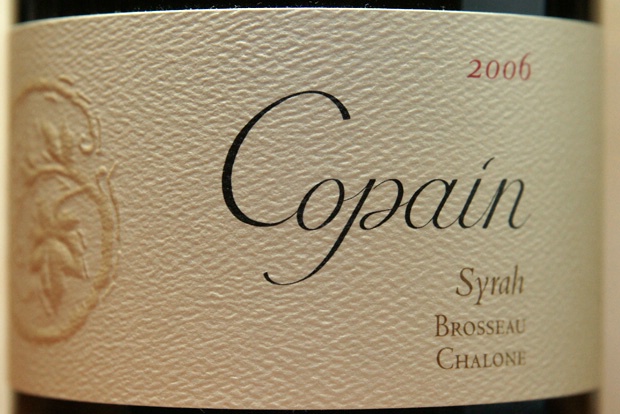
2006 Copain Syrah Brosseau Vineyard

6ca34476-7b25-4bbf-8d4c-e3ff744b6e7a

Copain Syrah Brosseau Vineyard

California, Central Coast

Tasting Note:

The fruit is bright, fresh blackberry on the nose. Amazing for an aged Cali Syrah. A touch of menthol and alcohol follow through to the palate with a mid-palate and medium-long finish that includes tar and licorice. The oak is well integrated with a hint of vanilla still present. A well balanced wine on the palate – medium high acidity, medium tannin and a silky mouth-feel that presents a lighter Syrah profile. Alcohol is a bit heavy, but not overwhelming. This wine is singing and in its prime drinking window now. Thoroughly enjoyable on its own, but would pair well with red sauces, or red meat. I did not expect a Copain Syrah to weather the test of time so well!

This is a superb example of a New World Syrah with an Old World Northern Rhone influence. I have not tasted a Copain wine aged this long before. A pleasant surprise!

Comments Off on 2006 Copain Syrah Brosseau Vineyard

Filed under Wine Tasting

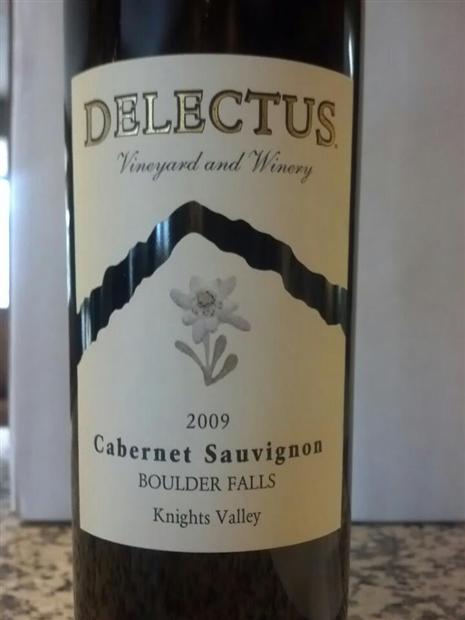
2009 Delectus Cabernet Sauvignon Boulder Falls

359993

2009 Delectus Cabernet Sauvignon Boulder Falls

Napa Valley, CA Winery – Sonoma Knights Valley AVA Fruit

If you haven’t tried older Delectus wines, you should. The winemaker before 2016 (Gerhard Reisacher) had some interesting ideas that make his red wines worth investigating. The extended cold soak, cool fermentation and extra time their reds spent on the lees drive a different profile. When you include the high quality fruit coming from well-managed Knights Valley estate vineyards, you have reds that show notable balance for fruit-forward high-alcohol wines.

Delectus was acquired by Vintage Wine Estates in 2016. Vintage hired a new winemaker and lost their access to the Knights Valley vineyards. For the record, I have no idea what they are doing today, but if you can get your hands on inventory from vintages prior to 2016, it is worth giving them a try.

Winemaking Ideas

These are not classically styled Old World wines. In good vintage years, the extended cold soak makes the wines quite extracted. The longer cool ferment and the extra time on the lees seems to affect the tannin and add a finer texture. In my opinion, if you were to marry this philosophy to a cool climate region, that would be something special. Instead, you have wines chasing Robert Parker’s next 100 point score. Don’t get me wrong, these are well-made wines and I do enjoy them as what I call “cocktail wines”, or accompanying rich red meat dishes. The usual high-alcohol makes these dry wines taste sweeter. Somehow, Mr. Reisacher managed to make these high-alcohol wines fairly integrated and balanced. Something you don’t see much of in Napa Valley.

My Wine Tasting Note from CellarTracker

Like other tasting notes on CT, this wine also hit me as odd. To get the first question out of the way, it does not taste hot, even though the label lists 16.7% ABV. Shockingly, the alcohol is well integrated. Upon first pour, this is a high-acid fruit bomb. At 9 years of bottle age a surprise… decant and give it an hour before you drink and you will find the real wine underneath.

At first, the nose is almost non-existent, but later reveals itself after a couple of hours. Once it develops, the nose is alcohol, plum, blackberry, black currant and menthol. With time open, this wine becomes well-integrated. The palate starts with blended red & black fruit (like boysenberry compote), but after time it settles down and morphs into the blackberry, plum & black currant you expect. The wine is dry, but the high alcohol content makes it seem somewhat sweet. The mouthfeel starts out soft, but thin and then the tannin shows and the texture begins to fill the mouth – high tannins and high acidity abound. The mid-palate shows immediately after the fruit and is all dark chocolate (without bitterness) that follows to a very long finish. This wine rewards patience. I agree with one of the other CT notes. Much like a Conn Valley Cab. As fruity and bold (perhaps more even), but the tannin is fine-grained and softer. I would be concerned about giving this more time in the bottle. The alcohol is so high, without the big fruit/acid/tannin behind it, the alcohol will likely begin to dominate. It seems to be drinking well now, but is definitely for those who enjoy fruitier, high-alcohol wines.

Napa and the 100 Point Race

This is every bit like the more expensive “cult” wines I have tasted. If you are a fan of that style, track down one of these older vintage Delectus wines and give it a try. They stand-up to aging and offer a similar experience for a lot less!

Comments Off on 2009 Delectus Cabernet Sauvignon Boulder Falls

Filed under Bordeaux/Meritage Blend, Knights Valley, Napa Valley, U.S. Wines by Region, Wine Collecting, Wine Education, Wine Tasting, Wine Tasting Notes