Category Archives: U.S. Wines by Region

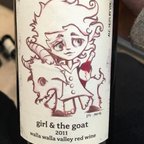
2012 Saviah Cellars Girl & the Goat

2012 Saviah Cellars Girl & the Goat

Walla Walla AVA, WA

Wine Tasting Note:

Rich, fruity blackberry, plum and spice on the nose. Fruit forward blackberry, plum and black currant on the palate, moving to a mid-palate and finish of copious amounts of dark chocolate. Spicy white pepper and cinnamon undertones. Medium-high acidity and medium tannin structure. Nice silky mouth-feel with an extra long finish. Super well-balanced wine. Drinking great right now… best window: 2016-2019. I wish this was more widely available than just in the restaurant in Chicago. I was gifted this bottle by Richard Funk the winemaker/owner at Saviah Cellars who took on the challenge of making this wine for Stephanie Izard – owner of Girl & the Goat. This wine is produced from his near perfect estate Petit Verdot vintage in Walla Walla during 2012. This is a superlative wine for drinking by itself and with food. I drank this with a coffee rubbed NY strip and it was a great match. 50% Petit Verdot, 25% Cab Sauv, 25% Cab Franc.

I don’t know whether the vision for this wine was the chef’s, or the winemaker’s, but this turned out to be a wonderful wine. Richard Funk is a great guy. I really enjoyed spending time with him during our last trip to  Walla Walla. He really hit a home run with this wine and I hope that Petit Verdot vineyard of his produces more great vintages in the future!

Comments Off on 2012 Saviah Cellars Girl & the Goat

Filed under Bordeaux/Meritage Blend, U.S. Wines by Region, Walla Walla Valley, Wine by Varietal, Wine Tasting, Wine Tasting Notes

2008 Acacia Chardonnay Winery Lake Vineyard

2008 Acacia Chardonnay Winery Lake Vineyard

California Carneros AVA

Wine Tasting Note:

I have to wonder, am I drinking a different wine than the others leaving notes on CellarTracker? Take note: you definitely have to be more of a White Burgundy fan, than a Cali Chard fan to enjoy this wine. Conflicting thoughts on this one… This wine is wound very tight, like a Crus Chablis might, without enough cellaring. On the pop, the nose is all bitter key lime, grapefruit and brine. Let the wine rest for 15 minutes and the nose begins to blossom a bit. Definite honeysuckle and green apple comes to play, in addition to the other aromas. Now, the alcohol comes forward – another Cali producer over-doing a white with 14% alcohol. The palate is complex. After 30 minutes, the sweet honeysuckle moves to the front and lime, grapefruit and brine moves to a well-defined mid-palate. The oak is not subtle here, but it adds interest by exaggerating the mouth-feel coming from stirring the lees. The wine almost feels like heavy cream in the mouth. The acid level is high. This could easily age another five years. How would you feel about a 15 year aged Cali Chardonnay? The finish is very, very long with a lightly sweet-sour flavor that persists. This is like a better White Burgundy, missing the finesse. This should be drunk with specific foods to tame its wildness. The acidity would hold up well to the most buttery of white cream sauces I can think of, in fact, linguine in a rich white clam sauce is coming to mind! Drinking window easily until 2022.

Comments Off on 2008 Acacia Chardonnay Winery Lake Vineyard

Filed under Carneros, Chardonnay, Napa Valley, U.S. Wines by Region, Wine by Varietal, Wine Tasting, Wine Tasting Notes

Two Rhys Chardonnays

Rhys Alpine Vineyard

My wife and I pulled out a couple of stellar California Chardonnays from the cellar last night. Rhys really does stand out as a quality Chardonnay producer. I normally go to French White Burgundy for quality and value in this category, but Rhys has compared well and I do try to support the better quality USA wineries. I must admit, typically I do not enjoy New World white wines under $40/btl. In general, they are produced to accompany food, or as an easy drinking aperitif and have little nuance. The challenge is, moving from Old World Chardonnay to California, you have to be willing to spend $60-100/btl. for similar quality. I usually prefer to stick with comparable French whites and pay 1/2 to 3/4 the price. Unfortunately, even Rhys has been raising their bottle price lately and is approaching a poor value proposition with White Burgundies…

Here are my tasting notes on the two Rhys wines we drank last night:

2013 Rhys Alpine Vineyard Chardonnay

California Central Coast AVA

Tasting Note:

The nose is complex with citrus and tropical fruits… candied lemon, bright fresh lemon, banana and pineapple. There is a tinge of alcohol and a kiss of minerality too. The palate is more straight-forward. Fresh lemon, bitter lemon rind leading to a lemon curd finish that has a touch of sweetness. The main impression here is of an understated wine, the nuances of which will not be experienced with food. I think the mouth-feel is still developing, so with very high acidity, I would let this rest a few more years to achieve the best tasting experience (drinking window 2015-2020). This drinks very well now as a quality Cali Chard, but if you are willing to wait, I think this will mature to add another point or two to the rating.

2012 Rhys Alesia Alder Springs Vineyard Chardonnay

California Central Coast AVA

Tasting Note:

At first pop, nice fruity candied meyer lemon on the nose that blows off after a few minutes. Nose settles down to a typical Cali Chard – lots of citrus, with some alcohol and a touch of concrete minerality. Very high acidity and well integrated alcohol. The palate is all citrus up front, with a mid-palate of bitter lemon rind and medium-long finish with a hint of vanilla. This wine is elevated by the mouth-feel. It has a delicate, silky texture that significantly enhances the drinking experience without food. With food, could be an excellent pairing with a citrus marinated pork loin. This is big enough to handle a few more years in the cellar, but is definitely in its drinking window now (drinking window 2014-2018).

Comments Off on Two Rhys Chardonnays

Filed under Chardonnay, U.S. Wines by Region, Wine by Varietal

Watching a California AVA Change its Identity

lodi_native_logo_288

There is a small group of pioneering winemakers taking the leap of faith (with some encouragement) to embrace a different approach to Lodi winemaking. They offer limited production premium wines and are fashioning a new identity for the region.

The brilliance of the vision is in the marketing. Wine collectors and enthusiasts follow winemakers and vineyards… it is the dirty secret most wineries would rather not acknowledge. Strong distribution, labels, shelf-talkers, shelf space and displays draw the average consumer. So, when you talk premium wine, what describes successful marketing? …Rock Star winemakers and masterfully managed vineyards. Examples on the vineyard side: I am always looking for single vineyard designate wines from Beckstoffer, Bien Nacido and Stolpman vineyard sites at below market prices. Same applies to winemakers like: Foley, Hobbs, Grahm, Lindquist, Smith, Ramey, Petroski, etc. (too many favorites to list). I am always looking…

The Lodi Native Project

This project was the original brain-child of Randy Caparoso (see bio here: Randy Caparoso), but it’s success depended on the execution of a group of winemakers who embraced the challenge. At its core, the project represents a winemaking philosophy, but the goal is much broader and ambitious. It includes a group of winemakers (Layne Montgomery-M2, Stuart Spencer-St. Amant, Ryan Sherman-Fields Family, Mike McCay-McCay Cellars, Tim Holdener-Macchia and Chad Joseph-Maley Brothers) that individually agreed to release 100-250 cases per vintage of Lodi AVA vineyard designate wines under a set of rules that require non-interventionist winemaking. The parameters include: all natural wild yeast (no inoculation), no additives (i.e. acidification), no filtering, all neutral oak in aging, etc. The heritage vineyard sites (see historic vineyards here: Heritage Vineyard Society) include: Marian’s Vineyard, Schmiedt Ranch Vineyard, Soucie Vineyard, Stampede Vineyard, TruLux Vineyard and Wegat Vineyard. These are all “Old Vine” vineyard sites (see Lodi Native vineyard info here: Lodi Native About).

Why is this Special?

This project represents the re-making of an AVA. There will always be bulk fruit and wine produced out of Lodi AVA, but this effort is showcasing why/how Lodi can be different and have at least a small footprint on the premium wine scene. What does Lodi Native bring to the wine world we do not already have? These are quality, terroir-driven, food friendly Zinfandel based wines at reasonable prices. I have not tasted other Zins quite like these. The previously recognized quality Zin producers, like Seghesio and Ridge are very different. Go Lodi Native! Your team has added diversity to the world of wine…

The Impact

Lodi has a large number of Heritage designate Old Vine Vineyard sites. Many were planted with their own root system (not spliced onto alternative root stock). Lodi is fortunate to have sandy-loam soils at some sites where phyloxera cannot survive. The native root systems on these 90-120 year old vines do seem to have an effect on the character of the wine. Many of these vineyards yield only 2-3 tons of fruit per acre, without intervention. These self-regulating vines seem to have “learned” how to contribute to yield management on their own.

These sites represent a valuable asset to the local wine community, having as much to do with quality winemaking, as the historical significance they hold. The importance of these vineyards was not recognized until roughly ten years ago, but it was Randy’s vision that made them commercially viable, and it was the winemakers’ commitment to showcasing the uniqueness that brought the project together.

Lodi Native has given a voice to the different nature of this AVA. Maybe Randy guessed at what could happen if the winemakers pulled it off, but I don’t think any of them understood what it would mean to building a local wine identity… beyond bulk wine grape production. These wines are very good in a serious classic sense and are terroir driven. They offer structure and balance, something missing from much of the rest of the AVA and they definitely belong in the category of premium wines. They offer a delicate finesse, focusing on soft mouth-feel, floral nose/palate and age-ability.

Value

If you are a wine enthusiast, you owe it to yourself to seek out these wines. They are the beginning of the emergence of the classic Lodi AVA and the value is solid.

More on Lodi Native Wines to come…
 

2 Comments

Filed under Lodi, U.S. Wines by Region, Wine Education, Wine Industry, Wine Tasting, Winemaker Interview

Lodi AVA Wine Tasting – WBC16

WBC16 Logo

Beginning with a few impressions from this year’s Wine Bloggers Conference in Lodi… It appears Lodi isn’t just old vine Zin anymore…

The first tasting of the event started my immersion in the region. Here is an overview of several producers and a few initial thoughts:


Oak Farm

Oak Farm Vineyards – Tasting a competent and very typical middle of the road Cab Sauv, but the real star here (and of the night) was a Loire style Sauv Blanc aged on the lees to add complexity and mouth-feel. In speaking with the winemaker, he definitely had a Loire sensibility and was specifically looking for that identity. If you enjoy Sancerre wines and would like to explore a similar approach produced in the U.S., give this wine a try.

Heritage Logo

Heritage Oak Winery – The impact of these wines was the good acidity across the board. I came to Lodi expecting not to see much structure, due to the very warm climate. The Sangiovese and Tempranillo in particular are fruit forward, with high acidity and a medium tannic structure. Nice food wines and across the board above average wines.

prie

Prie Vineyard & Winery – The reds were very thin and weak, but the Vermentino was exceptional. This varietal typically has citrus notes that usually leans toward lemon. The wine had good acidity and a beautiful rich lemon curd taste and texture…think lemon meringue pie. Great example of what Vermentino can be.

M2 Logo

M2 Wines – Traditional fruity Zins, easy drinking with mild acidity.

Mettler logo

Mettler Family Vineyards – Average red catalog. Again, the white wine was the notable offering. It was nice to see the Spanish varietal Albariño represented. This was a soft, easy drinking wine with nice mouth-feel.

Uvaggio

Uvaggio – The collection included a few average white wines. Atypically, the best wine was the Italian varietal Barbera. I thought, the best Lodi red wine of the night. This was a medium bodied, fruit forward wine with good acidity and chewy tannins. It had a bit in common with the Italian GD Vajra Barberas I have tasted (my favorite).

Scotto

Scotto Cellars, Masthead – Interesting story behind how this wine was developed with wine critic input. Check their website for the story. 100% Sangiovese with a bright red cherry fruit-forward palate and a mild dark chocolate mid-palate that moves into the finish. The wine had medium acidity and a reasonable mouth-feel that tended toward the watery side. It showed a balanced approach with good structure. It was approachable now, but had just enough structure to add some complexity.

fieldslogo

Fields Family Wines – Think food wines. Excellent structure across all wines tasted. Great wines to accompany food, or to age in your cellar – Syrahs, Petite Sirah and Tempranillo. The first producer I have tasted in Lodi to consistently offer food-friendly wines. Using mostly neutral oak for aging, lets the fruit shine through. All wines had medium-high acidity and medium-high tannins with good balance. Would be great restaurant wines.

Stay tuned for more impressions from the 2016 conference…

Comments Off on Lodi AVA Wine Tasting – WBC16

Filed under Lodi, Wine Tasting, Wine Tasting Notes

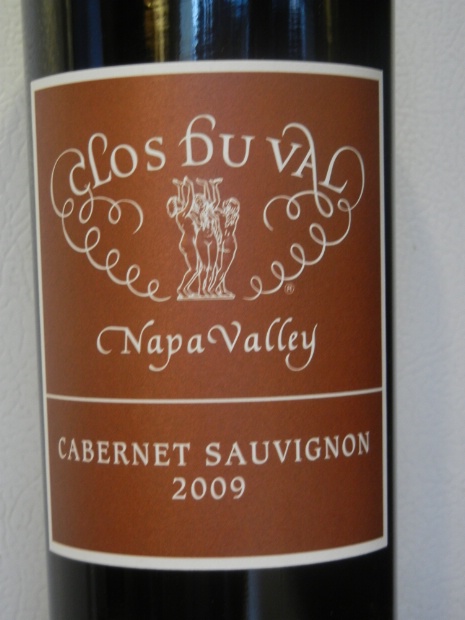
2009 Clos Du Val Cabernet Sauvignon Napa Valley

Clos

2009 Clos Du Val Cabernet Sauvignon Napa Valley

Napa Valley AVA, CA

Tasting Note:

Still fresh on the nose with plum, blackberry, graphite and a touch of alcohol. First pour, closed with a minimum of fruit. You can tell this wine needs time to open. After 30 mins, fruit-forward with subdued plum, black currant and blackberry and a mid-palate of subtle dark chocolate with a very short finish. The acidity is medium-high, but it is the tannin that is interesting. Softer than when young, although chewy and strangely mouth-filling without being very drying. Not unpleasant, but past its prime drinking window. Great value Napa Cab Blend when young. Losing a couple of rating points with age. Drink-up!

As I continue to drink more aged Napa Cab/Cab Blends at all price points, I am able to fine-tune a feel for drinkability and age-worthiness. Hind-sight is always 20/20, but this was a wine meant to drink in a 2012 – 2015 window (3-6 years of age). Looking back, there was not enough balance in the structure to go 10… I am finding the lower cost Napa Cab blends tapping out at around 5 years. The more recent higher quality releases have been hitting a wall at around 10-12 years of age. I have only tasted early 90’s wines that have lasted well, in a 15-20 year window.

5 Comments

Filed under Cabernet Sauvignon, Napa Valley, U.S. Wines by Region, Wine by Varietal, Wine Tasting, Wine Tasting Notes

2009 Tobin James Zinfandel Blue Moon Reserve

292538

2009 Tobin James Zinfandel Blue Moon Reserve

Paso Robles AVA, California

Tasting Note:

This wine is improving with age. You don’t often find a zinfandel that can hold up to much bottle age, maybe Seghesio, Ridge… This was a surprise. Before we start, this is not an Old World influenced red wine. It is a California bomb! Completely fruit forward nose of dried red and blue fruits with alcohol and mineral notes. The fruit explodes on the palate. After seven years in the bottle, this zinfandel is very uncommon. The palate is all dried fruit: raisin, prune, boysenberry, blueberry… not as much sweet, as intensely fruity. Touch of dark chocolate on the mid-palate and a very long fruity finish. Silky, medium-low tannins still, with a beautiful mouth-filling texture. The high alcohol is evident, but not overpowering. Not a wine for food. Enjoy as an apertif, or digestiv. One of the most well-made California fruit-bomb style wines I have ever tasted!

We purchased this wine during a Tobin James special event at the winery. Their reserve wines are not easy to find, but worth searching out. The general release wine reflects broader market ambitions and is just average for quality and value, so don’t judge the reserve wines by what you may find on the shelf at your wine retailer!

1 Comment

Filed under Paso Robles, U.S. Wines by Region, Wine Tasting, Wine Tasting Notes, Zinfandel

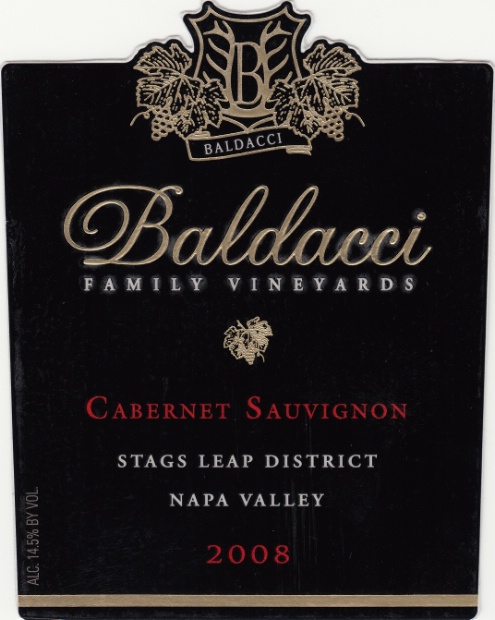
Baldacci Family Vineyards Cabernet Sauvignon Stags Leap

Baldacci

Baldacci Family Vineyards

Black Label Cabernet Sauvignon

Stags Leap District, Napa Valley

Tasting Note:

Beautiful Napa Cab in the middle of its drinking window! Drinking Baldacci Stags Leap Cabs over the last 20 years, I am struck by how they always over-deliver at their price. This bottle cost $46 in 2010 and is drinking like a $70+ Napa Cab! Blackberry and black currant on the nose with tar and leather. Still fruit-forward after 8 years of aging, with blackberry and black currant in front, transitioning to a mid-palate of dark chocolate, leather, underbrush and tar. The wine has a lengthy, slightly hot finish. Gorgeous rich mouth-feel, full and sensuous. The tannins have resolved well and are just under the surface. The acidity is high, but this paired perfectly with a rib-eye steak. Without food, the acidity would have been a bit much. The signature Cab character of graphite and tobacco are missing, but regardless, my wife and I really enjoyed this bottle with steaks for dinner!

Comments Off on Baldacci Family Vineyards Cabernet Sauvignon Stags Leap

Filed under Cabernet Sauvignon, Napa Valley, Stags Leap District, Wine by Varietal, Wine Tasting, Wine Tasting Notes

Winemaker Interview – Billo Naravane of Rasa Vineyards

Please follow my winemaker interview series! You can find this and other interviews at the following link:


Winemaker Interview Series – Billo Naravane


Comments Off on Winemaker Interview – Billo Naravane of Rasa Vineyards

Filed under Cool Climate Wine, Walla Walla Valley, Wine Industry, Wine Tasting, Winemaker Interview

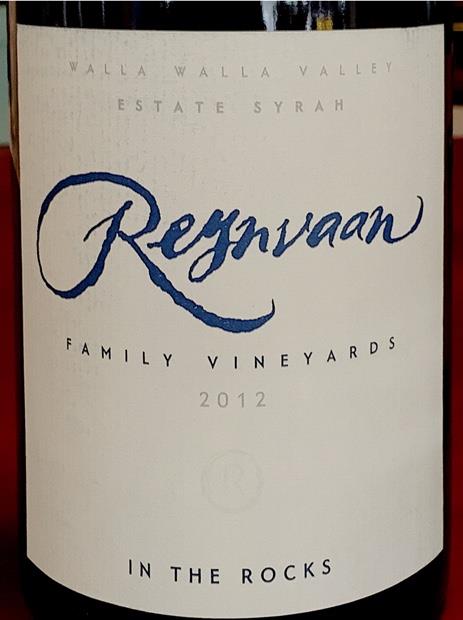
2012 Reynvaan Syrah In the Rocks

Reynvaan Pic


Reynvaan Family Vineyards – Walla Walla, Washington

Walla Walla Valley AVA

Wine Tasting Note

Do you enjoy Syrah from the Northern Rhone region? Cote Rotie AOC perhaps?

If you have enjoyed a quality bottle from the Northern Rhone and added it to your “wines of distinction” list (like I have) seek out a bottle of Reynvaan Syrah and experience a domestic producer that understands this style well. Everything about the Reynvaan wine speaks “Northern Rhone”… meatiness, earthy, floral. Many casual wine drinkers I have introduced to this style have had a difficult time wrapping their heads around it. My wife tasted this wine tonight and immediately said, “this is good… wait, I don’t think I like it.” This is that kind of wine – soft, supple, appealing… until the complexity shows on the palate… and you wonder, “is wine supposed to taste like this?”

Tasting this wine in the first hour after opening is a shame… the real wine doesn’t reveal itself and open until the 3rd and 4th hour. Tasting note after 4 hours open:

The nose carries strong raw meat aromas, with blackberry and mulberry fruit, floral violets and a touch of nail polish. The wine is fruit forward on the palate with blackberry and black currant, has a dark chocolate mid-palate and a floral violet with oily tar finish. After four hours, some of the freshness of the fruit is lost, but the classic Northern Rhone profile is revealed… that oily texture and tar finish. Wow, for 25% – 50% less than Cote Rotie, this wine can be acquired in the U.S. The wine has medium-high acidity, but only medium tannins. The lack of tannins throws the balance off a bit, but the plush, oily texture is right on. This is a well-made wine from a vineyard managed to produce fruit to match this style. The evolution of flavors and textures in the last four hours leads me to believe you should give this some time in the bottle to realize its true potential: peak drinking window 2017-2018. This is not a wine I would choose to experiment with for extended bottle aging.

Well done! If Matt Reynvaan could have squeezed a bit more tannins from the skins/stems, this would have been world class, at the absolute pinnacle of wines made in this style.

Comments Off on 2012 Reynvaan Syrah In the Rocks

Filed under Cool Climate Wine, Syrah/Shiraz, Walla Walla Valley, Wine Tasting, Wine Tasting Notes