Monthly Archives: July 2015

Why Do Wines Taste Different? – Part 2b: Vineyard Location

Vineyard Influence on Wine Flavors and Structure

As I dive deeper into this, the rabbit hole takes me deeper and deeper… I must apologize again. Location is too big a topic to include a discussion of soil types in the same piece… So, it appears I will have a part 2a, 2b and 2c in this series on “Why Wines Taste Different”. For those of you staying with me on this, thanks for your patience and perseverance.

Vineyard Location

Varietals

This topic has everything to do with the individual varietal. If you want to find the best wines, a big part of the answer is in the vineyard location. Learning to differentiate the common warm climate varietals from the cool climate varietals is important:
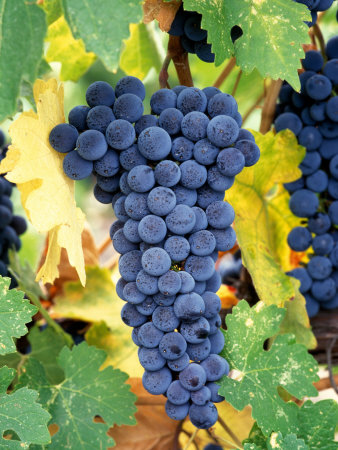
Cabernet-Sauvignon-Grapes

(Cabernet Sauvignon Grapes)

Warm Climate Reds 

Grenache, Mourvedre, Cabernet Sauvignon, Syrah, Tempranillo, Zinfandel, Malbec, Merlot, Sangiovese
Viognier grapes

(Viognier Grapes)

Warm Climate Whites

Viognier, Roussanne, Marsanne. Chardonnay, Sauvignon Blanc

Pinot noir Grapes

(Pinot Noir Grapes)

Cool Climate Reds

Pinot Noir, Cabernet Franc, Syrah, Nebbiolo, Merlot
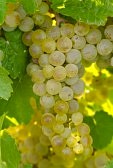
riesling-wine-grapes

(Riesling Grapes)

Cool Climate Whites

Chenin Blanc, Riesling, Sauvignon Blanc, Albarino, Pinot Gris, Glera, Chardonnay, Gewurtztraminer

Climate Affect on Wine Character

There are many more varietals in each category, but these are frequently seen in single varietal formats and are the most common. Notice that Chardonnay, Sauvignon Blanc, Merlot and Syrah are listed as both. These four are the most versatile wine varietals in the world. They can make quality wines in both warm and cool climates, but keep in mind the flavors and textures are totally different when grown in the different locations. Warm climate Merlot has less acidity/tannins and can be beautifully soft, or horribly flabby. Warm climate Chardonnay usually has less acidity and tends towards simple citrus flavors. Most warm climate Sauv Blanc tastes like fresh mown grass mixed with lemonade to me, but others enjoy it. Warm climate Syrah is another story… warm climate locations are better when moderated by a Mediterranean climate, but these areas can produce killer wines. Cool Climate locations can produce exceptionally complex Syrah, but sometimes are a little weak on fruit flavors, so are often mixed with Viognier to enhance approachability. I enjoy these wines tremendously.

What to Look For?
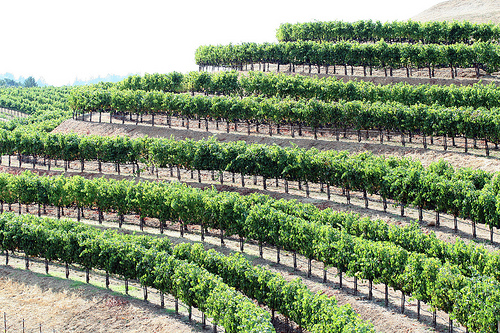
Spring Mtn Vineyard

(Spring Mountain Vineyard)

Inland Locations at Higher Elevation

(roughly 2,000-4,000 feet)

For example, try the top of Spring Mountain AVA and Howell Mountain AVA in Napa Valley. You will find bold wines with a pleasant blend of acidity, tannins and alcohol there. In the hands of an expert winemaker, these vineyards can produce a wonderful, fully developed mid-palate. Haven’t heard the terms “attack”, “mid-palate”, or “finish”? Drop me a line and I will write a piece explaining these wine characteristics!
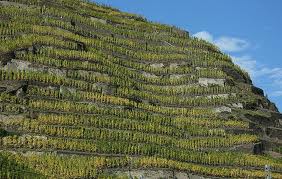
Mosel Vineyard

(Mosel Vineyard)

Steep Vineyard Sites

These sites stress the vines and drain them very effectively. The berries are usually smaller and the fruit (and resulting wines) always have more intense flavors. These vineyards are everywhere, just keep an eye out. The opposite holds true, be careful with wines made from valley floor fruit. If not managed carefully, these vineyards can become bulk wine territory! The most extreme examples lie in the Mosel Region in Germany.
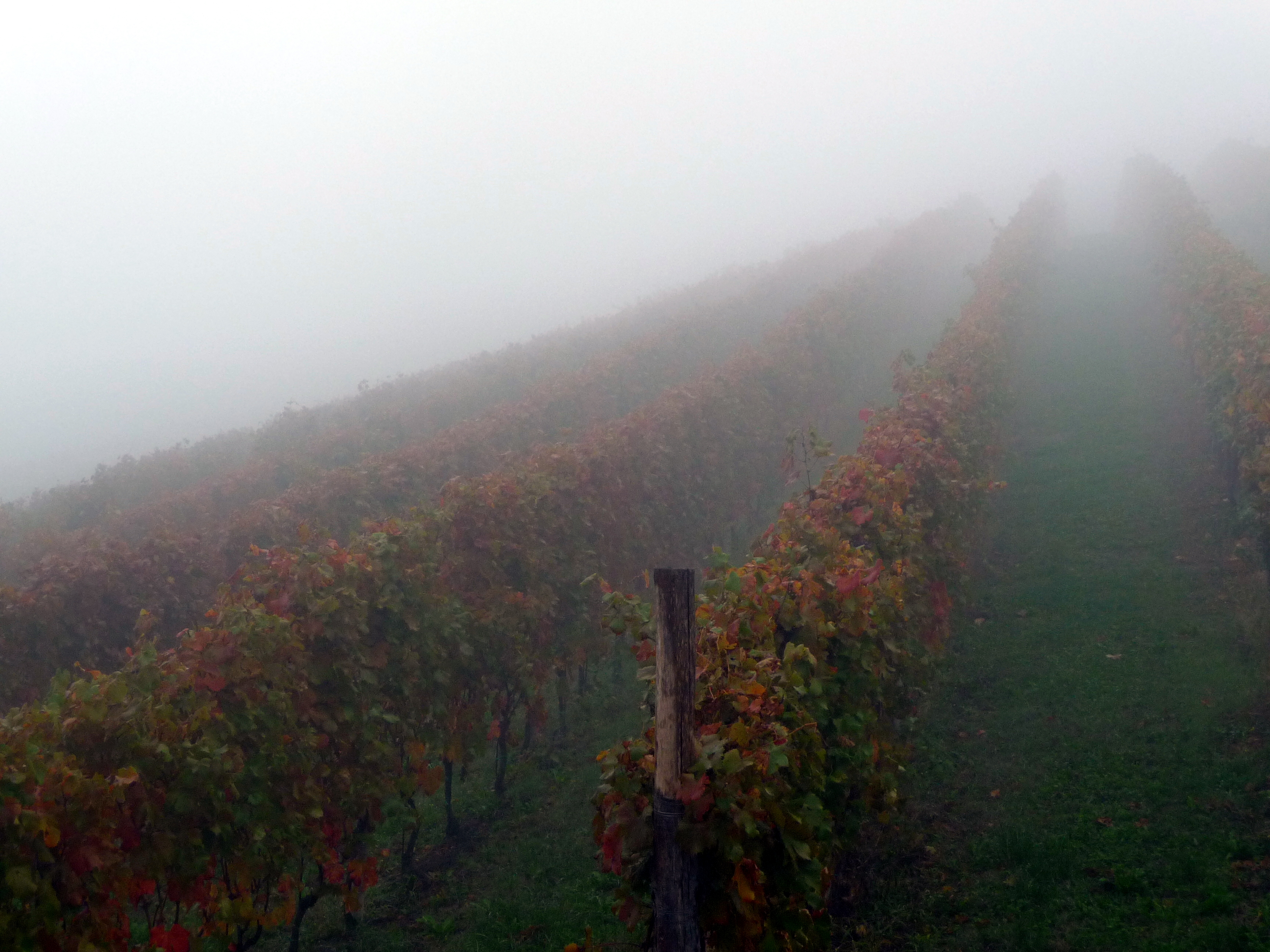
Langhe_vineyard

(Langhe Vineyard)

Inland Foggy Locations

Remember those Cool Climate varietals… if there is enough sunshine to fully ripen the berries at these sites, WATCH OUT! These wines are amazingly good. These vineyards can produce complex, fruit forward wines with high acidity. Watch your vintages with these producers. In cooler years, these wines can be very rustic, and/or thin. U.S. Examples: Santa Rita / Santa Maria AVA, or Russian River AVA.
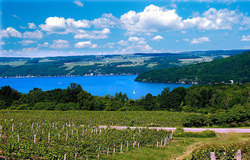
Finger-Lakes-vineyard

(Finger Lakes Vineyard)

Inland Locations Adjacent to Large Lakes

Often, cold winter climates can support vineyards in these areas. The lakes moderate the low temps at night during bud-break and harvest (Spring & Fall). Depending on the amount of sun, these vineyards can produce fresh, brisk white wines, or a well-balanced lighter style of red wine. U.S. Examples: Lake County AVA or Finger Lakes AVA.
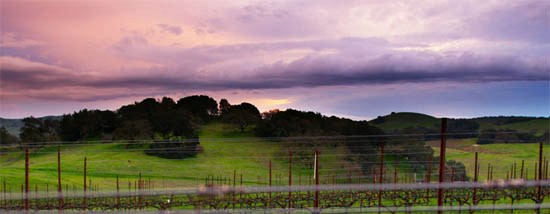
Sonma coast Vineyard

(Sonoma Coast Vineyard)

Coastal Locations

These sites can produce excellent, or horrible fruit from vineyard to vineyard. The best sites don’t get a lot of rain and are watered by the dew and fog. In addition, higher elevation sites adjacent to the coastline are an advantage. The elevation offers more time above the morning foggy conditions to ripen the fruit and destroy the potential mildew. These vineyards will not produce easy drinking wines, but if you like complex flavors (sometimes unusual) and good structure, try a few of these and find out if they are for you. U.S. Examples – Sonoma Coast AVA.

Conclusion

Valley floor locations almost always produce easier drinking softer wines, especially when located in warmer climates. These are not my kind of wines, but I recognize that many consumers enjoy this style. Each to their own, but at least with this information, you can understand what influences how these wines taste. If you are willing to evaluate your preferences and find the vineyard locations that match your palate for each varietal, it will enrich your wine experience (find my preferences below).

Vineyard Locations I Prefer (a few)

Chardonnay – Burgundy AOC, Champagne AOC, Mendocino AVA, Santa Maria and Santa Rita Hills AVA, Russian River AVA

Sauvignon Blanc – Marlborough Appellation, Sancerre AOC

Chenin Blanc – Vouvray AOC, Stellenbosch and Swartland Appellations

Merlot – Right Bank Bordeaux AOC, Spring Mountain AVA, Walla Walla AVA

Cabernet Sauvignon – Napa Valley AVA, Left Bank Bordeaux AOC, Bolgheri Superiore IGT, Maipo Valley Appellation

Syrah – Southern and Northern Cotes du Rhone AOC, Paso Robles AVA, Walla Walla AVA, Barossa Valley Appellation

Pinot Noir – Burgundy AOC, Willamette Valley AVA, Santa Rita Hills AVA
3 Comments

Filed under Cool Climate Wine, Wine Education, Wine Industry, Wine Travel

Why Do Wines Taste Different? – Part 2a: Climate

Continuing the two part series, well… I realized this topic was just too much for one additional piece. Don’t forget, I am no industry expert. This piece is only offered from the perspective of the impact on enjoyment of wine flavors and structure. Folks, I have tasted a LOT of wine. Over the years, you ask questions, and you learn which factors affect the wine and how. Now I am sharing that experience with you.

PART 2a – How Terroir Affects the Fruit 

This second part in the series is the most complicated. This installment in the series provides insight into the location factors that influence wine flavors. It is impossible to cover these next topics without technical detail. I apologize in advance for diving into the dryer Somm training. I will try to associate these influencing factors with their specific impact on flavors and structure, so it will offer more interest and meaning…

0601_g1_2_terroir-wheel

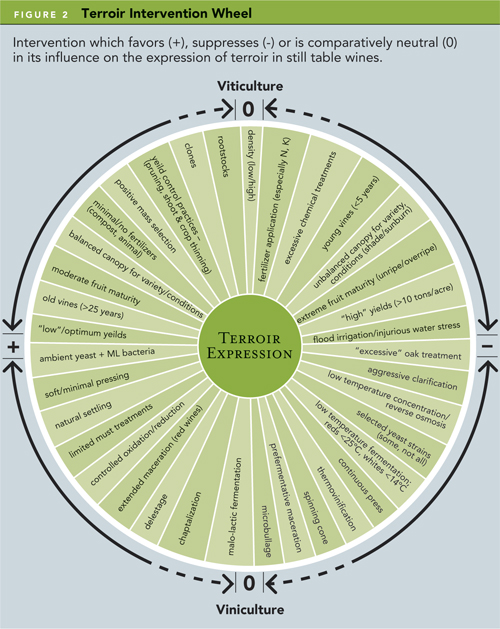
Climate is closely related to the idea of “terroir”. I put the term in quotes, because it is a concept more than a word. Terroir impacts both flavors and structure in wine (for example: blackberry and acidity). Here is the Webster Dictionary definition: “The combination of factors including soil, climate, and sunlight that gives wine grapes their distinctive character”. Close, but there is more to it than just that. Some additional ideas would be: proximity to bodies of water (i.e. lake, ocean), heavy winds, or fog during the growing season and the most important – local wine growing traditional practices.

Each of these can have a bigger influence than you would think:

  • Foggy mornings can add a considerable amount of acidity to the fruit and ultimately the wine.
  • Heavy winds have a more basic function – the wind keeps the berries dry, so thinner skinned varieties (Pinot Noir, Merlot) can be grown in humid climates, without mildew and rot.

Wine growing tradition can affect things like:

  • Trellis design – Overhead trellising (called Pergola and common in Italy) makes it impossible to practice canopy management. This can lead to inconsistent vintages from varying weather conditions. Without canopy management, it is difficult to control producing burnt vs. under-ripe fruit from year to year. Italy has been slowly converting their premium vineyards to head-trained trellis and pruning systems for this reason.
  • Yield per acre – Some regions can produce 8 tons of fruit per acre, or more. This is bulk wine territory. You can taste the difference when fruit is pruned from the vines early and the yield is reduced to 2-3 tons per acre, commonly found in the premium wine category. This always develops more concentrated and complex flavors. Ask a winery about the yield per acre for their fruit source. They should be able to tell you immediately. It is a VERY important decision and will separate quality wines from bulk wine. Your dividing line is at about 4 tons per acre.

Terroir can also be a philosophy of sorts. Have you ever considered wine to be a unique indicator of “place”? Wine can and does reflect local cuisine and culture. In many of the Old World wine growing regions, wine is viewed as a definitive indicator for the location where it is made. That is why they have actual government laws regarding how wine must be made in many regions. In this way, Wines from St. Estephe AOC, or Sancerre AOC all have a consistent character. Before my Somm training, I would have told you this was completely crazy. In the U.S., we don’t think of wine in this way, but still… when I drink a Napa Cab Sauv, it does take me back to past visits to Napa Valley.

Affects of Climate and Location on Wine

So, now let’s pick-up where we left off in Part One and dive into the climate and location factors that influence the flavors in wine:

Where is the vineyard located, in a: Maritime (adjoining ocean), Continental (inland), or Mediterranean (moderate temps & ocean influence) Climate? If you add soil type, these are THE most important factors in vineyard influence on the wine. So, how does this affect the way we experience the wine? Let’s start with climate. The primary impact of climate is on the varietal selection planted. As an example, varietals grown in the Loire are completely different than those grown in Bordeaux and those choices have an obvious impact on flavors in wine from the two regions. Within the same varietal wine, the climate difference impacts structure: Acidity, Tannins, Alcohol, Complexity (especially mid-palate) and Balance. This is the part of the discussion that becomes more variable and interesting.

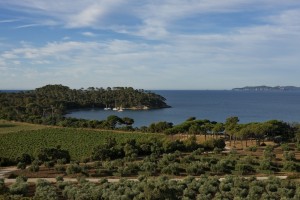
Winery Provence

Provence Region, France

Maritime Location

In Northern Latitudes, these locations can be cool with fog, but winter temps stay moderate. If the growers can get the grapes fully ripe, watch out – fantastic wine results. Think acidity here. Wonderful climate for growing cool climate red varietals (if the soil is right) like Pinot Noir, Cab Franc and Syrah. This type of climate can also produce interesting cool climate style whites, like Chardonnay, Albarino and Pinot Gris. Think U.S. Sonoma Coast, or Spanish Rias Baixas. In Southern Lattitudes, the hot days and cool nights make killer warm climate reds, like Cab Sauv, or Grenache. Think French Provence, or Italian Tuscan Coast.

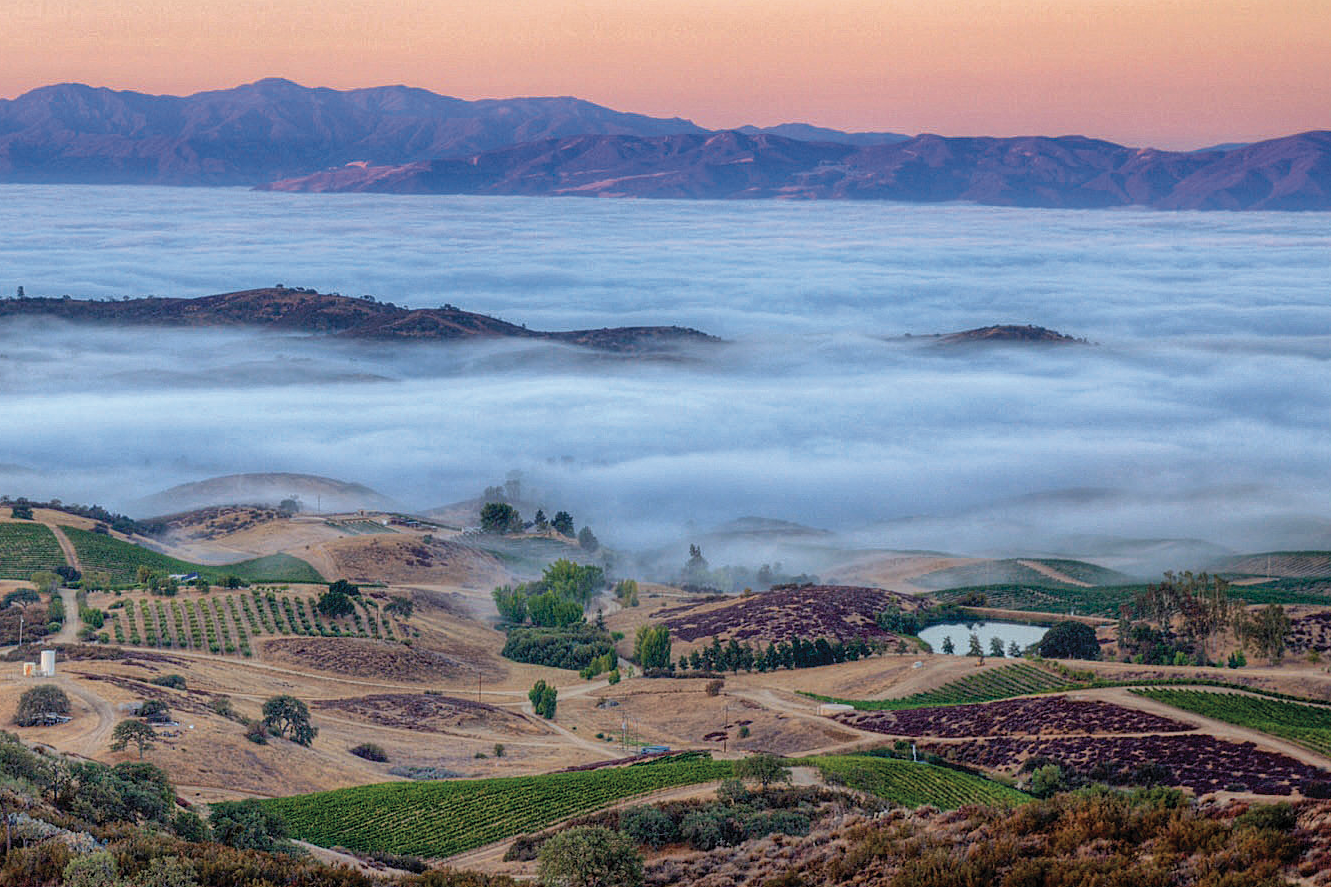
Clear Lake Pic

Clear Lake Region, CA

Continental Location

These inland locations do not have the moderating affect of the ocean, so these regions cannot extend too far north, or south for that matter. Wine grapes have very specific climatic needs. A very interesting and different example is the California Clear Lake AVA – an inland location, but at higher elevation with a large adjacent lake. This AVA is starting to produce structured wines and as the local industry comes to understand the vineyard sites better, the wines form this area will continue to improve. The varying Continental climates can produce a wide array of varietals. Burgundy, France is the classic premium appellation. In the U.S., it might be Walla Walla Valley AVA.

northern-rhone-vineyard

Rhone Region, France

Mediterranean Location

These wine growing locations tend to be in southern latitudes, inland along rivers within 50-150 miles (or so) of the coast. The best reds produced in these areas are usually from Syrah and Mourvedre grape varietals. In the whites category, the varietals to look for would be Viognier, Marsanne and Roussanne. These areas offer some of the most complex wines in the world. You often find wines from these areas with crazy flavors, like: olive tapenade, tar and mint. Sounds unpleasant… but try extending your budget when the opportunity arises and buy a nicely aged bottle of Cote Rotie. Be prepared to have your socks knocked off! The classic premium appellation might be the Rhone Region in France. In the U.S., it would be San Luis Obispo County (Paso Robles AVA).

Conclusion

If you haven’t noticed what these locations have in common, think hot days and cool nights.

Grape vines need enough sunshine to ripen the fruit, but not too much heat… or else the wine tastes too flabby (try bottled grape juice). Cool nights add acidity, without which wines taste flat. It helps if Winter can be a little cold, so the vines can more effectively shut-down, go dormant and rest part of the year. Extremes within any of these factors makes for lousy wine, or dying vines.

This has been a brief review of Climate and its impact on Wine. The next piece will cover our most favorite topic – DIRT and vineyard site selection. I hope this series is offering deeper insight into the factors that affect wine flavors and structure. In particular, if you are interested in Wine Travel, this is the information that will make the experience much richer!

2 Comments

Filed under Cool Climate Wine, Wine Education, Wine Industry, Wine Travel

Why Do Wines Taste So Different? Part 1: Winemaking Strategies

INTRODUCTION

“Hey, it’s all made from grapes, right?”

funny-man-tasting-wine-glass

Early in my wine drinking years, this was my mantra and justification for buying cheap wine. As you drink more wine and increase your wine budget, you start to realize that every vineyard, winemaker and label can taste radically different. How is this? It doesn’t seem to make sense. Well, I will try to put some of that Sommelier training to good use and explain why and how individual wines can taste so different. We will start with Winemaker Techniques in Part One and then move on to Vineyard Management in Part Two. I will focus on red wine in this piece, because it has the most diverse flavor potential.

You may ask, why should anyone care? Good question. Many people feel, “If it tastes good, I drink it.” For those who feel that way, I get it… but for those that are looking to understand why they enjoy a certain wine and not another… read on.

PART ONE

How Do Winemakers Affect Wine Flavors and Aromas?

Grape Varietal Selection?

Many inexperienced wine drinkers do not realize that specific grape varietals have very distinct flavor profiles. There are literally 100’s of grape varieties, but under ten (number varies based on opinion) noble varieties most commonly grown and made into wine across the world. Here are just two examples to provide a point of reference:

Pinot Noir – Fruit flavors of cherry, cranberry, raspberry, etc. Herbal and mineral notes of mint, earth, limestone rock, etc., depending on terroir. This wine is mostly less acidic and has very limited tannins. It can have a silky mouthfeel, but never a voluptuous mouth-coating texture. Not commonly made to bottle age, with the exception of wines from Burgundy, France.
Cabernet Sauvignon – Fruit flavors of blackberry, black currant, black plum, etc. Herbal and mineral notes of tobacco, graphite, earth, etc., depending on terroir. This wine can be very acidic and have very high tannins. It can be watery, silky, or very rich in texture. Very commonly bottle aged and often improves substantially over time.

Inoculating the Juice with Commercial Yeasts, or Allow Natural Yeasts to Ferment?

This is a controversial topic in the industry. Some winemakers swear natural yeasts add complexity and interest to the wine. Commercial yeasts may add to a “cleaner” flavor profile, but offer a taste that appears to be more manipulated. Wild yeasts may contribute to a more natural, complex character.

Use Extended Cold Soak, Before Fermentation?

This can contribute to a more “extracted” wine. The idea is to take the time and extract as much flavor as possible from the skins, pips and flesh of the grapes. Wines that are cold soaked tend to have rich, deep colors. They may also be fruitier, but I have not noticed this consistently. The challenge is preventing natural fermentation during the process. The tanks must be kept in refrigerated areas during cold soak. This option ties up tank space and potentially limits production, adding cost to the vinification process.

Pump Over, or Punch Down the Cap During Fermentation?

You wouldn’t think this would make a difference, but I have consistently noticed wines fermented with a pump-over process tend be more refined and elegant as a whole.

Ferment in Stainless Steel Tanks, Plastic Containers, or Oak Barrels?

There are those that claim stainless steel can add to minerality, but I have not seen this consistently. Plastic is basically neutral, but when the juice is fermented in oak barrels and then the wine is aged in oak too… you often end-up with very oaky tasting wines. For example,  these Northern California producers tend to have this flavor profile: Silver Oak and Caymus. Although, they may, or may not make their wine this way.

Block Harvest Vines by Area, Vinify and Blend?

Estate wineries that use this method produce better wines – period. Micro-terroir is a concept that is very real. Numerous factors can cause block variation in the fruit. These differences influence variable fruit characteristics: more acidity, riper, additional minerality, etc. The real talent is the winemaker’s palate and experience that can determine the appropriate blend to build a fine wine profile.

Age on the Lees?

This produces softer wines, but adds yeast, or butter flavors. I enjoy this character, even more in white wine. I think this is more of a personal preference consideration.

Ferment with the Full Grape Clusters?

This is often confused with Carbonic Maceration, a process used on inexpensive wines to add enhanced fruit, or “candy” (bubblegum) flavors. Full cluster fermentation is a much less intrusive process. This technique can add a deeper fruit character to the wine. I enjoy wines utilizing this process.

Include the Stems During Fermentation?

In the hands of a master winemaker, this can add a significant amount of interest to the wine – improving tannic structure and adding briarwood flavors. When not handled well, it can truly make wines undrinkable. For a winemaker, experimenting with this is like playing with fire.

Include Pressed Juice, or Only Free-Run Juice?

This decision can add a significant amount of cost to winemaking. Only a third to half the extracted fruit juice is typically free-run. After that is collected, the pressed juice steadily becomes thinner, less complex and more rustic, as more pressure is applied. For example, one ultra-premium winery I know, uses only free-run juice and sells their pressed juice to other wineries.

Filter, or Fine the Wine?

Historically, this was always  done. Today, with more modern wine producing technology, it has become a decision. Previously, this was required to remove impurities from the wine and improve clarity. Today, when omitted, it can offer a more highly textured character to the resulting wine.

Extend the Maceration?

Maceration is the process that uses the fruit’s own weight to break the skins and extract the free-run juice. Extending this process works well with the Cold Soak option discussed above. When done together, there are notable differences in the wine. These wines tend to be softer and more extracted. Very interesting wines can be produced by blending this with traditionally produced wine. In colder vintage years, this can help to offset the more rustic character of the wine.

Allow Residual Sugar to Remain and/or Add Fruit Juice After Fermentation?

These are more common options in the U.S. today. The Predator is an example of such a wine. Many of these are sold in big volume across the U.S. Personally, I do not like these wines. They give me a headache and are lousy paired with food.

Age in Stainless Steel Tanks, New American/French/Hungarian Oak, or Neutral Oak Barrels?

There is more experimentation with this idea today than in the past. Previously, you would never have seen red wines aged in Stainless. Today, I run into these more and more. Regarding the choice to use new, or neutral oak barrels… personally, I am not a fan of oaky wines. For me, the only advantage of new oak is to deliver the toasted flavors that will be discussed below. I think wines often taste better when aged in a less manipulated neutral oak style.

Use Light, Medium, or Heavy Toasted Oak Barrels for Aging?

Toasting the oak barrels in which wine is aged can add surprisingly pleasing flavors. My favorite flavors from this option are baking spice and cinnamon, but it can also impart other characteristics such as a smokey aftertaste.

Conclusion

Now that all this information is at your fingertips, what can you do with it? Of course, you can always impress your friends with your wine knowledge at dinner parties… or you could put it to good use investigating new wines you might enjoy. My personal favorite is discussing pros and cons of these techniques with winemakers when my wife and I are vacationing in wine country. However you put it to use, the understanding of how wine is made can truly add interest to your enjoyment of wine!

Comments Off on Why Do Wines Taste So Different? Part 1: Winemaking Strategies

Filed under Wine Education, Wine Tasting

Best Value Wine Destination in the U.S.A.?

value pic

I was recently involved in a discussion regarding preferred wine tourism destinations among serious wine drinkers / collectors. Napa Valley is consistently drubbed for its utter lack of value. Average tasting room fees are $25 – $40/pp… to access top quality, it is not uncommon to pay $75/pp. Now granted, these wineries are so gorgeous – Napa Valley itself creates its own ambiance, but let’s move past honeymoons and anniversaries and talk year-in and year-out wine tourism destinations. My wife and I have vacationed in Napa at least 10 times in the last 20 years and while it was previously my favorite location, it is now third on my list behind the California Central Coast and Sonoma County. To make things worse, Napa tasting rooms have steadily become more impersonal, making me feel like one of the massive herd, or a bother, rather than a valued guest.

Yes, my favorite wine destination is the Santa Barbara and San Luis Obispo Counties area in California!

Destination Comparison

Cuisine / Restaurant SceneWinner Napa Valley

The Central Coast is improving, but still has catching up to do.

Tasting Rm FeesWinner Central Coast

1/3 to 1/2 the cost of Napa.

Tasting Rm AtmosphereWinner Central Coast

The Central Coast is a big winner here. I have been getting tired of the attitude in Napa. The tasting rooms are so much friendlier almost anywhere else. I miss 10+ years ago when wine tasting was casual and inviting!

Lodging ValueWinner Central Coast

1/2 the cost of Napa with several resort quality properties to choose from.

Quality of WineWinner Central Coast

Slight edge, not because any single wine is superior, but because overall – the wines approach Napa in quality and the selection is amazingly diverse. There are top quality producers of Syrah, Cabernet Sauv, Zinfandel, Pinot Noir and Chardonnay here… in Southern Rhone, Bordeaux and Burgundy styles. All of this diversity is driven by an area with crazy climate variability.

SceneryWinner Napa Valley

Maybe not as cozy as Napa Valley, but the hill and mountain regions west of Hwy 101 are very picturesque.

BeachWinner Central Coast

No Beaches near Napa. This region has Pismo Beach.

Winery ArchitectureWinner Napa Valley

Napa has a big edge here, but some wineries are starting to spend big money in the Central Coast area.

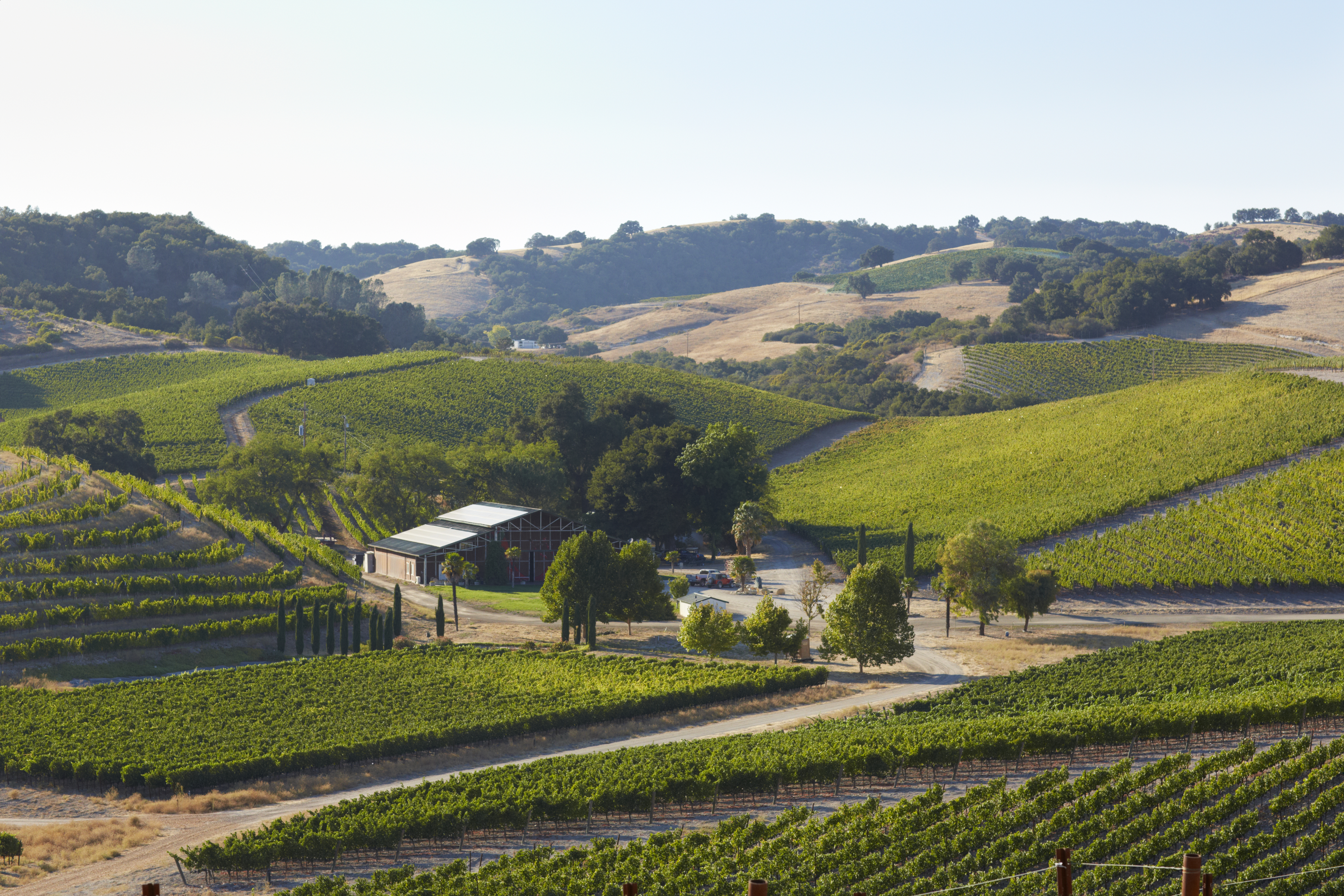
l'aventure winery

l’aventure winery

A Paso Robles Vineyard & Winery

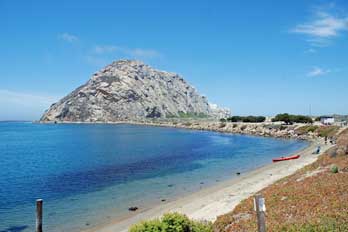
Morro bay pic

Morro Bay, CA

Central Coast Winery Suggestions

(arranged from South to North)

Santa Barbara County

Carr Vineyards – All wines are good, but their 100% Cab Franc is special and reasonably priced.

Jaffurs Wine Cellars Quality Southern Rhone style wines that offer great value.

Brewer- Clifton Pinot Noir and Chardonnay. Their Chardonnay is Burgundy style and fantastic!

Qupe – Beautiful, refined Syrah by a master winemaker.

Andrew Murray Vineyards The best value quality Syrah in the U.S. hands down.

Melville Winery Great values in Burgundy style Pinot Noir.

San Luis Obispo County

Laetitia Vineyard & Winery – Fine quality sparkling wines in a broad selection of styles.

L’Aventure Winery – Balanced Hedonism Incarnate (is that possible?). These wines are massive, powerful… and perfection.

Peachy Canyon Winery No winery makes more different single vineyard Zinfandels. If you are a Zin Master, you must visit Peachy.

Tobin James Cellars Their tasting room is definitely the most fun in the area!

Justin Cellars This is your bastion for Bordeaux style wine in the area. Their Cab Sauv and Merlot blends are very good! These wines are approaching the quality of the best in Napa.

Herman Story Wines THE BEST Southern Rhone Style Wines in the United States at prices that will cause you to do a double-take.

Other Wineries of Note Some of best wineries in the world are making amazing wine here, but are expensive and difficult to arrange access:  Alban Vineyards, Saxum Vineyards and Sea Smoke Estate Vineyards.

New Destinations My wife and I will be traveling to Walla Walla, WA this fall, six years after our last trip. I am hoping this location has much to show! I am looking for my next wine destination to add to our list! I will update our findings on this site after our trip!

2 Comments

Filed under Wine Industry, Wine Tasting, Wine Travel